

Tidy Sum
MathArrange digits 1–9 into three rows that meet addition or multiplication targets, with six complete-board attempts.
Rate Tidy Sum
The puzzle directory
Numbers people, this is your corner. Nerdle hides a full equation and gives you the same six guesses Wordle does. No spelling required, but order of operations absolutely counts.
Arrange digits 1–9 into three rows that meet addition or multiplication targets, with six complete-board attempts.

Trace paths through adjacent arithmetic tiles to reach target totals, applying each operation in the order you connect it.

Cancel numbers until every row and column hits its target sum, then try a tougher daily board with negative values.

A daily number puzzle where each digit repeats as often as its value in every row, column and irregular region. Count missing copies and correct excesses.
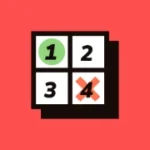
Remove numbers until every row and column matches its target; optional circles help track what stays.

Fill the missing digits in a fixed equation, then use five rounds of position feedback to find its hidden numbers.

Find a five-digit prime in six guesses, using digit positions and a prime-only entry rule.
In Normal mode, find a hidden six-character calculation that equals a displayed target, using feedback on digits and operators.

Build valid eight-character calculations, then use position colors and duplicate-character feedback to narrow the hidden equation.
Nerdle is the obvious place to start. It's Wordle with an equation instead of a word, and colour feedback tells you which digits and operators are in the right spot. Mathler gives you the answer up front and asks for the calculation, Primel only accepts prime numbers, and Calcle has you fill in the missing digits of a fixed equation.
Sumplete is less of a guessing game and more of a puzzle: cross out numbers until every row and column adds up to its target. It's a nice one to finish with, when you want something you can solve without guessing at all.
Basic arithmetic is enough. These play more like word games than exams; most of the challenge is narrowing down the possibilities, not doing hard sums.
Yes. Multiplication and division come before addition and subtraction, so 3+2*4 is 11, not 20.