
1 / 7
On this page
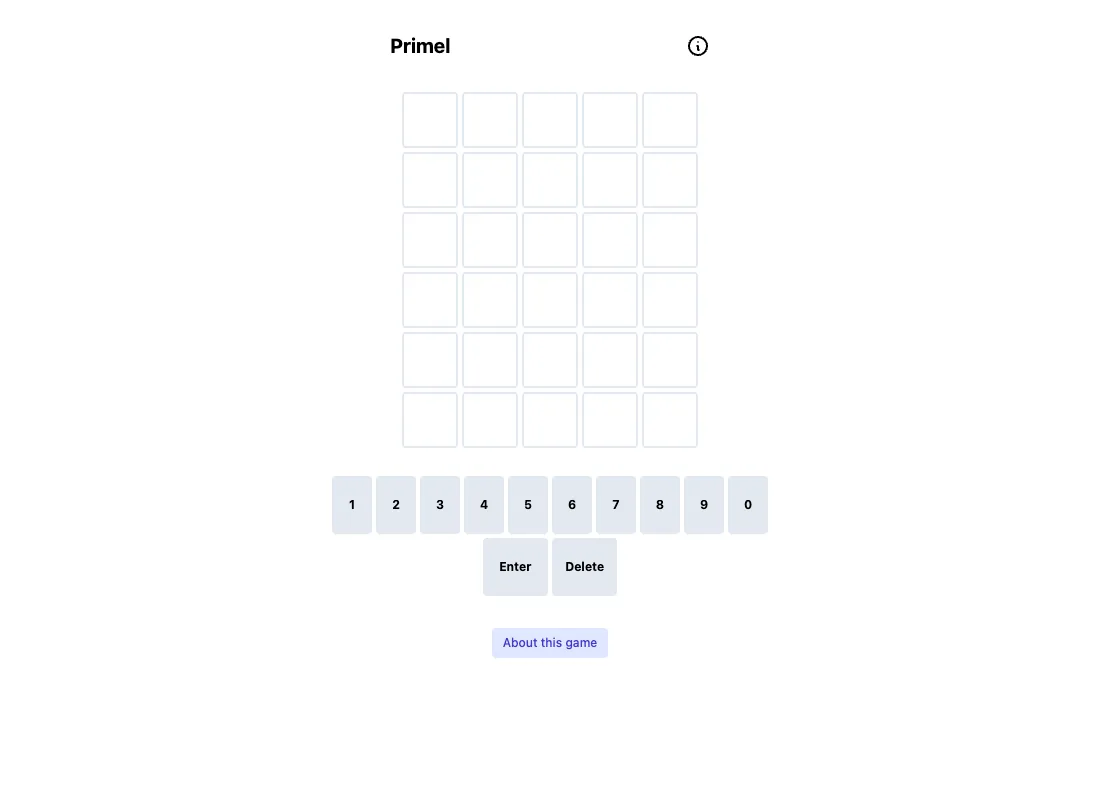
Primel asks you to do two things with every guess: choose a five-digit prime and use the colored digits to narrow the next one. A number that fits the positional clues can still be rejected because it is composite. That extra entry check changes how you use the six rows.
A rejected number leaves the row available
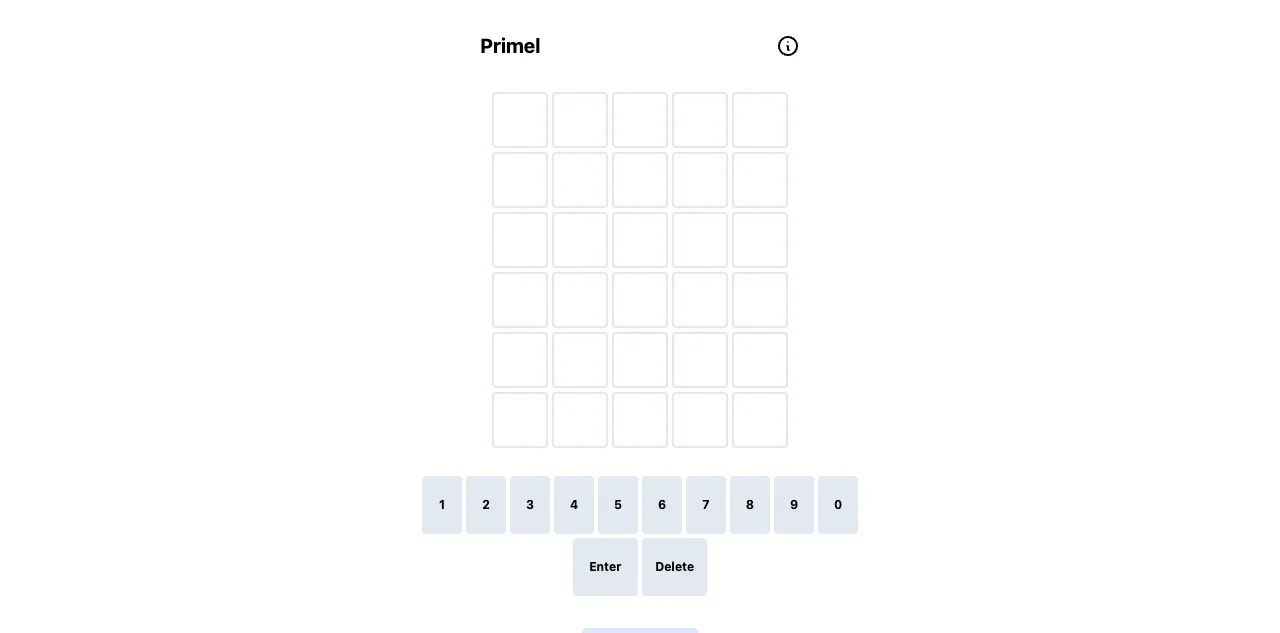
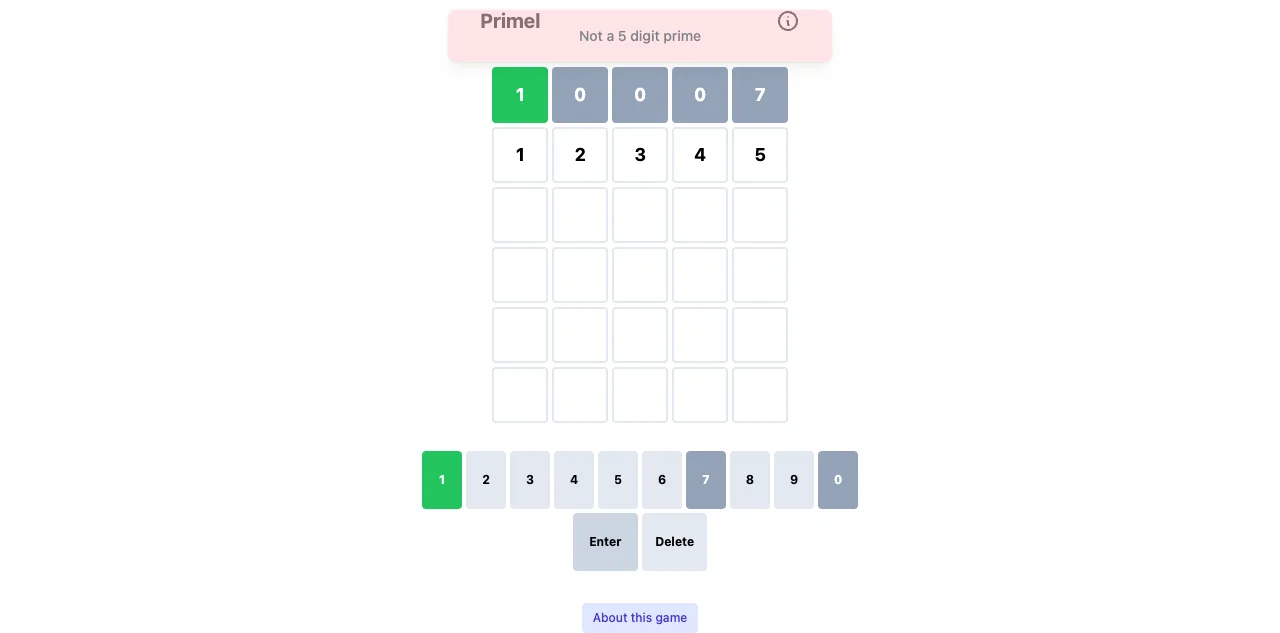
Enter five digits on the number pad and submit with Enter. In our desktop test, an accepted prime filled one row and returned colored feedback. Entering 12345 instead produced a “Not a 5 digit prime” message. The number stayed editable, and the attempt was not consumed. We could correct it before submitting a valid prime.
This makes a rejection different from a wrong guess. A wrong prime uses a row and gives positional clues; a composite entry needs correction before it can do either. The distinction also answers a concern raised in the r/math discussion of Primel: you do not have to recognize every five-digit prime from memory before trying an entry. Our test confirmed that this rejected composite did not cost a turn.
Read the board by position
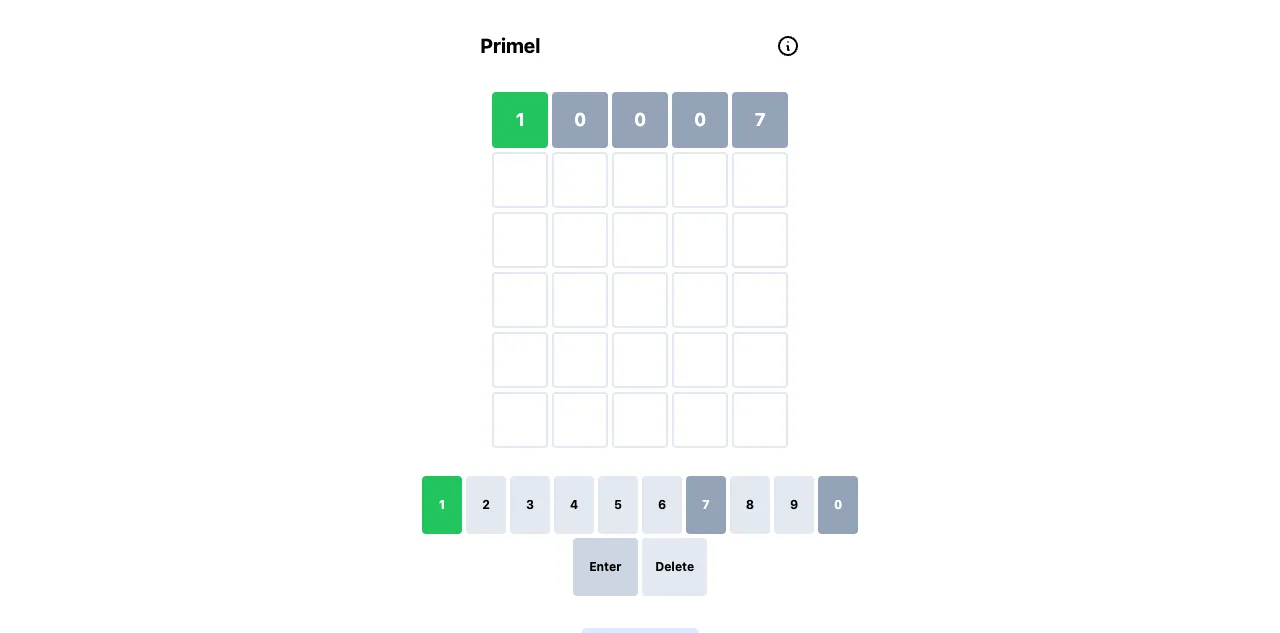
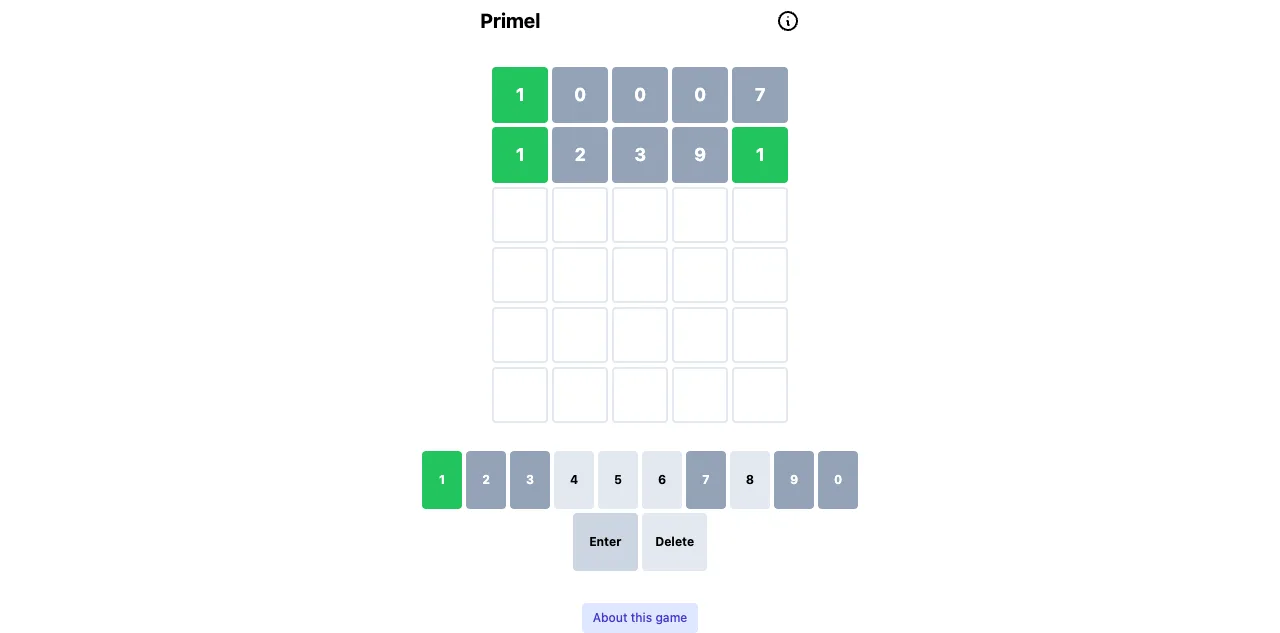
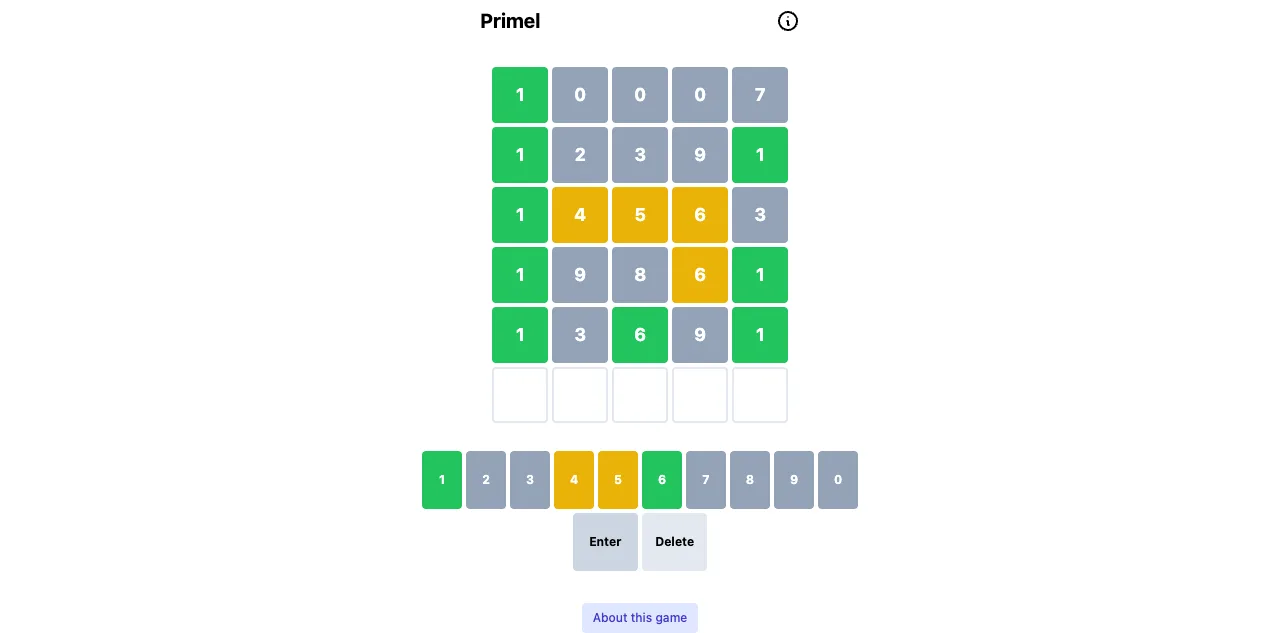
Green marks a digit in its correct position. Yellow indicates a digit that belongs elsewhere, while gray feedback rules out that occurrence. The number pad carries feedback too, but the rows retain the positional detail you need for the next candidate.
Repeated digits deserve particular care. Our test included a prime with several zeroes and later entries with repeated ones. Read each tile rather than treating the presence of a digit as permission to use it any number of times. Keeping a green digit in place is only part of the task: the whole next number must still pass the prime check.
A useful approach is to separate those decisions. First assemble a candidate that respects the clues, then check whether it is prime. A five-digit prime cannot end in an even digit or 5, and a digit sum divisible by 3 rules a candidate out. These are elimination checks, not a complete primality test. We used arithmetic assistance to check later candidates during this session, and the round ended without a solve.
Six rows put a limit on experimentation
We submitted six accepted primes and finished without solving the puzzle. The board showed a mix of fixed positions, misplaced digits and excluded digits along the way. Even with several positions narrowed down, each remaining arrangement still needed to be a valid prime. Today's answer is omitted here and from the selected screenshots.
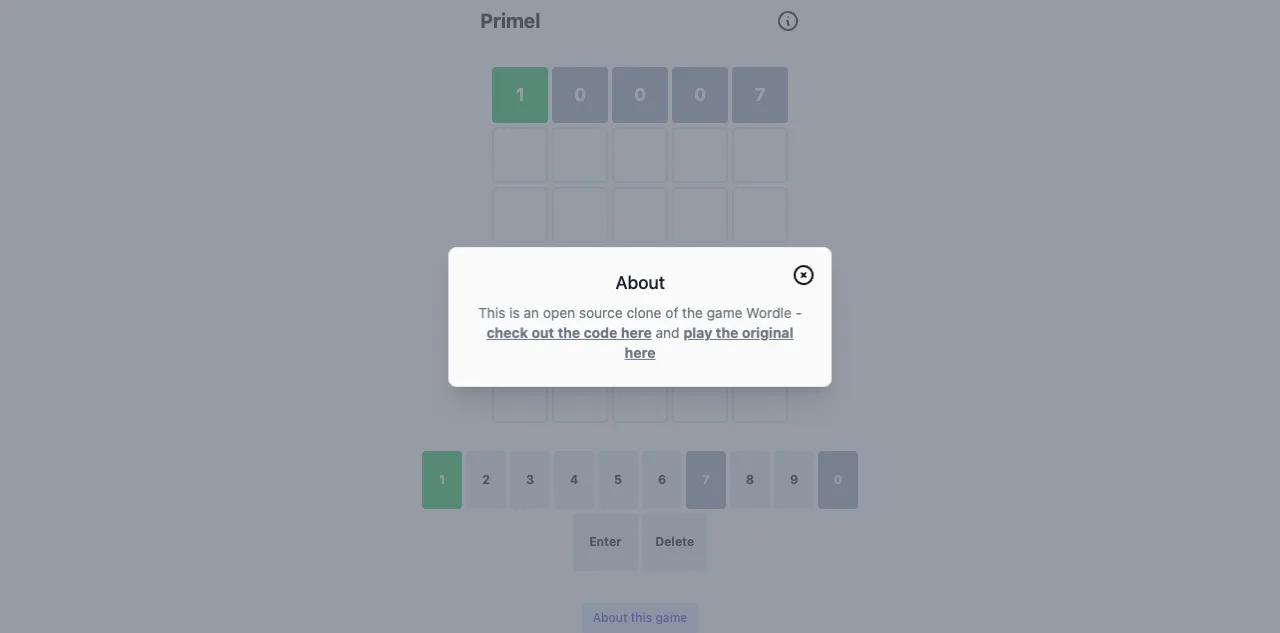
The official Primel page provides the playable board and an About panel describing its Wordle-clone basis. Our review covers one desktop round, the invalid-entry response, repeated-digit feedback and the six-guess boundary. We did not test a mobile keyboard, a later daily reset or saved statistics.
FAQ about Primel
Does a non-prime guess use one of the six attempts?
The rejected composite in our test did not. Primel left the row editable and showed a prime-number warning; an accepted prime uses a guess even when it is wrong.
Can guesses contain repeated digits?
Yes. Our accepted guesses included repeated digits. Read their individual tile colors, since a digit can be correct in one position without every repeated occurrence being correct.
Is checking the last digit enough to know a number is prime?
No. For a five-digit prime, ending in 1, 3, 7 or 9 is necessary but not sufficient. Other factors can still make the number composite.
Player reviews
0 reviewsPlayed it? Share what you think and help the next player choose.
Your experience
Games like Primel
All math games →
Nerdle
MathBuild valid eight-character calculations, then use position colors and duplicate-character feedback to narrow the hidden equation.
Mathler
MathIn Normal mode, find a hidden six-character calculation that equals a displayed target, using feedback on digits and operators.

sedecordle
WordSolve sixteen five-letter words with a shared stream of guesses and a 21-guess limit in the original Sedecordle mode.

Chessle
Board & CardReconstruct a hidden chess opening for both sides, using six submissions and colored move feedback in Normal or Expert mode.

Word Waffle
WordSwap the supplied letters into crossing words, using position colors and a limited move counter.

Dordle
WordSolve two five-letter words with seven shared guesses, using separate board feedback and a keyboard split between the two answers.