
1 / 4
On this page
Sufuku makes repetition the rule. On a board using 1, 2 and 3, each row, column and outlined region needs one 1, two 2s and three 3s. The important question is how many copies a line still needs. A second 2 can be necessary; a second 1 creates a conflict.
Each board uses its own number set, shown on the keypad. The official Sufuku rules describe the usual daily boards as 6×6 with 1, 2 and 3, or 7×7 with 1, 2 and 4. Occasional larger boards use different combinations. Read the keypad before applying a counting pattern from another puzzle.
Count what is missing
Select a cell, then choose a number. Gold digits are fixed clues; the darker entries are the numbers you can change. The regions have thick, irregular borders, so a cell belongs to three overlapping constraints: its row, its column and its region.
Start with a line that has one blank. Count its existing digits against the required totals. If it already has its single 1 and all three 3s, but only one 2, the blank needs another 2. A line with several blanks can also be straightforward: when it is short of only one kind of number, every remaining cell takes that number.
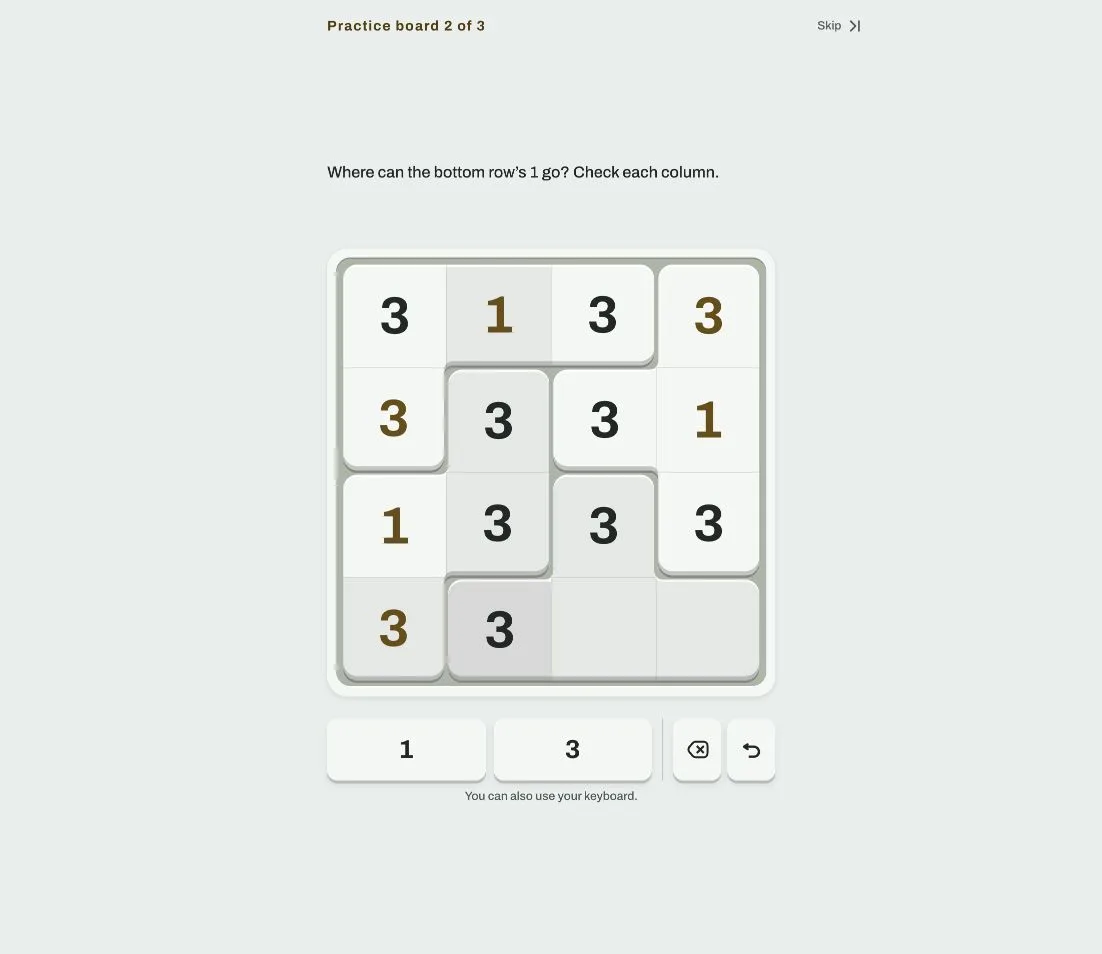
The next step is to cross-check positions. A row may still need a 1, but columns that already contain their 1 eliminate possible locations. Check the region too before committing. This is especially useful when a nearly complete row leaves two plausible spaces: the row count alone cannot distinguish them.
A circle marks an excess
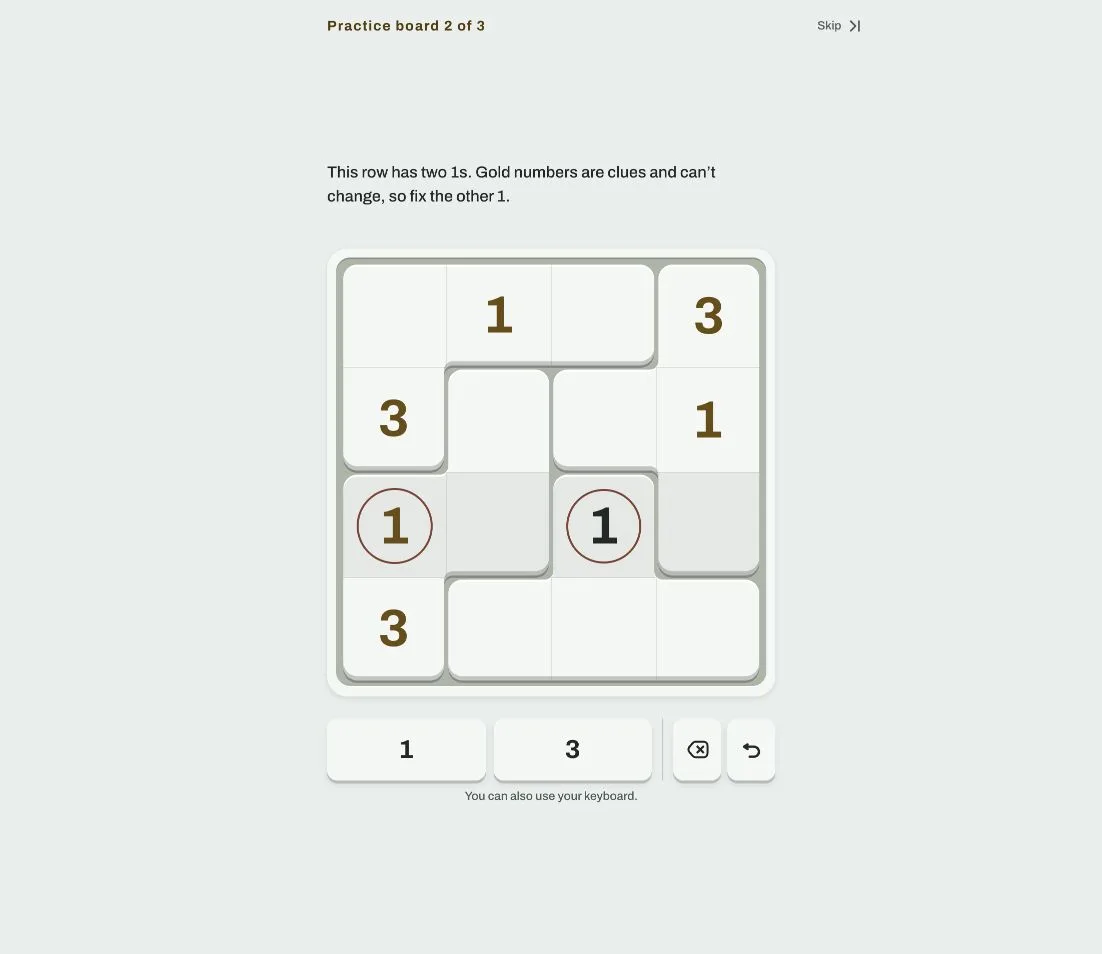
Sufuku circles digits when their count exceeds the allowance in a row, column or region. In our second practice board, the tutorial supplied an editable 1 in a row that already had a fixed 1. Both were circled. Replacing the editable entry with the number that row needed removed the conflict.
That feedback identifies a broken count, rather than marking every unproven placement as wrong. An entry with no circle still needs a logical justification. Use the fixed clues and all three constraints instead of treating the absence of a warning as confirmation of the final solution.
Learn on the separate practice boards
We completed the first two practice boards: a 3×3 using 1 and 2, followed by a 4×4 using 1 and 3. Each completion exposed a Next board button. The changing number sets make the counting rule clearer than memorising a single grid size.
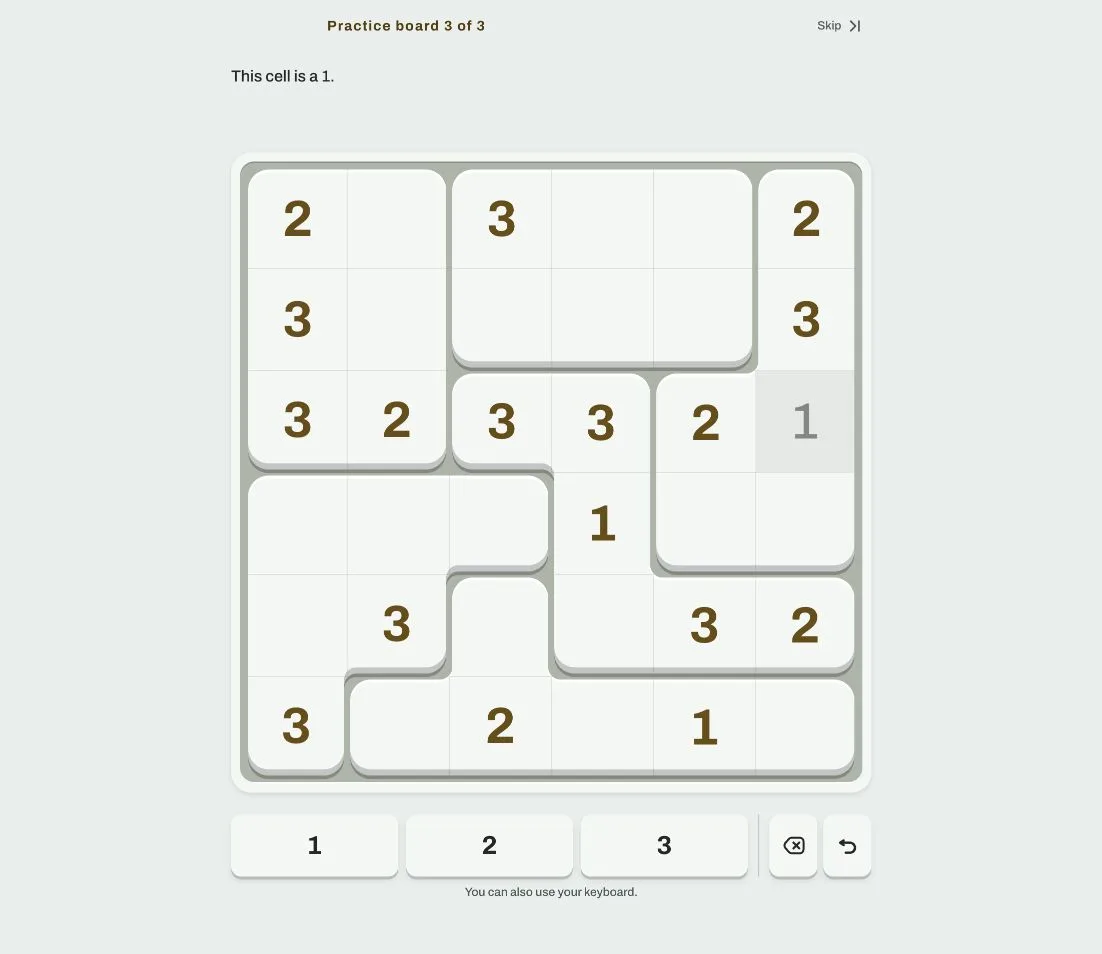
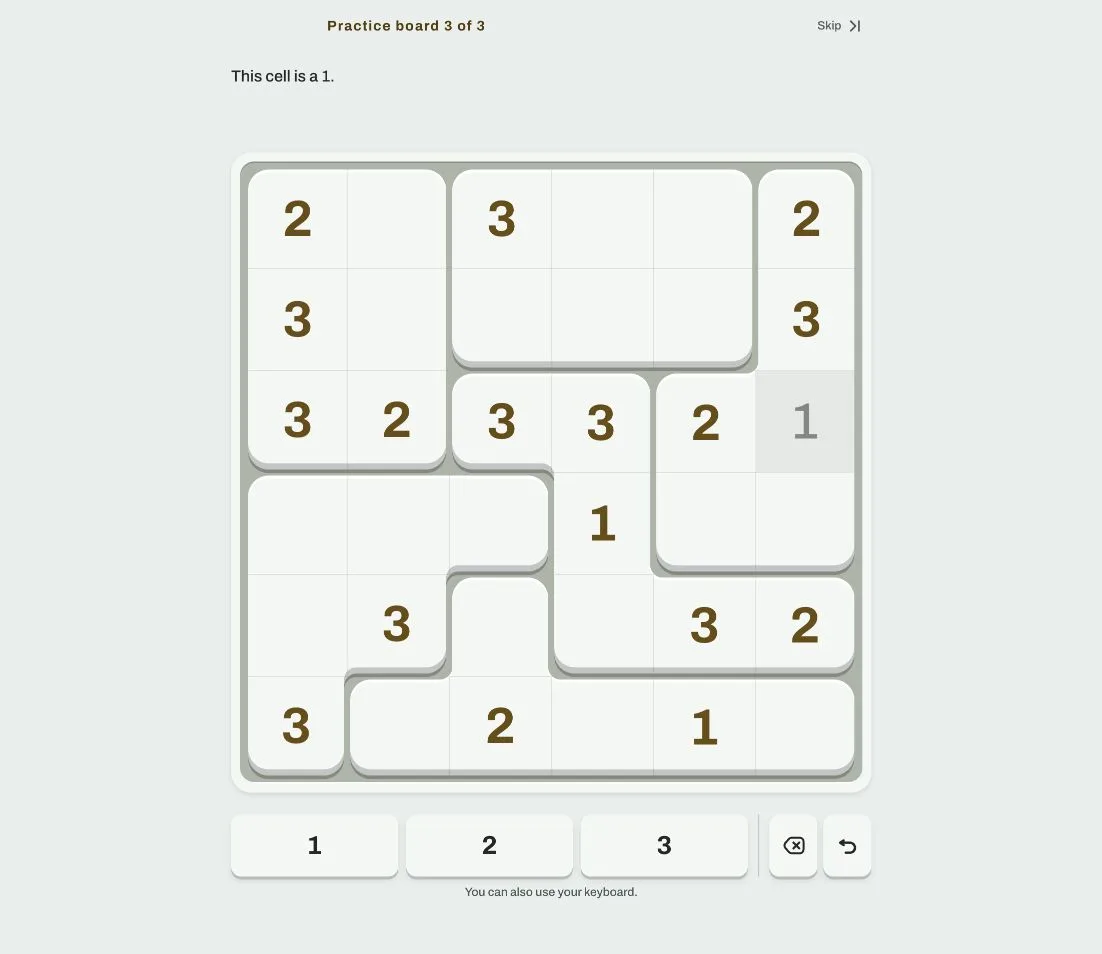
These boards include contextual teaching text. The third, a 6×6 board, also displayed a suggested cell value; we viewed it but did not complete it. Our test therefore covers assisted practice, placement and conflict correction, rather than a finished daily challenge or a measured solving time.
The week changes the challenge
The official schedule runs from the easiest puzzle on Monday to the hardest on Sunday. Everyone receives the same daily puzzle. Earlier puzzles from the current week remain available through the week strip, while previous weeks are closed. The official FAQ also distinguishes their rewards: current-week archive solves count toward a streak, but not badges. Those daily progression features were researched in the rules rather than tested in our practice session.
FAQ about Sufuku
Why does the keypad sometimes skip a number?
Each board has its own number set. The official rules list 6×6 boards with 1, 2 and 3, and 7×7 boards with 1, 2 and 4. Our second practice board used only 1 and 3, so a missing 2 was intentional.
Can I change the gold numbers?
No. Gold numbers are fixed clues. If a circled group includes a gold clue, correct the editable entry rather than trying to replace the clue.
Does Sufuku have a countdown?
No. The official FAQ says it records elapsed time only while the board is on screen. Time determines placement among the day’s players, with fewer mistakes breaking a tie. We did not test the daily ranking in practice mode.
Can earlier puzzles keep a streak going?
Yes, according to the official FAQ: puzzles from the current week count toward your streak, but not badges. They are available from the week strip; puzzles from previous weeks are closed. We did not test streak or badge changes.
Player reviews
0 reviewsPlayed it? Share what you think and help the next player choose.
Your experience
Games like Sufuku
All logic games →
Ponder Club
LogicA daily puzzle collection spanning words, numbers and visual games; tested here through Color Flood.

Ronin
LogicFill a 6×6 chess grid with one of each piece per region, keeping matching pieces out of attack. Use pencil notes and explore numbered past puzzles.

Nonograms
LogicFill black runs from row and column clues on 5x5 to 25x25 grids, request another standard puzzle, or choose scheduled special puzzles.
Guess a hidden word using totals for exact matches, misplaced letters and misses. Play a daily puzzle or choose a word length in Unlimited.

Boxed In
LogicFit nine supplied words into a shared letter grid, using the given letters and placement previews.

Unlabeled
LogicRestore eight missing axis labels across four charts, using numerical scales to separate the right labels from two decoys. Correct placements lock after each check.