
1 / 4
VideoOn this page
Size It Up turns a size estimate into a visual comparison. A blue reference stays fixed while you resize a red target silhouette until their proportions look plausible. Lock in the guess and the game shows how your estimate compares with the actual measurement. If you searched for ‘SizeItUp’, this guide covers Magnitudle’s daily size-estimation game.
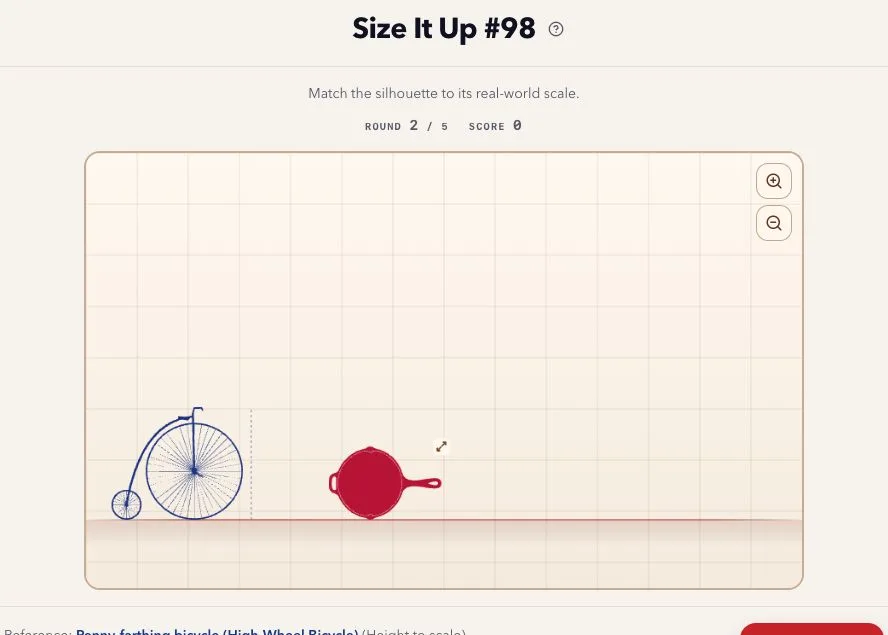
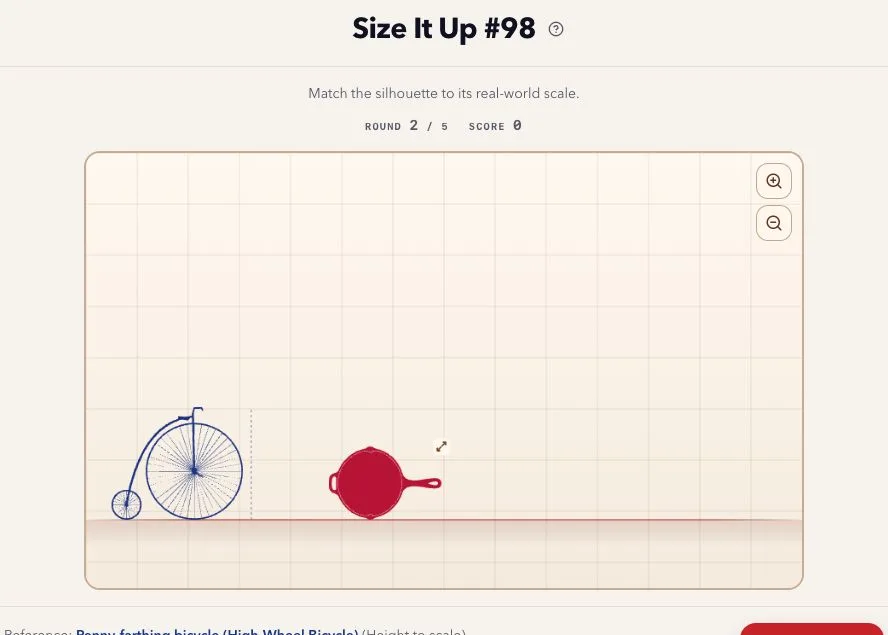
The central control takes a moment to learn. Drag the target's corner handle to change its size; dragging the body moves it around the board. Those actions serve different purposes. Repositioning can make two outlines easier to compare, but it does not itself correct their scale.
Read the dimension before resizing
The object names tell you what is being measured. In our daily test, one comparison used a reference's height against a target's length. Matching the apparent vertical extent of both silhouettes would have answered a different question.
Check those labels before making a large adjustment. Then look at the entire outline, including its pose and any long extremities. The useful comparison is the specified measurement of each object, not whichever two edges happen to be closest on screen. The in-game tutorial explains this distinction alongside the controls.
We completed two unaided comparisons. The first scored zero; the second earned the full 100 points after a much closer adjustment. That contrast is a fair picture of the game's demands: being confident about an object's identity does not mean you know its size relative to an unfamiliar reference. We did not complete the remaining three comparisons, so this is an account of the tested interaction and feedback rather than a full-run result.
What the reveal tells you
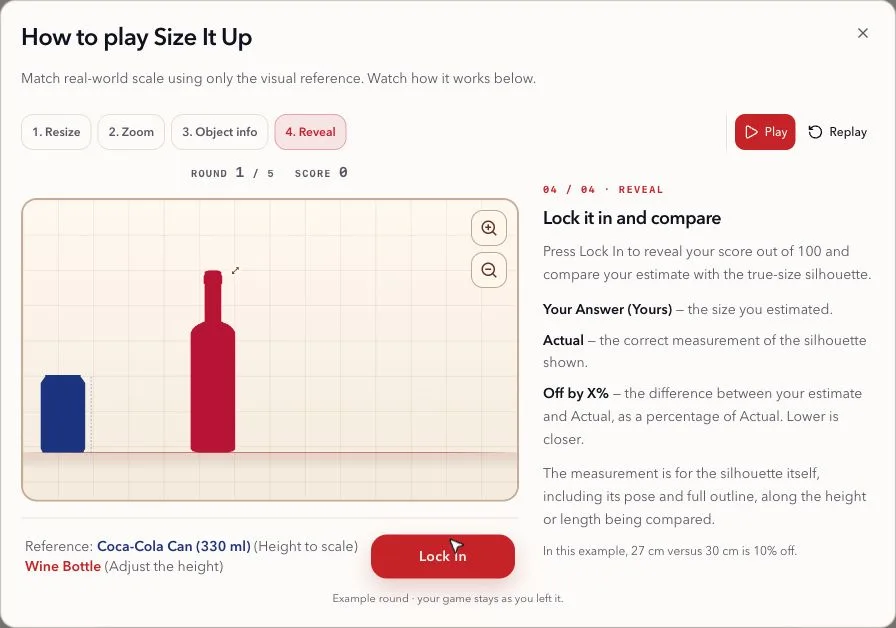
After Lock In, the feedback shows your estimated measurement, the actual measurement and the percentage error. Those values make the result more informative than a score alone. You can see whether your mental picture was slightly inaccurate or on entirely the wrong scale.
Our second comparison displayed a 1% error and awarded 100 points. The official rules confirm that an estimate within 6% earns full marks. There is therefore some tolerance: perfect points do not necessarily mean a mathematically exact resize.
A standard daily game has five comparisons, each worth up to 100 points. The overall maximum is 500. We have excluded the current daily measurements from the selected screenshots; the tutorial image is clearly labelled as an official example rather than our own result.
A better way to judge scale
Before dragging, make a rough verbal comparison: is the target about half as long, several times taller, or in another order of magnitude? That gives the first resize a purpose. Move the target nearer the reference if their positions make comparison awkward, then use the handle for the final adjustment.
The reveal is also worth reading before moving on. Its measurement and error explain what to revise in your mental model for future comparisons. You do not need to memorize every object to benefit from seeing which assumptions were wrong.
Magnitudle also lists an archive of previous standard, Pop Culture and Geography puzzles. Its public games are free browser games. Size It Up was created by Teej and is published through GriddleLink Games; these details come from the official Magnitudle overview.
FAQ about Size It Up
Why does dragging sometimes move the object instead of resizing it?
Dragging the silhouette body repositions it. Use the corner handle to resize.
Does 100 points require the exact size?
No. Magnitudle states that an estimate within 6% earns 100 points. Our tested 1% error received full marks.
Can I revisit older comparisons?
The official Magnitudle overview lists an archive of previous standard, Pop Culture and Geography puzzles.
Player reviews
0 reviewsPlayed it? Share what you think and help the next player choose.
Your experience
Games like Size It Up
All estimation games →
Roam
EstimationAnswer seven numerical questions while a pixel knight travels on your score. Roam gives 30 seconds per estimate, proportional scoring and repeatable category runs.

Cars
EstimationEstimate real auction-car sale prices against a short countdown. Photos, mileage, mechanical details and auction context help you set a price before the result is revealed.

Poured
EstimationPredict the level reached when a drink moves into a different vessel, then account for ice, foam and leaks in three daily pours.

Weigh Ahead
EstimationName something just heavier, lighter, newer or less populous in seven timed comparisons, then turn the closeness of your answers into a balloon flight from London.

Range Squeeze
EstimationChoose numerical bounds for seven daily trivia answers. Tight ranges offer more points, but a single number outside your interval scores zero.

Overunderle
EstimationEstimate a number, then decide whether the answer is over or under your guess across five daily Overunderle questions.