
1 / 4
A Packline district is won by the population inside it. Covering more cells of one color does not necessarily give that color the district, because dots represent different population sizes. You must fit the shapes across the map and produce the required balance of district winners.
Count people inside each shape
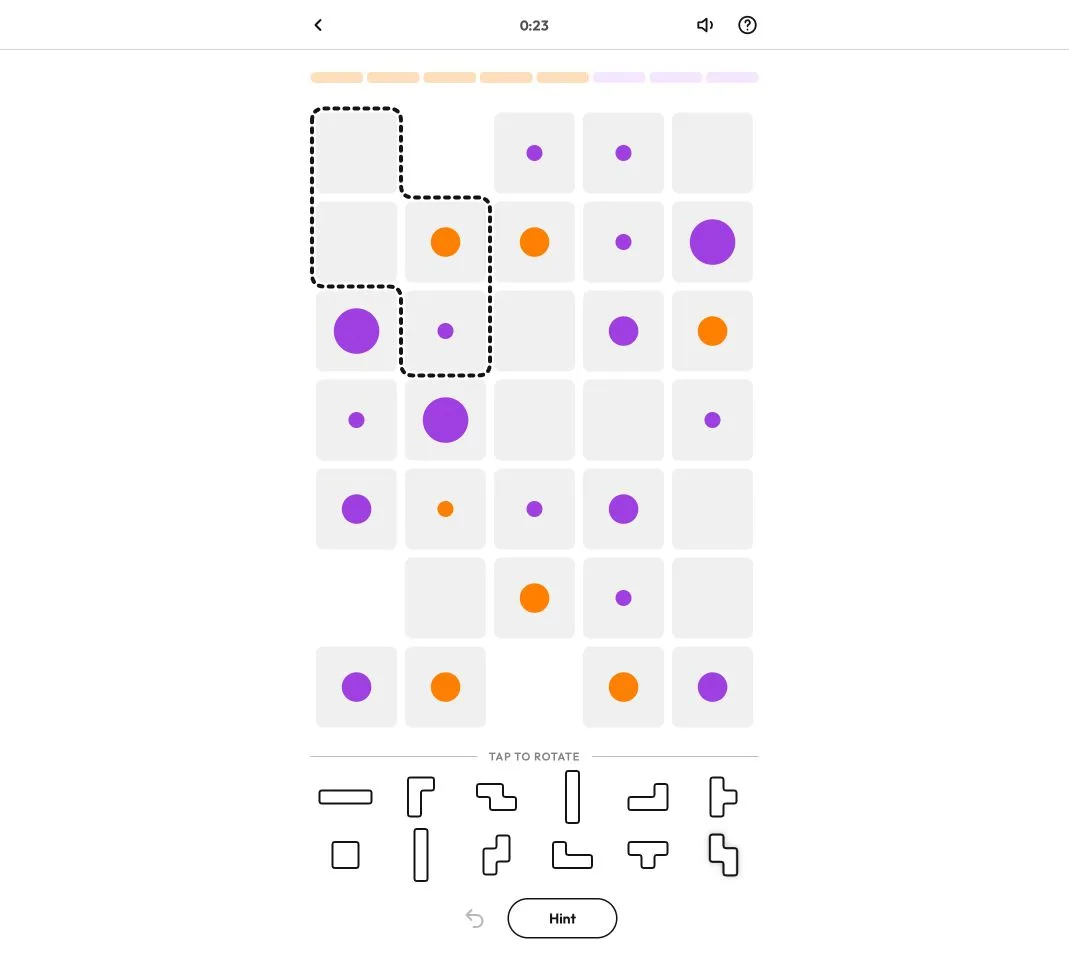
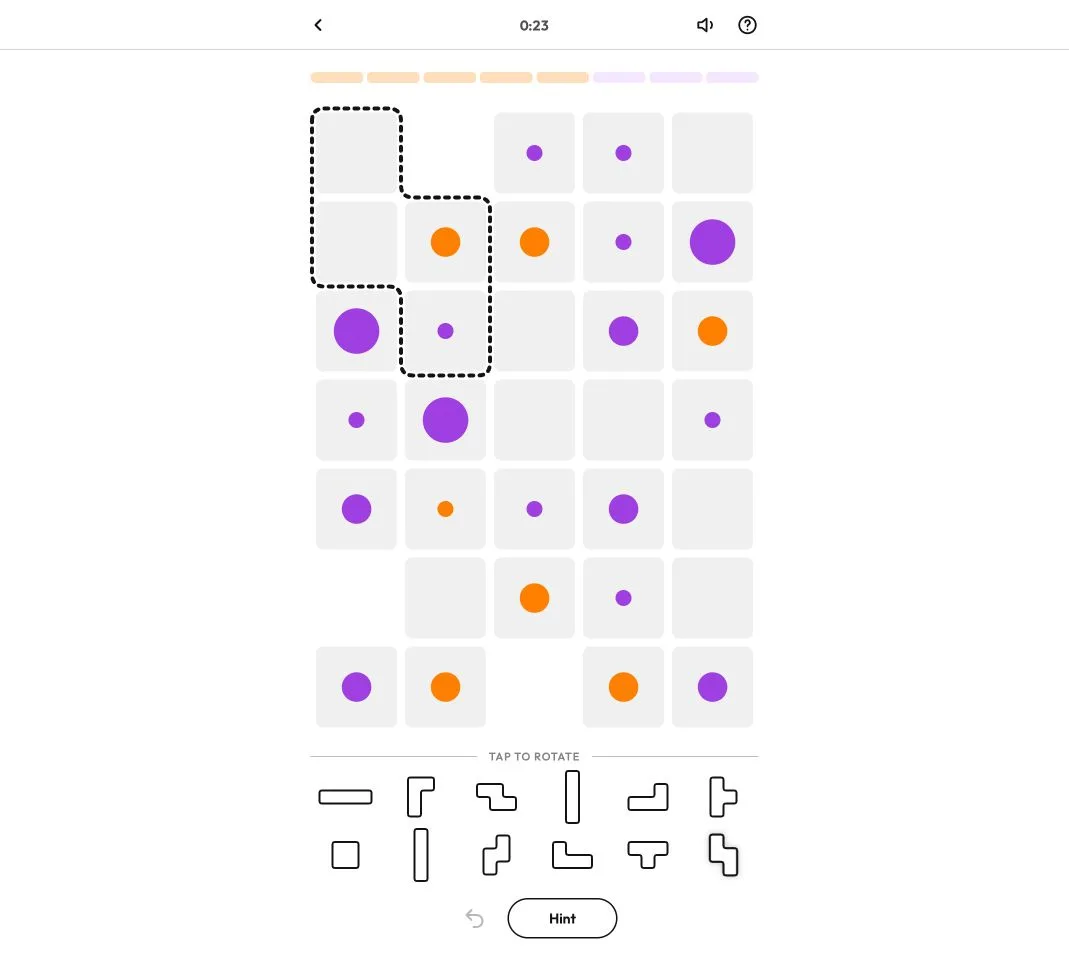
The tested daily used 32 active cells on a 7 by 5 map with three holes. Eight four-cell districts had to cover those cells, with five orange wins and three purple wins. The tray supplied more pieces than the final map needed, so choosing which shapes to leave unused was part of the placement problem.
Dots represented populations of 1, 2 or 3. Before placing a shape, add the population for each color across its four cells. Counting colored squares alone can give the wrong prediction. The progress display then lets you track the resulting district wins against the target.
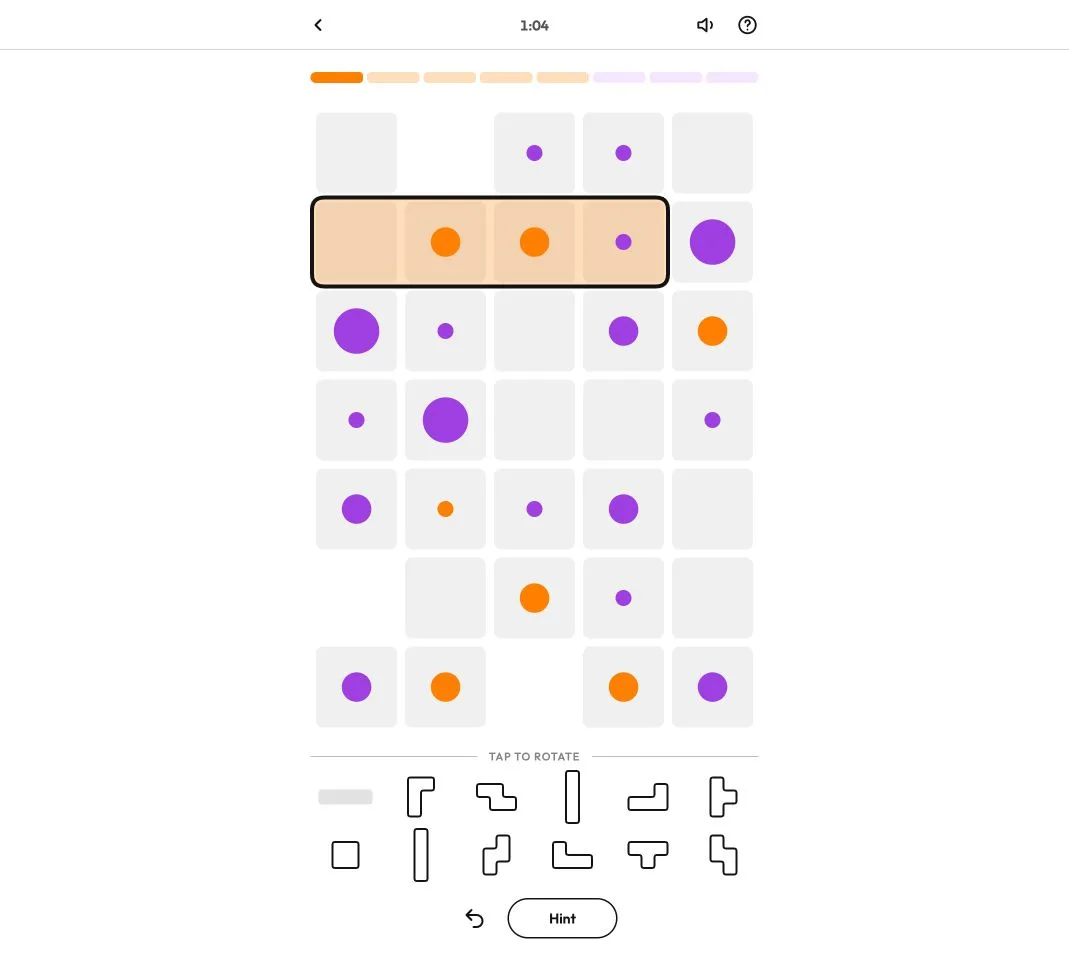
Tap a tray shape to rotate it and drag it onto the map. Tapping a placed shape returns it to the tray; Undo also allows you to revisit a placement. Our first horizontal bar created an orange district and increased the orange progress count. A subsequent hint identified that placement as not belonging, showing that a locally valid district could still obstruct the full arrangement.
Filling the map is only part of the task
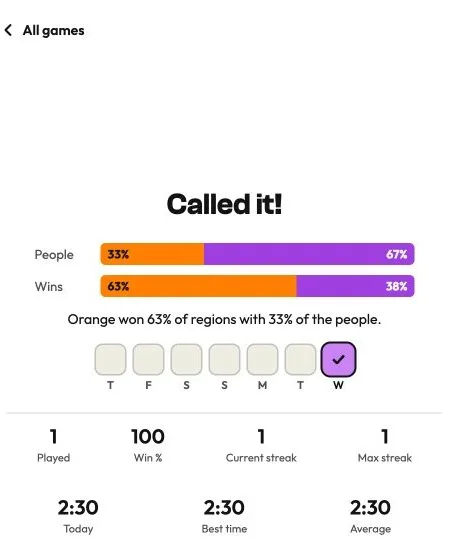
After that initial test, we transcribed the visible cell colors and dot sizes and used an offline tiling search to plan the remaining arrangement. We entered it with normal drags and rotations. The completed daily displayed “Called it!” at 2:30, with the required five orange and three purple districts. This was an assisted completion, not an unaided solve.
The result screen reported 33% orange population against 63% of district wins, and 67% purple population against 38% of wins. The win percentages are rounded: five of eight and three of eight do not display as whole percentages that sum neatly to 100.
That result illustrates the central decision in Packline: district boundaries determine how population becomes wins. Check the required winner counts while planning the tiling, rather than filling every gap first and inspecting the balance only at the end.
FAQ about Packline
Should you count colored cells or population dots?
Count population. Dots represent populations of 1, 2 or 3, and the population majority decides a district winner.
Must every tray piece be used?
No. The tested daily supplied 12 pieces but needed eight four-cell districts.
Can a placed district be removed?
Yes. Tapping a placed shape returns it to the tray, and Undo is also available.
Player reviews
0 reviewsPlayed it? Share what you think and help the next player choose.
Your experience
Games like Packline
All shapes & patterns games →
Marked
MemoryRemember briefly flashed target positions and replace them on a blank board, with distance feedback and more marks in each daily round.

Cutle
Shapes & PatternsCut a daily shape into two equal areas with one straight drag. Cutle records your first score, offers past shapes, and counts 48:52 or better as a win.

Geocrumble
GeographyRecognize three countries from separated map fragments. Wrong guesses join pieces and reveal more coastline, while continent feedback helps narrow the search and the score drops.

Flipside
Shapes & PatternsFlip two-coloured paper into an all-white target shape, plan the order of neighbouring folds, and solve three daily sheets in as few moves as possible.

Loopy
Shapes & PatternsDraw a closed loop while reducing Loopy’s numbered clues to zero through nearby bends.

Loopy River
LogicDraw a single river loop through every open square, working around walls and blocked spaces. Learn the controls in the tutorial or try the daily board.