
1 / 3
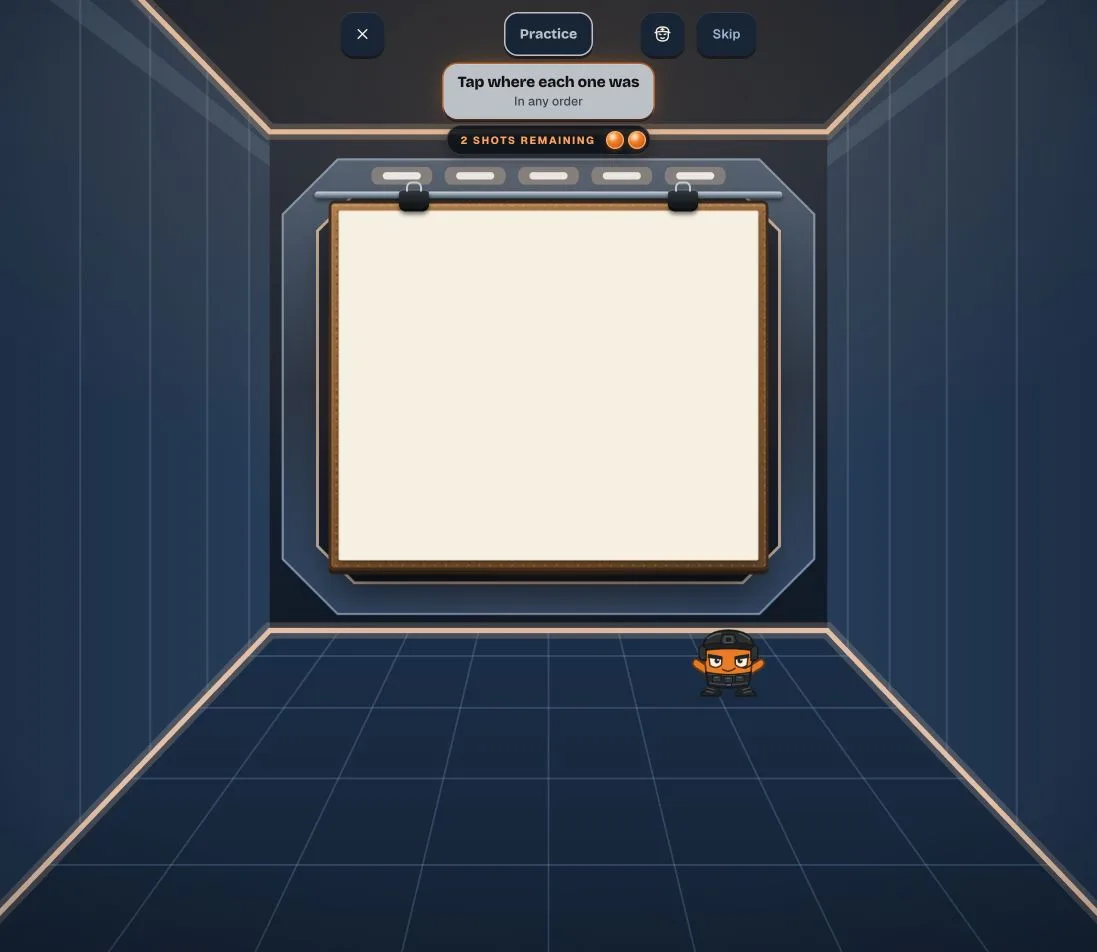
Marked briefly places targets on a board, removes them, and asks you to tap where they were. The board is blank when you answer. Your job is to preserve positions in memory, rather than react to a target that remains visible.
Each mark appears for half a second, one at a time, with a short blank interval. The daily sequence has three rounds: two marks, then three or four, then five. More marks mean more locations to retain, but the basic input stays the same—one placement for each remembered target.
Place your most certain mark first
Marked matches each tap to the nearest original mark that has not already been claimed. You can answer in any order, but the matching rule gives that order a consequence. A speculative tap can claim a target you intended to place more accurately later.
The official help therefore recommends placing the marks you remember most confidently before the uncertain ones. It also suggests anchoring a position to an edge or corner, or remembering several marks as a shape. These are practical ways to organise the board, rather than evidence of a guaranteed high score.
A line between two positions, for example, gives you a direction and a distance to remember. With more targets, a triangle or a rough letter shape may be easier to reconstruct than several isolated points. The shape still needs to sit in the right part of the board; remembering its outline alone does not recover its position.
The reveal measures distance
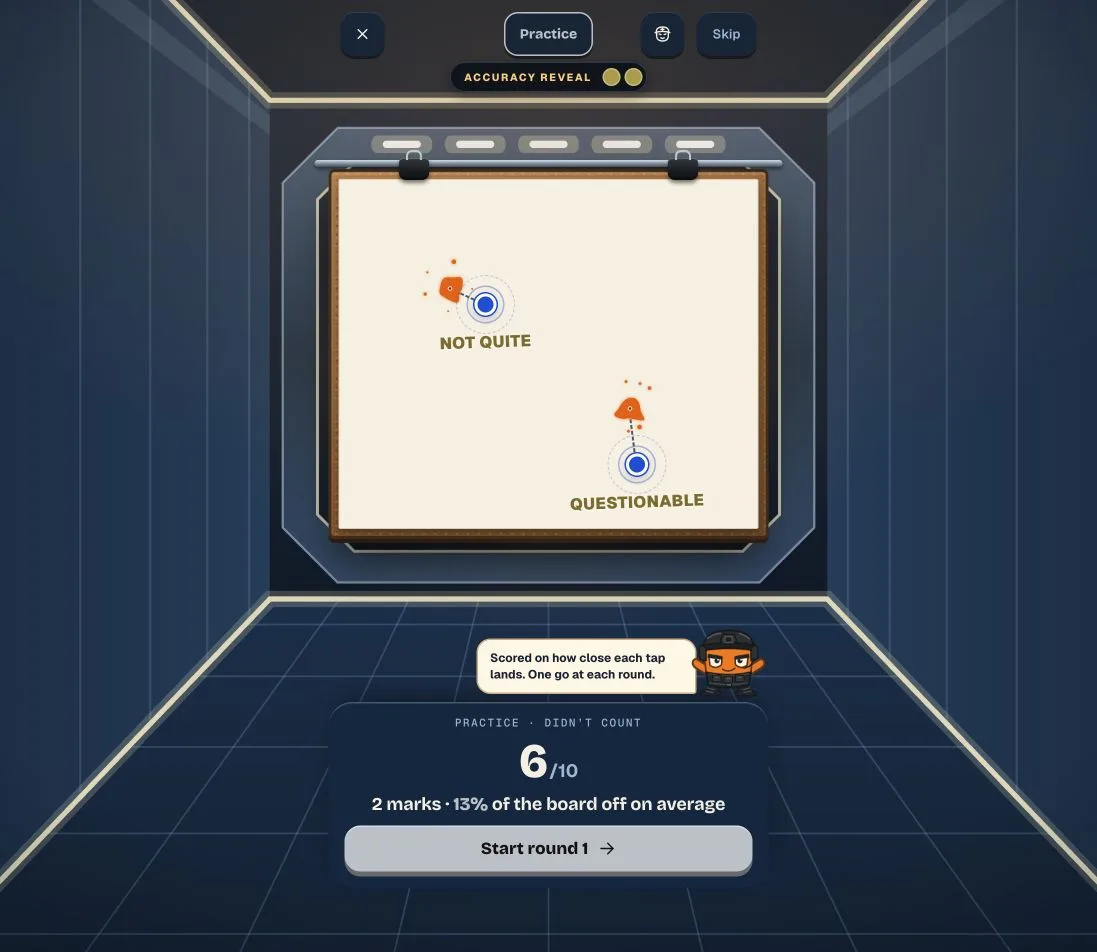
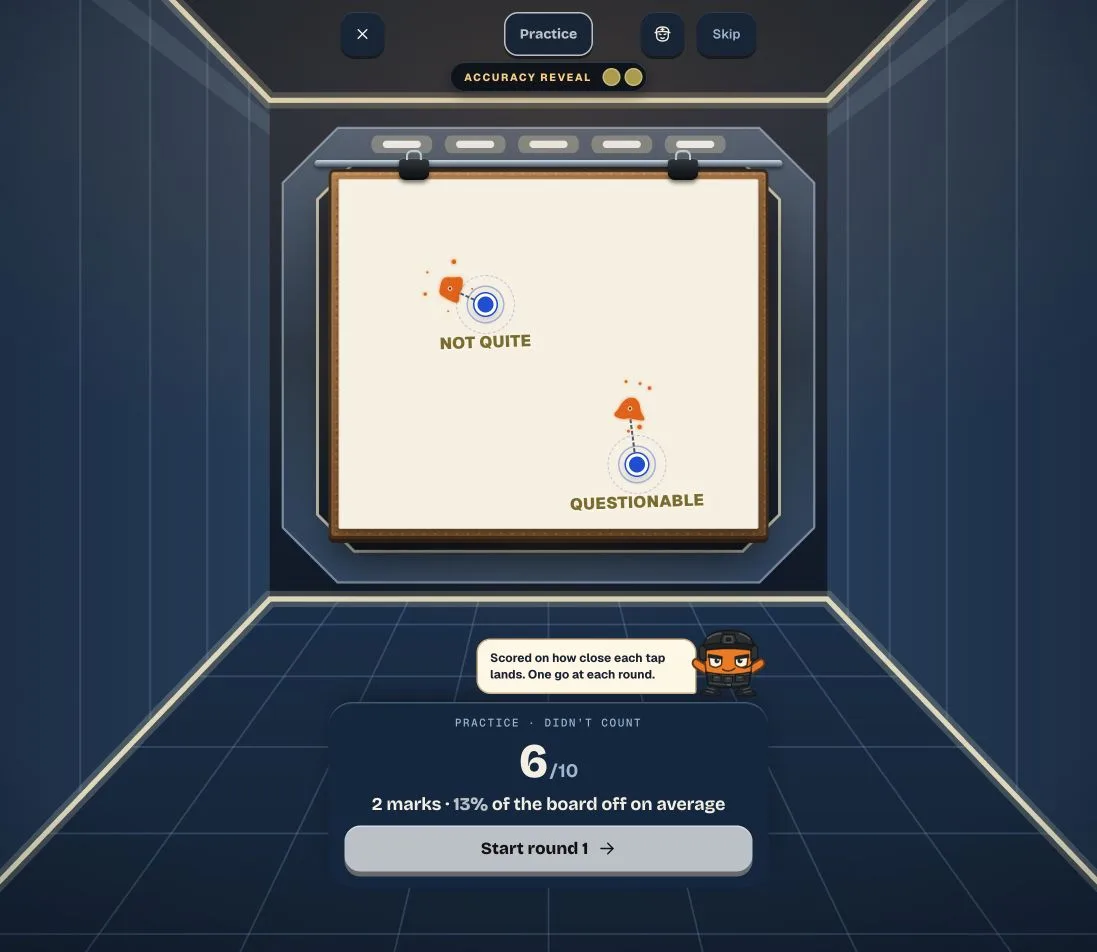
After the placements, the board shows the original marks and your guesses with connecting offsets. Each round is scored out of 10 according to how far the taps landed from their matched targets, measured as a share of the board. It is not an all-or-nothing hit test.
Our two-mark practice finished at 6/10, with an average error of 13% of the board. We missed the brief flashes and guessed the positions, so this result does not measure successful recall or establish the game's difficulty. It confirmed the two-placement submission and distance reveal. We did not complete the full daily sequence.
The selected screenshots show that practice board before placement and after the reveal. Practice is labelled as not counting toward the daily score, and avoids publishing today's target locations. The daily rules allow one go at each round, so be ready to watch before starting the marks rather than looking for them after they disappear.
FAQ about Marked
Do I have to replace the marks in their original order?
No. Each tap matches the nearest original mark not already claimed. The official help recommends placing your most certain memories first.
How long are the marks visible?
Each mark appears for half a second, one at a time, with a blank interval. You place the marks after the board becomes blank.
Is a near miss worth anything?
Yes. Each round is scored out of 10 from the distances between your taps and their matched targets, measured relative to the board.
Player reviews
0 reviewsPlayed it? Share what you think and help the next player choose.
Your experience
Games like Marked
All memory games →
RETESS
MemoryRemember six objects after a six-second look, then rebuild their positions, shapes and colours on a 4×4 board. Each reconstruction layer locks before the next.

Cutle
Shapes & PatternsCut a daily shape into two equal areas with one straight drag. Cutle records your first score, offers past shapes, and counts 48:52 or better as a win.

Geocrumble
GeographyRecognize three countries from separated map fragments. Wrong guesses join pieces and reveal more coastline, while continent feedback helps narrow the search and the score drops.

Flipside
Shapes & PatternsFlip two-coloured paper into an all-white target shape, plan the order of neighbouring folds, and solve three daily sheets in as few moves as possible.

Loopy
Shapes & PatternsDraw a closed loop while reducing Loopy’s numbered clues to zero through nearby bends.

Draw a single river loop through every open square, working around walls and blocked spaces. Learn the controls in the tutorial or try the daily board.