
1 / 3
On this page
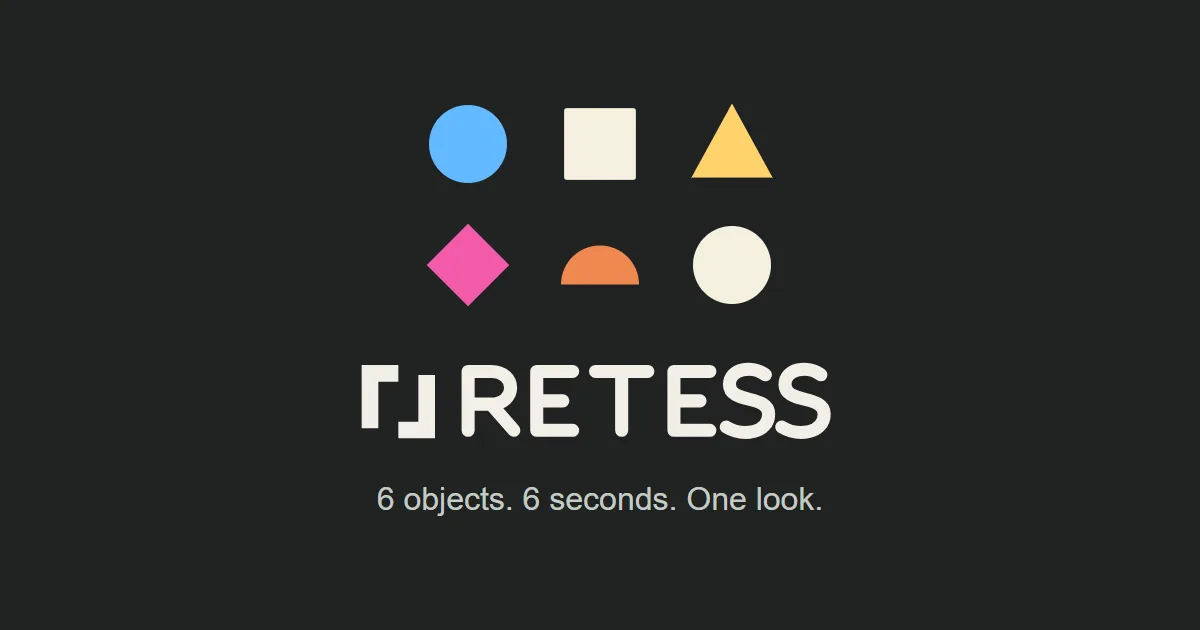
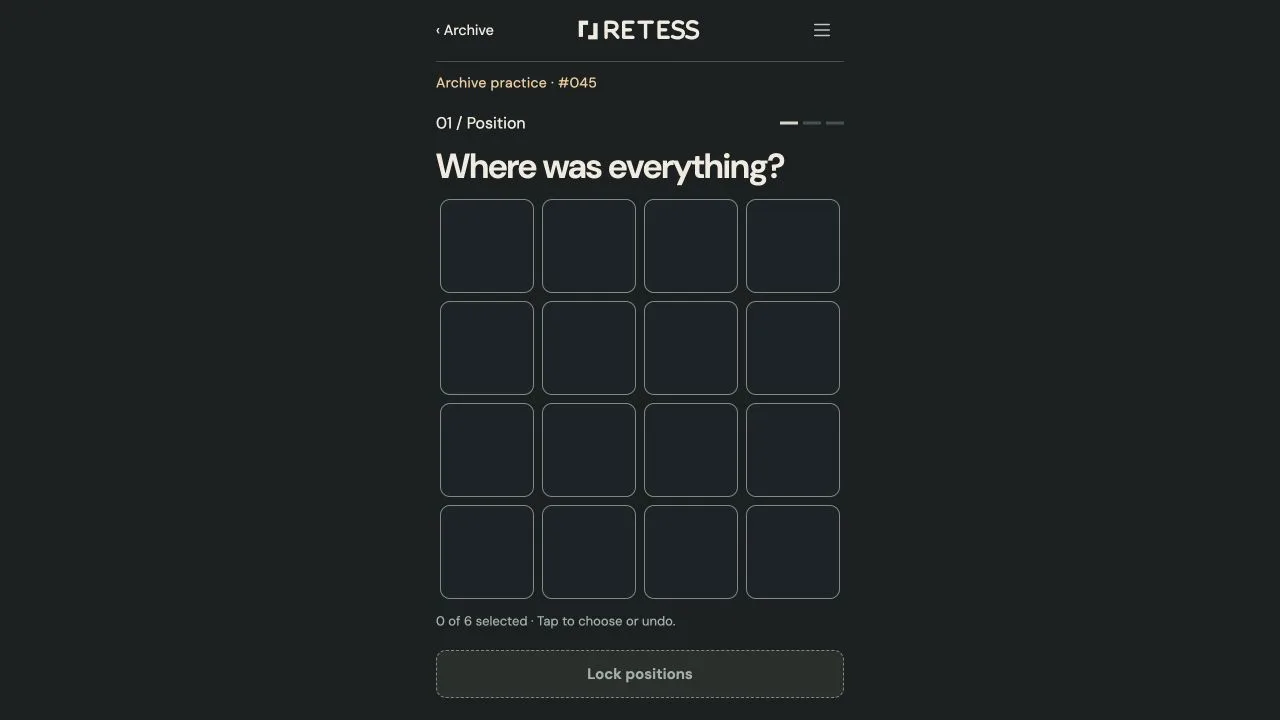
RETESS asks you to remember six objects after a six-second look, then rebuild what you saw on a four-by-four board. Location alone is not enough. Each object also has a shape and a colour, and the reconstruction separates those three details into stages.
The viewing window is brief, but rebuilding is untimed. That gives the game a clear rhythm: observe, recall the occupied cells, then attach the remaining details without being rushed by another countdown.
Three decisions, locked in order
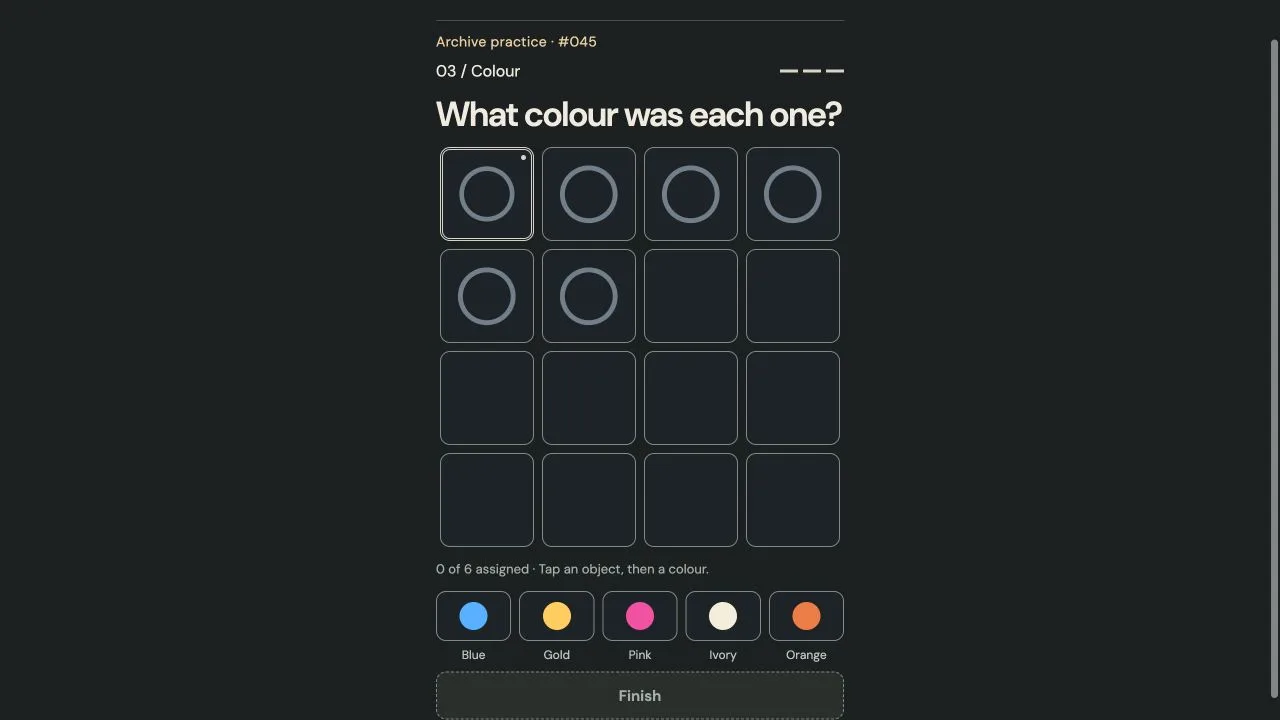
First select the six positions that held objects. Confirm those cells to move to shapes. Select a placed object and choose its shape from the palette, then repeat until all six have a shape. Lock that layer to reach the colour stage, where each object receives a colour before you finish.
Each confirmation commits the previous layer. You cannot rely on the colour screen to fix a position you selected earlier, so review the entire grid before locking it. An uncertain location affects more than one part of the reconstruction because the later details belong at particular cells.
The available shapes include circles, squares, triangles, diamonds and semicircles. The colour palette in our test contained blue, gold, pink, ivory and orange. Several objects may share a shape or colour; remembering the set of six items is not the same task as remembering which detail belongs where.
What the score measures
The score explanation assigns 50% to positions, 30% to shapes and 20% to colours. Credit is distributed across the six objects, with the total rounded at the end. The instructions also explain that colour can earn credit at a correct position even if the selected shape there is wrong.
That weighting gives a practical priority during the look: establish the spatial arrangement, then connect shapes and colours to those locations. It does not make the other details optional, but a reliable map provides a basis for the next two stages.
We completed the daily board and reached 100 out of 100, with all six positions, shapes and colours correct. This was a mechanics check using machine-readable accessibility descriptions alongside the visible exposure. That assistance preserved details beyond a normal human glance, so the result is not a measure of unaided memory or expected difficulty. No answer video was used before the test.
One look, then deliberate rebuilding
The official rules specify six seconds to inspect the arrangement. Leaving during that window ends the exposure; the original arrangement is shown again only after finishing. Plan to be ready before starting rather than opening the board while distracted.
Once reconstruction begins, take advantage of the untimed stages. Check spatial relationships such as a pair in one row or a cluster around an empty cell. Before locking shapes, compare each object with its neighbours so that similar colours or repeated forms do not blur together.
The archive offers earlier dated puzzles as practice, separate from daily progress and streak. We opened the preceding puzzle there and worked through positions and shapes to the colour screen. Those archive stages supply the gallery images, avoiding a public copy of the completed daily arrangement.
Basic play opened without registration. We did not establish a full pricing policy, an unlimited new-puzzle mode or an official reset timezone. RETESS’s appeal is the compact reconstruction itself: one short exposure creates several connected memory decisions, and the final breakdown shows which layer you retained.
FAQ about RETESS
Can I change positions after moving to shapes?
No. Each reconstruction layer locks before the next stage, so check all six positions before confirming.
Do I have to finish rebuilding in six seconds?
No. Six seconds is the viewing window. The reconstruction stages are untimed.
How does partial credit work?
The score explanation weights positions at 50%, shapes at 30% and colours at 20%. Colour credit needs a correct position but can still count when its shape is wrong.
Does archive practice affect the daily?
The archive describes practice as separate from daily progress and streak. We opened an older puzzle through that archive.
Player reviews
0 reviewsPlayed it? Share what you think and help the next player choose.
Your experience
Games like RETESS
All memory games →
Marked
MemoryRemember briefly flashed target positions and replace them on a blank board, with distance feedback and more marks in each daily round.