
1 / 3
On this page
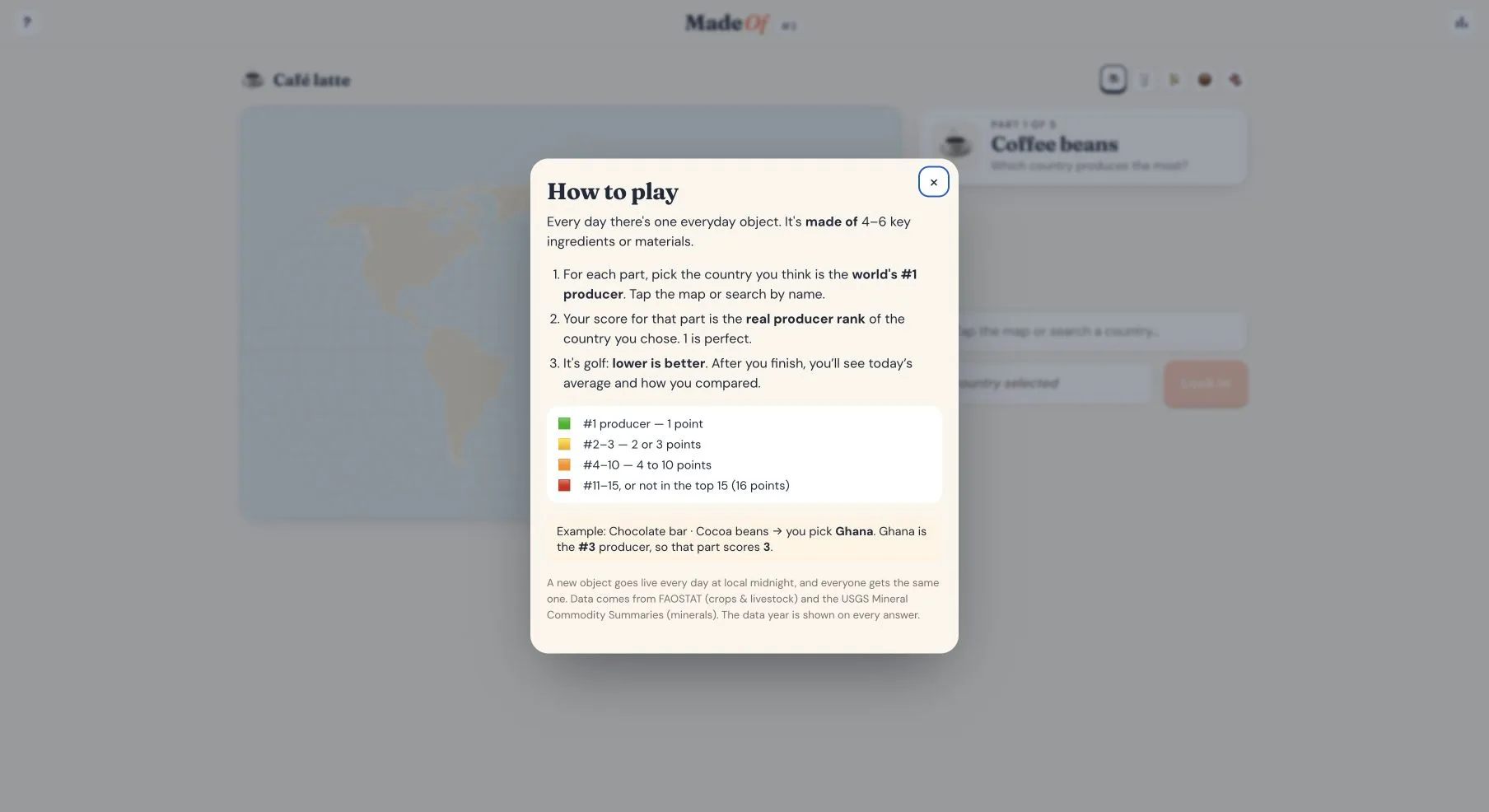
Made Of asks where the materials in an everyday object are produced. Each day’s object contains 4–6 ingredients or materials, and you choose the country you think produces the most of each. Your score is that country’s real production rank: choosing the leading producer earns 1 point, while a country outside the top 15 costs 16. Aim for the lowest total.
That makes a plausible producer a useful fallback. You do not have to find the single correct country to keep the score down, but fame and production volume are different clues. Think about the raw material named on the card, rather than where the finished product is associated with.
Select a country, then lock it in
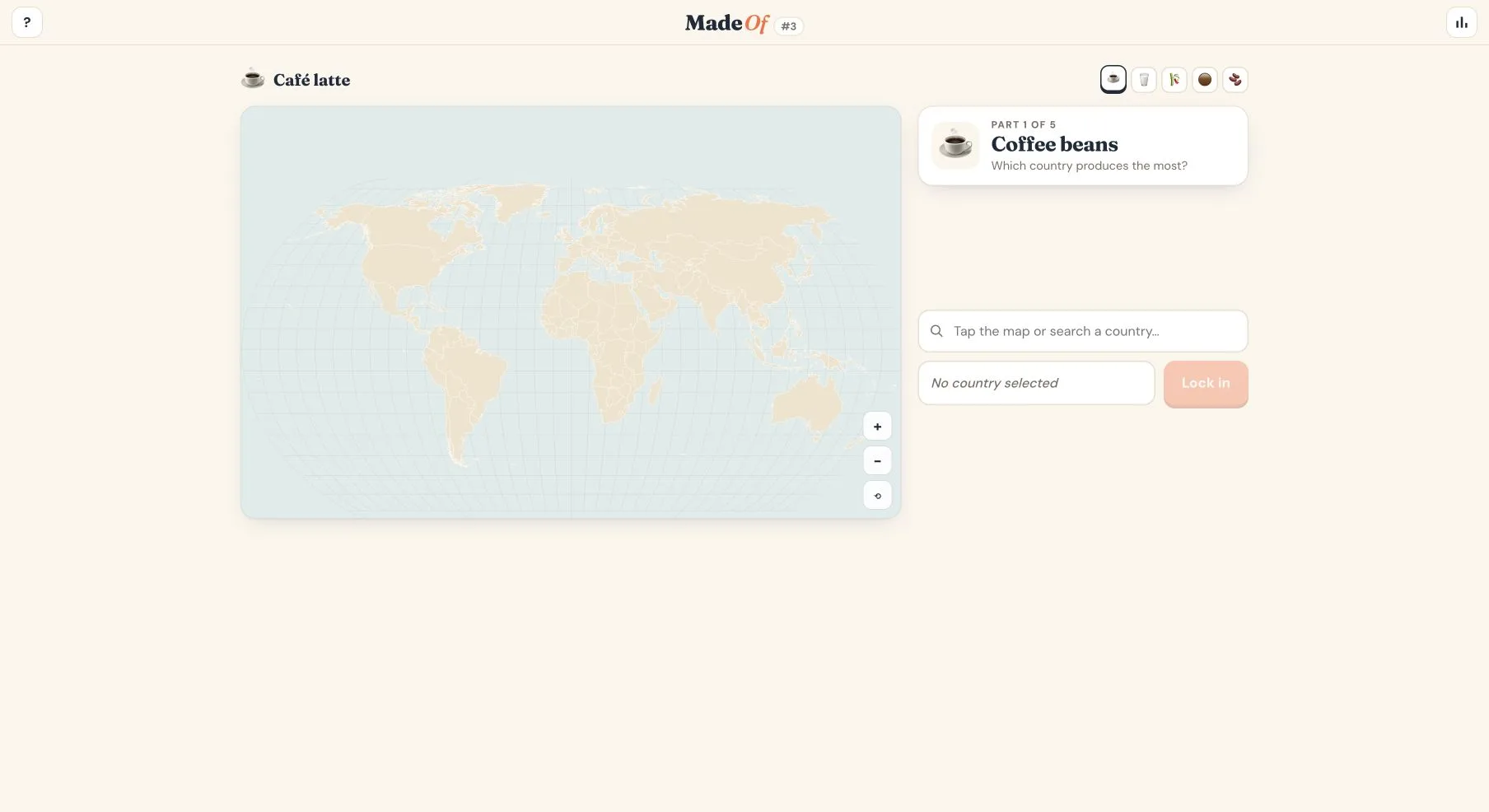
The ingredient card sits beside a world map. You can tap the map or search for a country by name. In our desktop test, entering a country and pressing Enter selected it; the separate Lock in button committed the answer. This gives you a chance to check the country before scoring it.
After confirmation, the map and ranking panel reveal how your choice compares with the leading producers. The panel includes production shares, a short explanation, the dataset and its year. Next part advances to another material in the same object. Our completed five-part game totalled 12 points.
The feedback uses green for the #1 producer, yellow for ranks 2–3, orange for ranks 4–10 and red for ranks 11–15 or an unranked choice. Read the number as well as the colour: two orange answers can contribute quite different totals. An outside-the-top-15 test choice displayed a “15+” badge and explained that the country was not a major producer.
Read the material definition and data year
The official explanation of the data identifies FAOSTAT’s Crops and livestock products data for agricultural materials and the USGS Mineral Commodity Summaries for minerals. The answer panel shows the relevant year, so the task is to predict the ranking used by the puzzle rather than a live market measurement.
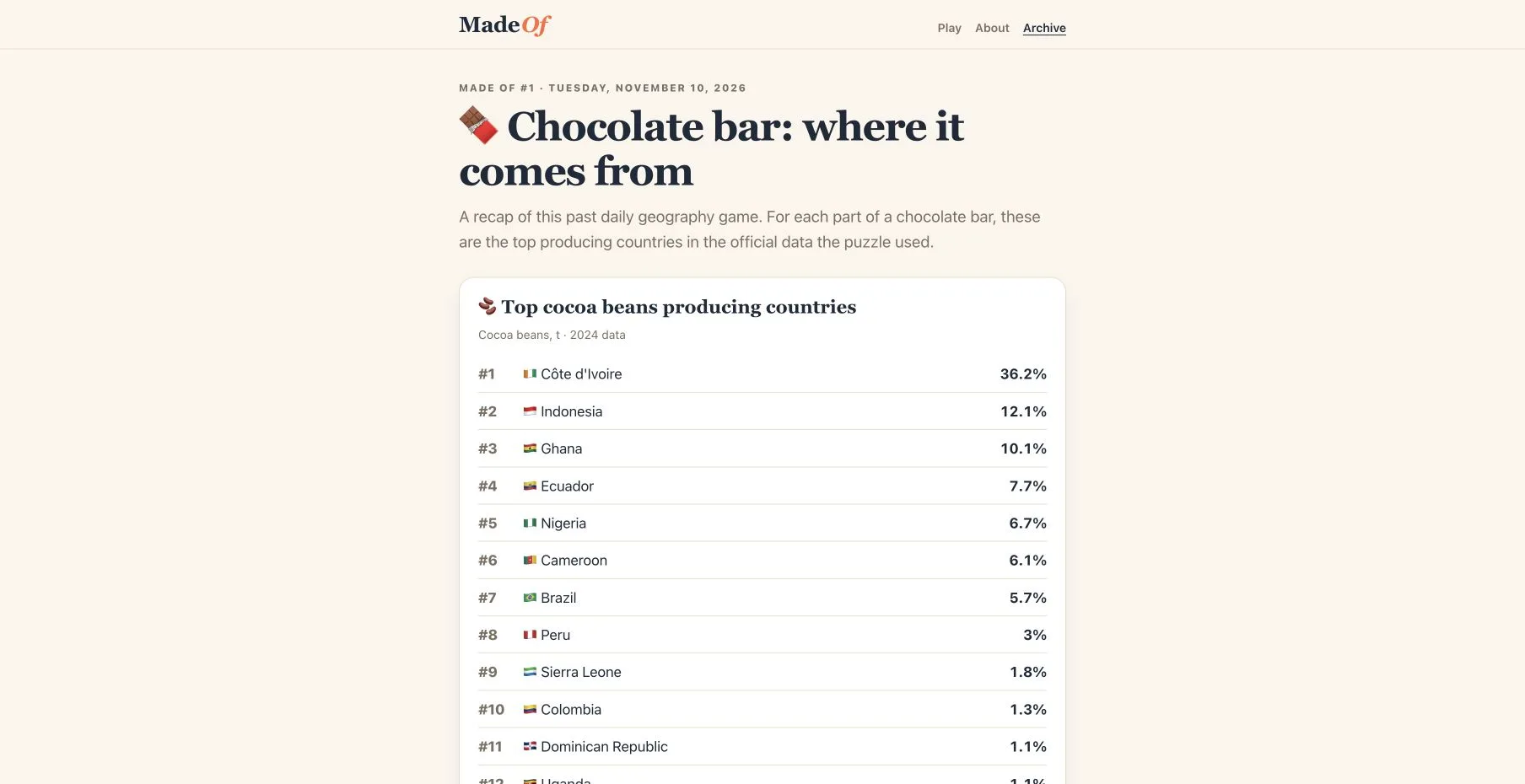
The definition matters too. A processed commodity and the crop it comes from can have separate production tables. The historical chocolate-bar recap, for example, labels sugar as raw cane or beet sugar and gives its data year. Checking these labels after a reveal makes an unexpected rank easier to understand without treating every familiar commodity name as interchangeable.
One daily object, with recaps afterward
The help panel says a new object appears at local midnight. Finishing opens the day’s summary and comparison with the average when that statistic is available. During our initial completion the average was unavailable, so that session does not establish how the comparison normally looks or how quickly it appears.
The archive serves a different purpose from practice mode. Its past-object pages list materials, producer rankings, shares and sources; the pages we opened were recaps, not playable repeats. Made Of is free and requires no sign-up according to its official About page.
FAQ about Made Of
Does Enter submit my country?
In our desktop test, Enter selected the searched country. The separate Lock in button committed it for scoring.
What happens if my country is outside the top 15?
That part scores 16 points. The interface displays a 15+ badge, and lower totals are better.
Can I replay old objects?
The archive pages we inspected are recaps showing materials, rankings and sources, rather than playable repeats.
Are the rankings based on live production figures?
No. The game uses published FAOSTAT and USGS datasets, and shows the data year on each answer. Check the exact commodity definition as well as its year.
Player reviews
0 reviewsPlayed it? Share what you think and help the next player choose.
Your experience
Games like Made Of
All geography games →
GeoQuest
GeographyLocate the requested countries on a world map in a daily quest or regional practice. Retry mistakes, zoom into small countries and compare first-try accuracy when the round ends.

Flagle.io
GeographyReveal a daily flag tile by tile and combine its colours with distance, direction and proximity clues within six guesses.

Flagle
GeographyIdentify a flag through matching pixels, overlap percentages and six country guesses in the flagle-game.com version.

Worldle
GeographyRead a country or territory outline, then combine distance, direction and proximity across six geographical guesses.
pinfact
GeographyPin locations that fit five daily facts in pinfact, balancing map accuracy with bonuses for less common answers.
Far-Fetched
GeographyJudge seven unusual headlines as real or fake in Far-Fetched, then pin where the true stories happened.