
1 / 8
Videos · 2On this page
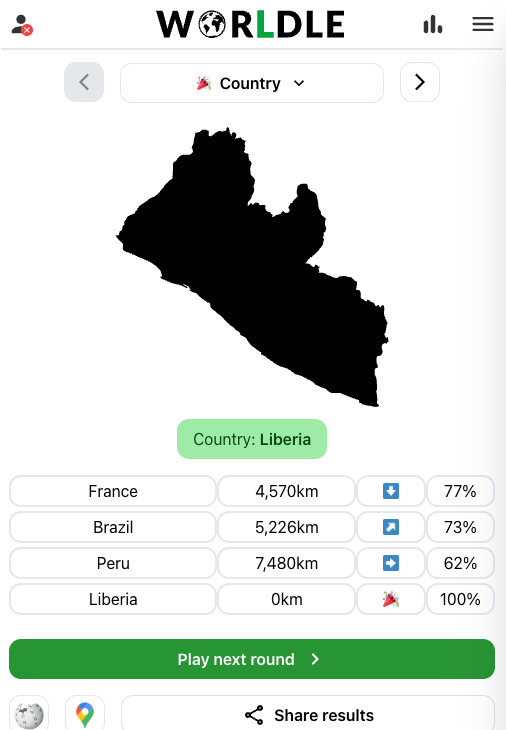
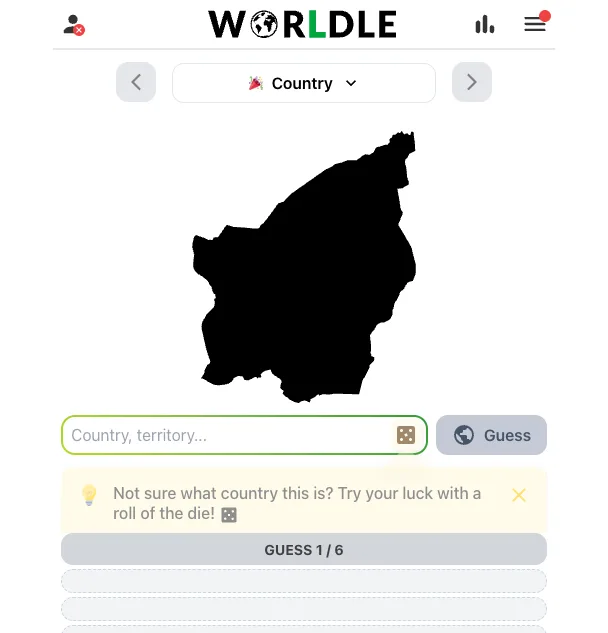
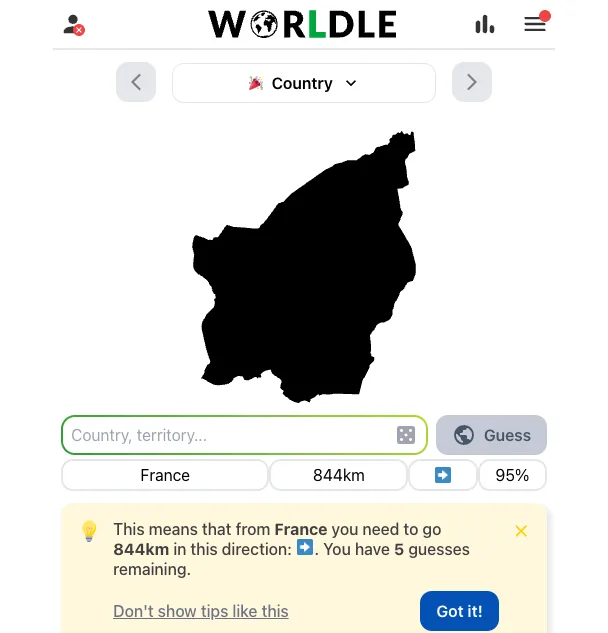
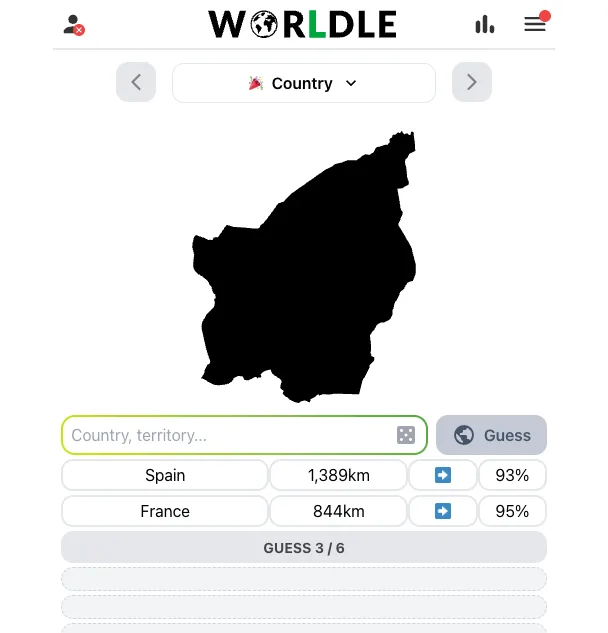
Worldle gives you a country or territory outline, then turns each wrong guess into a geographical clue. You have 6 attempts. The important part is reading the arrow from the place you guessed toward the hidden place: it tells you where to move next, rather than which direction your guess lies from the answer.
Read the three clues together
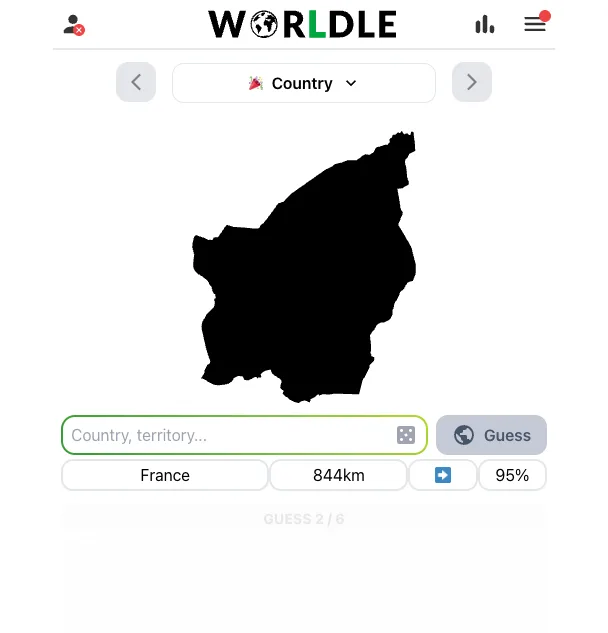
A submitted country produces a distance, a direction arrow and a proximity percentage. In our desktop test, two wrong guesses returned different distances and directions, so the feedback offered a way to revise the search even when the silhouette was unfamiliar. We stopped after those guesses without revealing the answer.
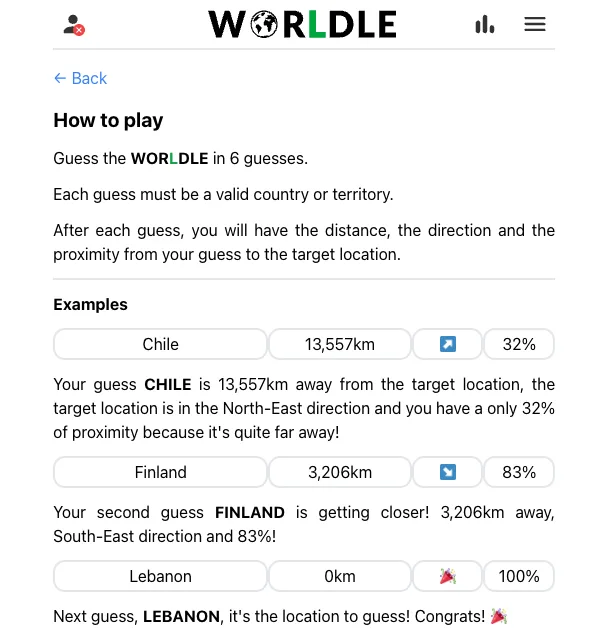
The percentage describes proximity; it is not the probability that your next guess will be correct. A high percentage can still leave a substantial distance to cover. Check the distance beside it before assuming that only a neighboring country remains. The official Worldle rules illustrate the relationship with worked examples, including the zero-distance result for a correct guess.
The outline is still useful after your first attempt. Compare its coastline, proportions and separate pieces with the region suggested by the arrow. If those disagree, reconsider the country rather than forcing the shape to fit your first idea. Countries and territories are both possible entries, so restricting the search to large sovereign states can be misleading.
Make the next guess answer a question
A practical approach is to use an unfamiliar outline to choose a broad region, then ask whether the first feedback places the target east, west, north or south of that guess. After another attempt, compare both rows. Moving closer in distance is useful evidence, but it does not erase the earlier direction clue.
The game accepted country selections through its search interface and retained the earlier rows. Use those rows to challenge your current region: a new guess should fit the earlier direction as well as reduce the distance.
Keep the outline in view
The main silhouette round was tested on desktop; bonus rounds, sharing, streak persistence and phone controls were outside the session. When the outline suggests one place and the feedback suggests another, compare both wrong guesses before committing. A familiar coastline is a useful lead, but it still has to agree with the direction and distance.
FAQ about Worldle
Which way does the Worldle arrow point?
It points from your guessed country or territory toward the hidden place. Read it as the direction to move next.
Does 95% mean a 95% chance of being correct?
No. The percentage describes proximity. Check the distance alongside it; a high value can still leave a significant journey.
Can the answer be a territory?
Yes. The official rules describe countries and territories, so the outline is not restricted to sovereign countries.
Player reviews
0 reviewsPlayed it? Share what you think and help the next player choose.
Your experience
Games like Worldle
All geography games →
GeoQuest
GeographyLocate the requested countries on a world map in a daily quest or regional practice. Retry mistakes, zoom into small countries and compare first-try accuracy when the round ends.

Flagle.io
GeographyReveal a daily flag tile by tile and combine its colours with distance, direction and proximity clues within six guesses.

Flagle
GeographyIdentify a flag through matching pixels, overlap percentages and six country guesses in the flagle-game.com version.
pinfact
GeographyPin locations that fit five daily facts in pinfact, balancing map accuracy with bonuses for less common answers.
Far-Fetched
GeographyJudge seven unusual headlines as real or fake in Far-Fetched, then pin where the true stories happened.

Flagdle
GeographyName a country or territory from its flag and use color-and-pattern similarity feedback across six guesses.