
1 / 3
On this page
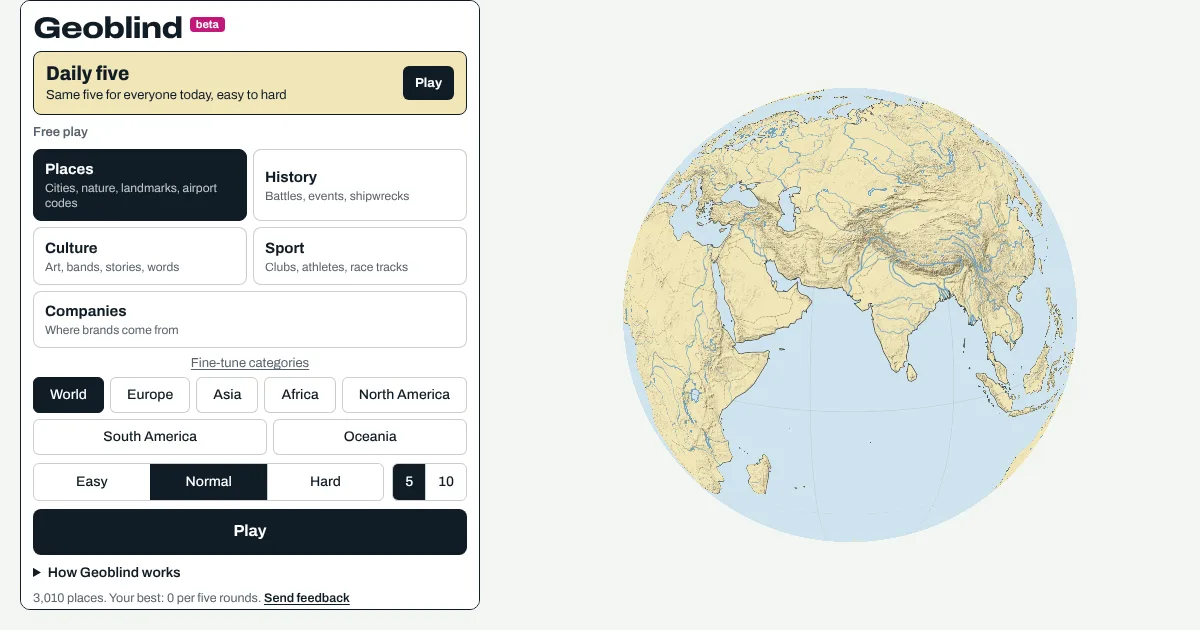
Geoblind asks you to put a place on a world map, then shows how far your pin landed from the answer. Some prompts name a location directly; others ask you to recognise a place from a picture. Knowing the answer's name and knowing where to click are two separate parts of the challenge.
The daily mode contains five rounds that move from easier clues toward harder ones. Free play gives you more control over the subjects and the map challenge, so you can practise a particular kind of geographic knowledge.
Identify the place before placing the pin
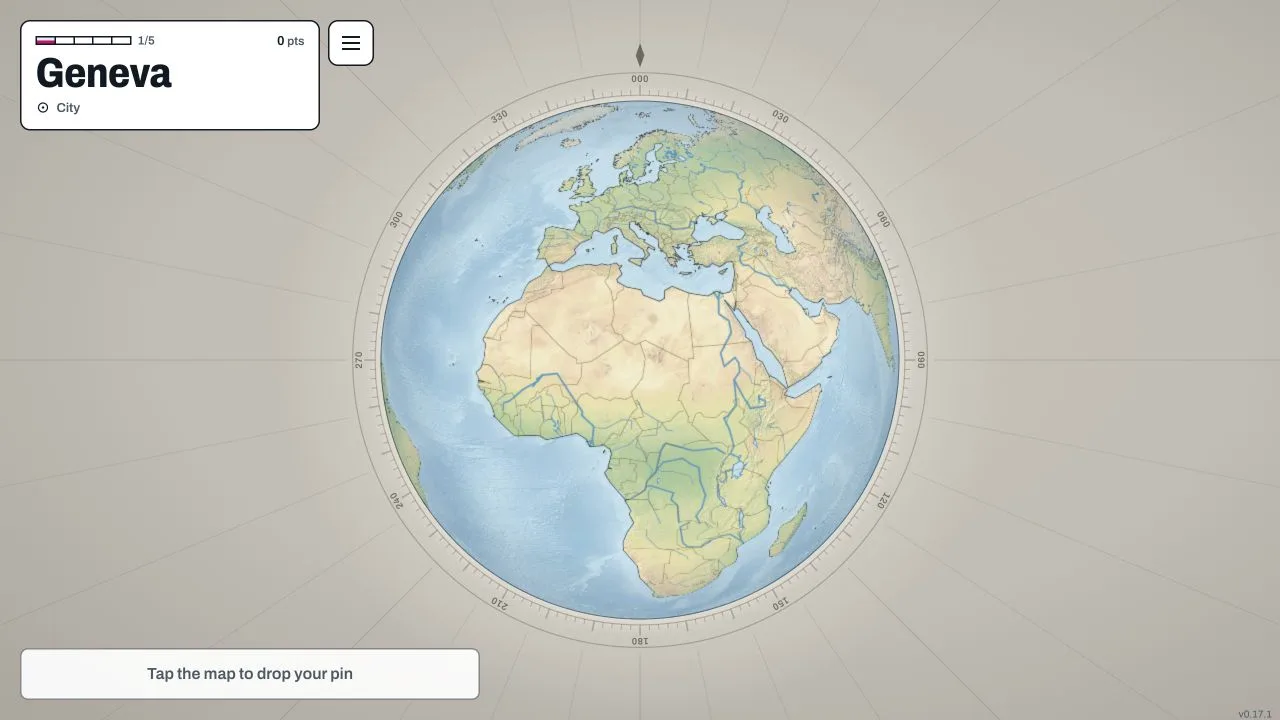
In the daily game, our opening prompt used a landmark image rather than simply naming a city. We recognised the landmark unaided, placed a deliberately distant pin and locked it. The result reported a distance of 7,680 km and zero points, then allowed us to continue to the next clue.
The official help describes both text and picture topics. Named locations include cities, mountains, lakes and landmarks, while other topics use images such as paintings or crests. Read what the prompt asks you to locate: recognising an object in a picture is only useful if you connect it to the intended place.
The map itself supplies coastlines and rivers. The help says Easy and Normal include borders, which can make an inland location easier to narrow down. Pick a difficulty that lets you learn the geography rather than relying only on a country's outline.
Lock a guess and study the result
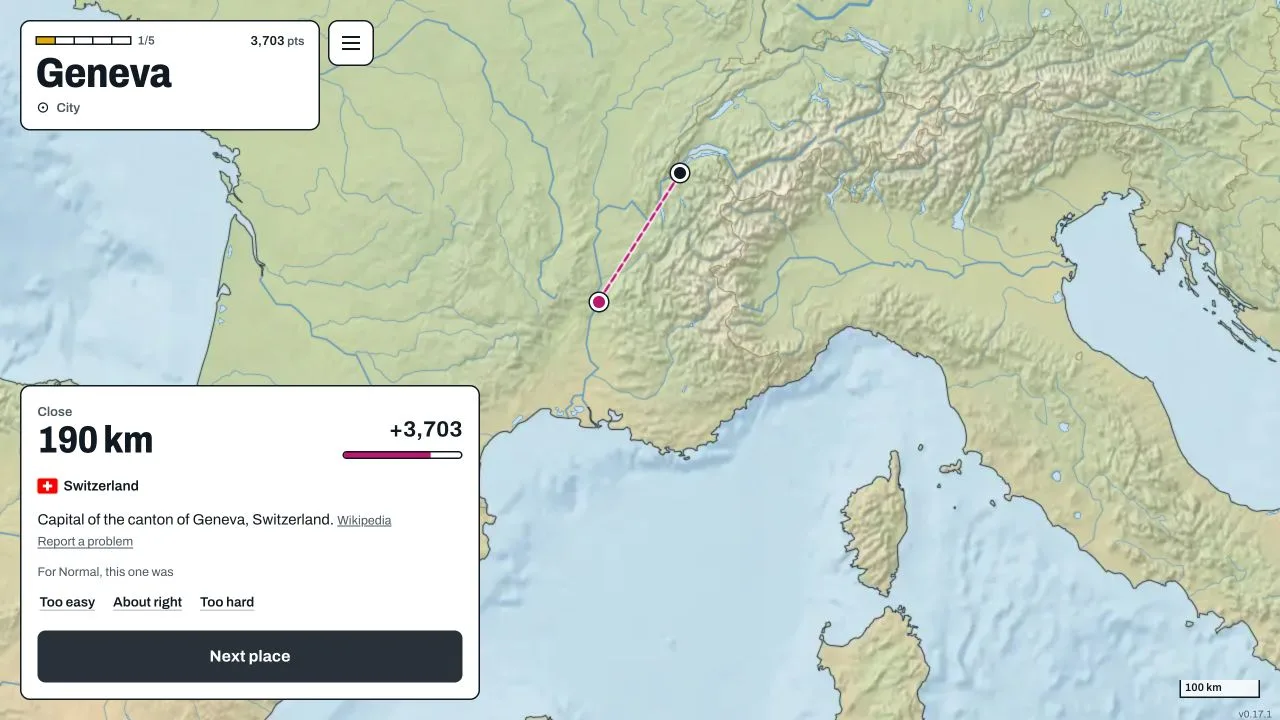
Choose a point on the map, then use Lock in to commit it. Feedback reveals your guess and the correct pin, with a line between them. The distance and score make the error measurable rather than just marking the answer wrong.
We opened a separate five-round Classic free-play game on Normal and received a named-city prompt. Our locked pin was 190 km away and earned 3,703 points. The result zoomed to the two locations and included a short factual note. We did not finish the remaining rounds of that match.
A round can award up to 5,000 points according to the instructions. Our two observed results show that a close regional guess can earn substantial credit while a faraway guess can earn none. They do not establish the exact mathematical scoring curve, so distance remains the clearest guide to how a pin could improve.
Practise by topic and region
Free play has controls for topic, difficulty, region and a five- or ten-round game. These choices matter if you want to focus on cities, learn a particular part of the world or remove some of the help provided by borders.
After each result, compare the correct location with the features you used to estimate it. Was the city farther along a lake, nearer a border or on another part of the coastline? That comparison gives the next pin a concrete reference instead of leaving you with only a score.
The official help describes Geoblind as free browser play. We opened both modes without registration. An archive and a precise daily reset timezone were not established. The gallery comes from the separate Classic game, showing its prompt and feedback without exposing a completed daily set.
FAQ about Geoblind
Do all clues name a city directly?
No. The daily check included a landmark picture. The help also lists picture-based topics alongside named geographic places.
Can I choose a region or difficulty?
Yes. Free play provides topic, region, difficulty and round-count controls. We opened a five-round Classic game on Normal.
How does the game explain a wrong location?
After locking a pin, the result shows the correct location, your distance and points, plus a short fact. Our free-play result connected both pins on the map.
Player reviews
0 reviewsPlayed it? Share what you think and help the next player choose.
Your experience
Games like Geoblind
All geography games →
GeoQuest
GeographyLocate the requested countries on a world map in a daily quest or regional practice. Retry mistakes, zoom into small countries and compare first-try accuracy when the round ends.

Flagle.io
GeographyReveal a daily flag tile by tile and combine its colours with distance, direction and proximity clues within six guesses.

Flagle
GeographyIdentify a flag through matching pixels, overlap percentages and six country guesses in the flagle-game.com version.

Worldle
GeographyRead a country or territory outline, then combine distance, direction and proximity across six geographical guesses.
pinfact
GeographyPin locations that fit five daily facts in pinfact, balancing map accuracy with bonuses for less common answers.
Far-Fetched
GeographyJudge seven unusual headlines as real or fake in Far-Fetched, then pin where the true stories happened.