

1 / 5
VideoOn this page
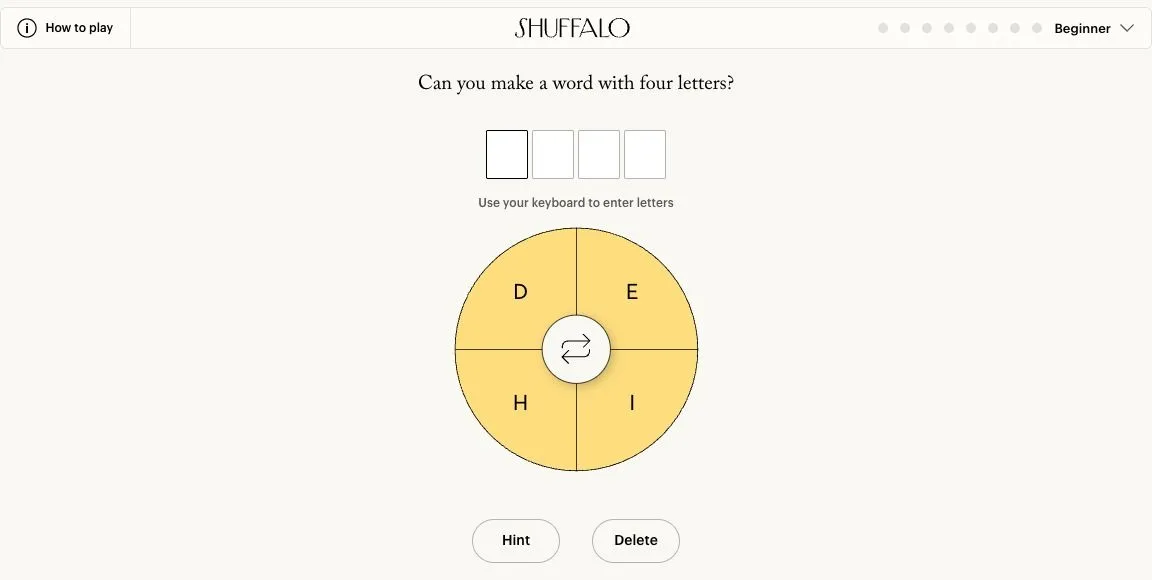
Shuffalo starts with a small anagram and keeps enlarging it. Find a word using every letter in the wheel, then rearrange that same pool with one extra letter. The challenge is letting go of the word you just found: its spelling can become an obstacle when the next answer needs a different arrangement.
A word that grows after each solve
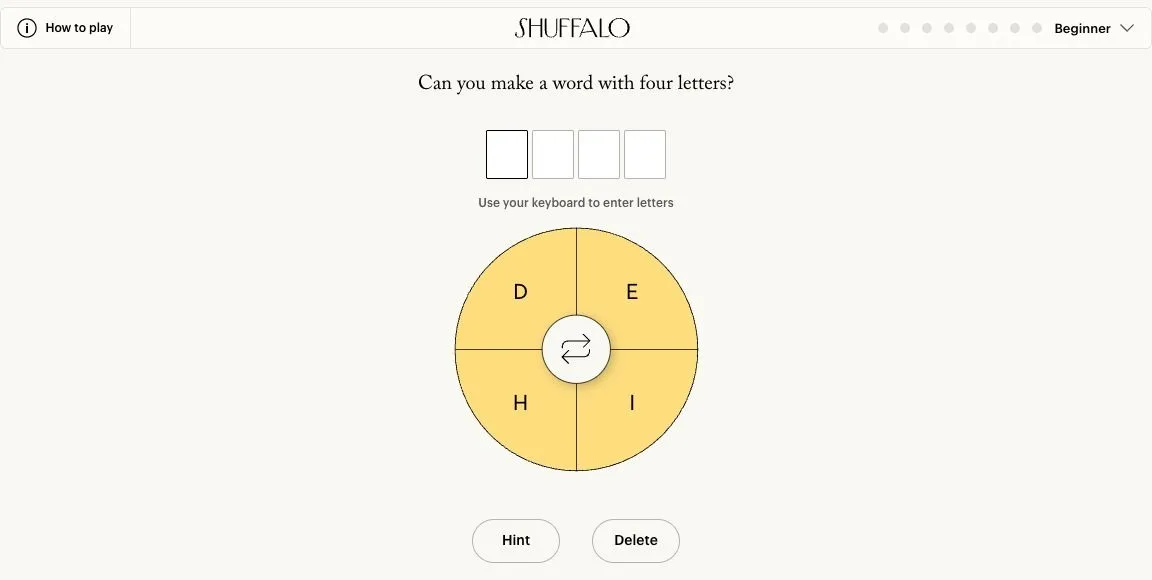
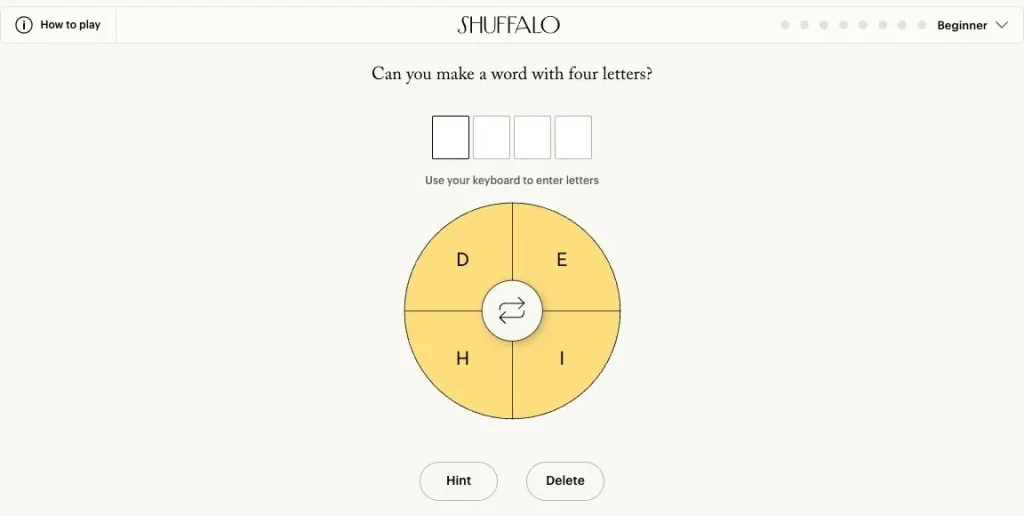
The New Yorker's daily puzzle accepts a word as soon as the answer spaces are filled with a valid arrangement. You can type on a keyboard or click letters in the wheel. Each letter must be used once. Correct answers advance the chain, adding another letter and another space rather than presenting a completely unrelated set.
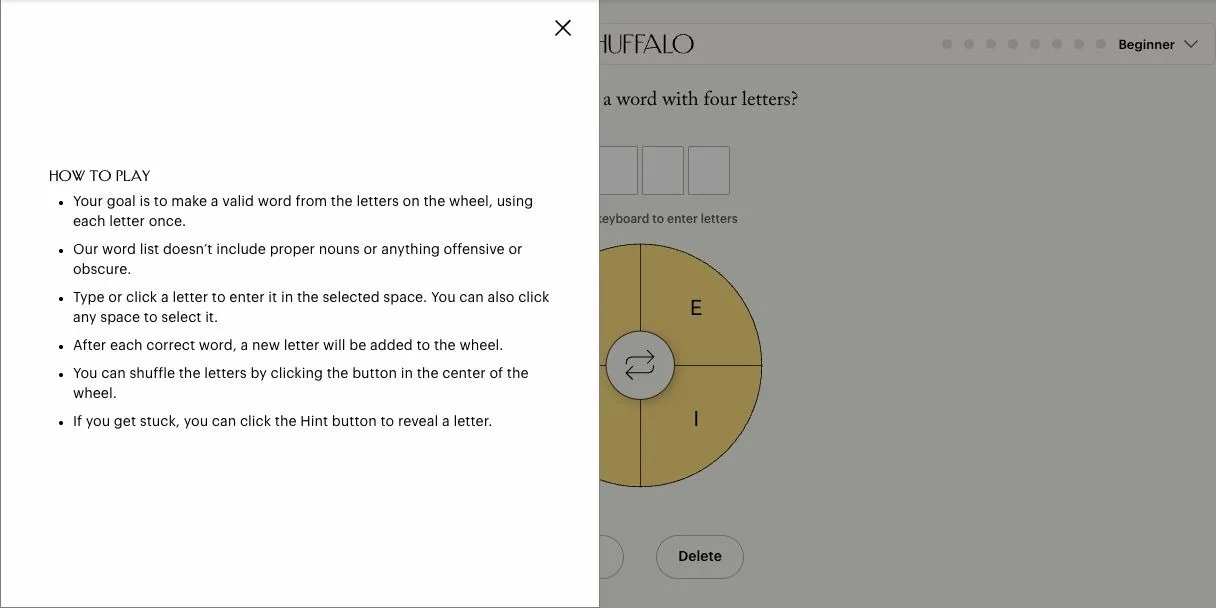
The dictionary matters as much as the letters. In our historical November 11 round, a five-letter arrangement produced “Not an accepted word”; a different arrangement of the same pool advanced immediately. The official help excludes proper nouns, offensive words and obscure words, so an unfamiliar candidate may fail even when its letters fit. Delete lets you revise the attempt without consuming a hint.
Reconsider the whole pool
Keeping the previous answer in mind is useful, but preserving its order can narrow your search too much. A better approach is to look for fresh endings, consonant pairs or familiar letter clusters across the entire wheel. The official help also describes a centre Shuffle control for rearranging the letters when their current positions become distracting.
Hints reveal a letter in the answer, giving a fixed point for the next rearrangement. On a separate historical November 10 board, one use exposed a letter and raised the hint count to one. The counter makes it possible to keep track of how much assistance the round used.
The main result is not the final challenge
We completed the November 11 chain unaided, moving from a four-letter word through the eight-letter answer. The main result awarded “Super shuffalo” and recorded zero hints. It then offered an optional bonus round: another letter expanded the pool to nine, and solving it produced a separate “Bonus solved!” result. Finishing the main chain therefore leaves a clear choice between stopping and trying one longer anagram.
The result also offers sharing and a previous-game link. We opened another dated puzzle through the official game pages, which made it possible to inspect the hint behaviour separately from the zero-hint completed run. The screenshots show these historical boards rather than today's solution.
FAQ about Shuffalo
Why is a word rejected when all its letters fit?
Shuffalo uses an accepted-word list. The official help excludes proper nouns, offensive words and obscure words. In our test, one arrangement was rejected while a different word using the same letters advanced.
What does a hint reveal?
The hint we tested exposed one letter in an answer space and increased the hint count by one. It did not fill the entire answer.
Do you have to solve the bonus round?
The historical round we completed showed a main result first, with a Play bonus round button. The bonus added a ninth letter and produced its own solved result.
Player reviews
0 reviewsPlayed it? Share what you think and help the next player choose.
Your experience
Games like Shuffalo
All word games →
Letter Tax
WordAnswer seven categories while permanently taxing letters out of later words, then weigh rescue help against leaderboard eligibility.

Decoys
WordChange one letter in every word to uncover a shared secret group. Decoys separates harmless typos from real-word slips and marks solves that use its single reveal.

sedecordle
WordSolve sixteen five-letter words with a shared stream of guesses and a 21-guess limit in the original Sedecordle mode.

Transfiguword
WordSolve three definition clues, bank their letters, then rearrange the full pool into two new answers and a mystery word.

Wordgy
WordJoin a chain of compound words and two-word phrases, with free direction changes and optional score-reducing help.

Wordsummit
WordTrace adjacent letters to find the highest-scoring word on a 5×5 board. Five attempts, tile multipliers and coloured feedback make each path a deduction.