
1 / 3
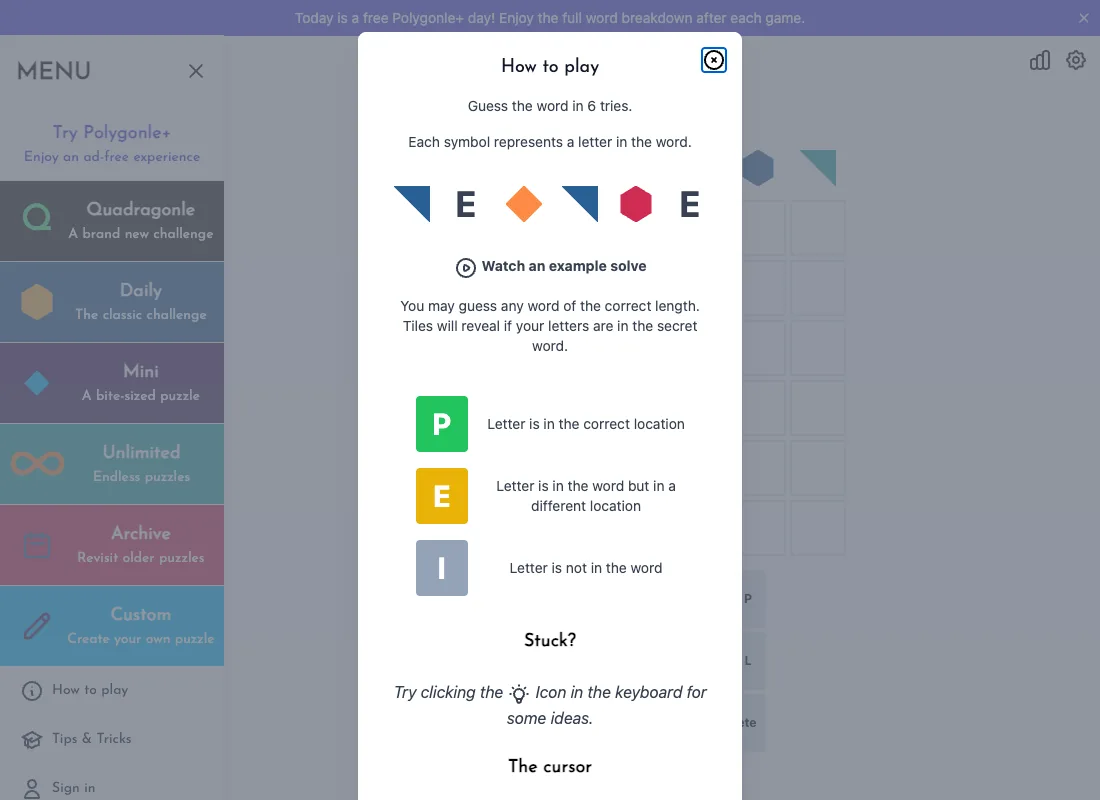
VideoPolygonle shows a repeated-letter pattern before you make a guess. Each symbol represents a letter in the hidden word, and identical symbols identify matching letters. You then have six tries to combine that structural clue with colored letter feedback.
The shapes describe the answer
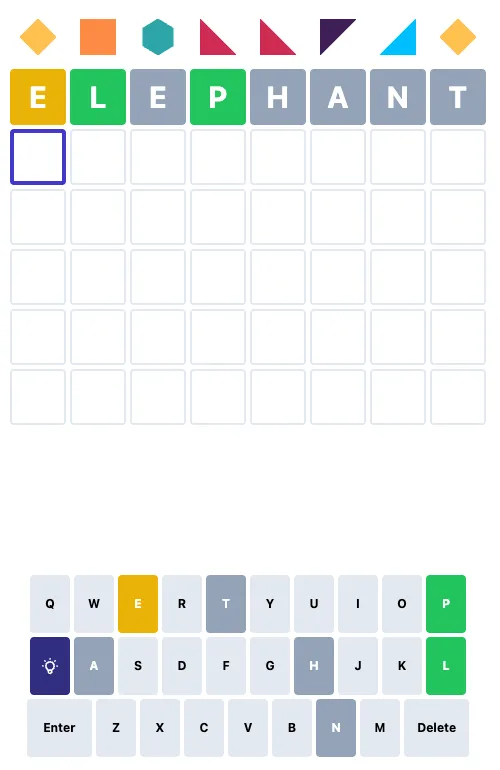
Our daily board had eight positions. The first and last symbols matched, while another pair appeared in the middle. That pattern gave information about repeated letters before we entered anything.
A guess does not have to follow the pattern. The official help allows any valid word of the required length, which means you can test useful letters even when you cannot yet construct a word that fits every symbol. Keep the distinction clear: a submitted test word and the hidden answer need not share the same repetition pattern.
An accepted guess can test the pattern indirectly
We submitted ELEPHANT unaided. L and P turned green, the first E turned yellow, and the second E was gray. The remaining letters were gray too. The word was accepted despite its repeated-letter positions differing from the displayed shapes.
The two Es are a useful detail. Reading only the yellow E would miss the information in the gray copy. Keep the number of supported occurrences in mind as well as their possible positions, then compare that information with the matching symbols.
This was an unfinished desktop round. It verified submission and feedback, but did not establish a solution method or an optimal first word.
The official game help explains the six-guess rule and shape mapping. The creator's introductory discussion also identifies the extra pattern clue as the game's central addition.
Polygonle gives you two kinds of constraints to reconcile: the word's letter pattern and the evidence from your guesses. Returning to the symbols after each accepted word can reveal a consequence that the tile colors alone do not immediately show.
FAQ about Polygonle
Must every guess match the shapes?
No. The official help allows a valid word of the required length even when it does not match the displayed shape pattern.
What do matching shapes tell me?
Identical symbols stand for the same letter in the hidden answer. Use their positions to identify repeats before guessing.
Why can one repeated letter be yellow and another gray?
Feedback accounts for how many copies belong in the answer. In our test the first E in ELEPHANT was yellow and the second was gray; do not treat that as two confirmed Es.
Player reviews
0 reviewsPlayed it? Share what you think and help the next player choose.
Your experience
Games like Polygonle
All word games →
Letter Tax
WordAnswer seven categories while permanently taxing letters out of later words, then weigh rescue help against leaderboard eligibility.

Decoys
WordChange one letter in every word to uncover a shared secret group. Decoys separates harmless typos from real-word slips and marks solves that use its single reveal.

sedecordle
WordSolve sixteen five-letter words with a shared stream of guesses and a 21-guess limit in the original Sedecordle mode.

Transfiguword
WordSolve three definition clues, bank their letters, then rearrange the full pool into two new answers and a mystery word.

Wordgy
WordJoin a chain of compound words and two-word phrases, with free direction changes and optional score-reducing help.

Wordsummit
WordTrace adjacent letters to find the highest-scoring word on a 5×5 board. Five attempts, tile multipliers and coloured feedback make each path a deduction.