
1 / 5
VideoOn this page
Parseword turns a cryptic clue into something you can take apart on screen. Select a word or phrase, choose a replacement or letter operation, and continue transforming the remaining clue until it matches the definition. The answer grows out of the visible steps rather than a separate guessing grid.
Select the words that work together
A selection can include more than one word. That matters when one word tells you what to do to its neighbour: a position indicator can select a letter, while a direction indicator can reverse a group. In our completed daily puzzle, we extracted a letter, replaced another word with a synonym, then reversed the combined letters. Each chosen operation replaced its source words on the board.
The menus help make the reasoning concrete. Selecting a word in our test produced several synonym choices, each with its letter count. We chose the short option that could fit the required answer length once combined with the earlier letter. Recognizing a synonym was only part of the solve; we also had to decide which remaining words governed that new group.
Learn mode explains the structure
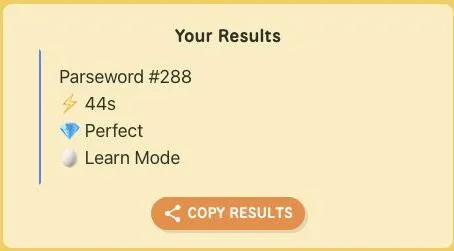
Our daily round used the default Learn mode. It identified the definition and named the transform types involved, so this was an assisted learning-mode solve. The final result still distinguished that mode from the solve quality, recording both “Perfect” and “Learn Mode.” We did not press Hint or Check during that round.
A short tutorial introduces the selection-and-replacement interaction. In the tutorial we completed, selecting a word with a shortening indicator offered a reduced form; choosing it opened a worked explanation and a Next link. The Starter Puzzles menu also separates practice by transform, including anagrams, deletion, reversal and joining.
Help stays close to the clue
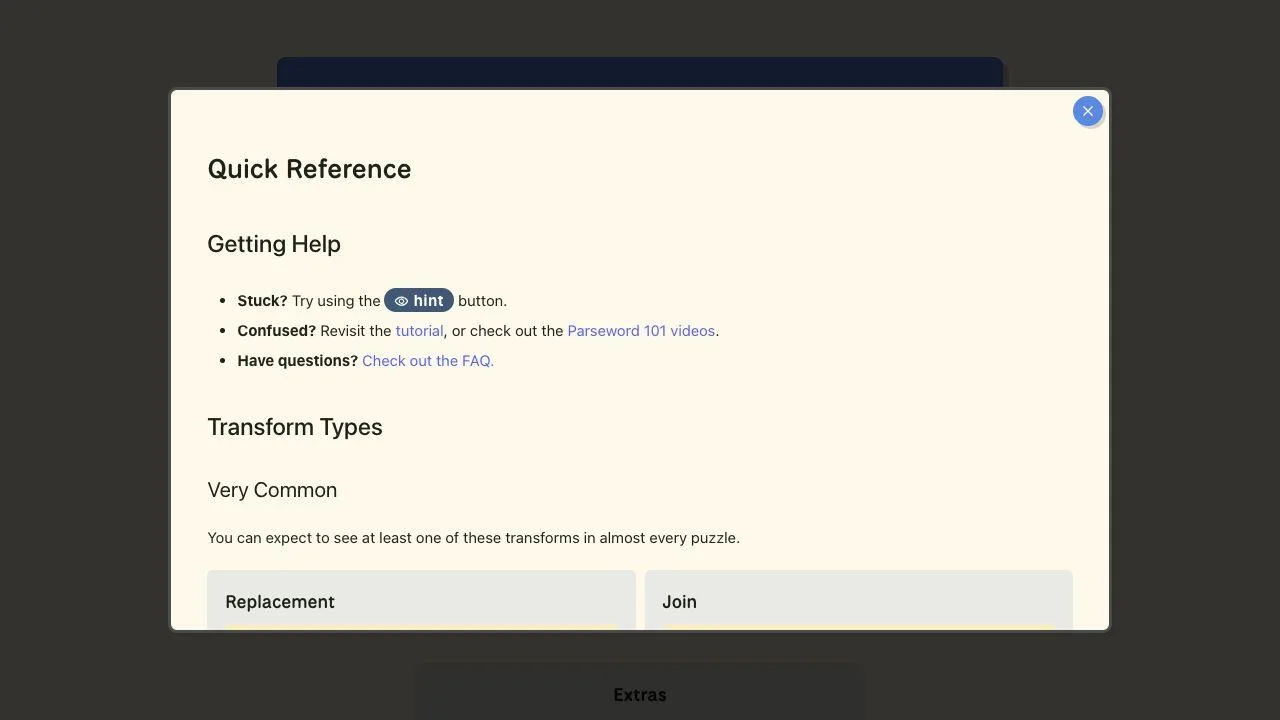
The Reference button opens a guide to transform types, with examples and links to further explanation. It also points to hints, the tutorial, Parseword 101 and the FAQ. This gives unfamiliar indicators somewhere to go without making a walkthrough the only way forward.
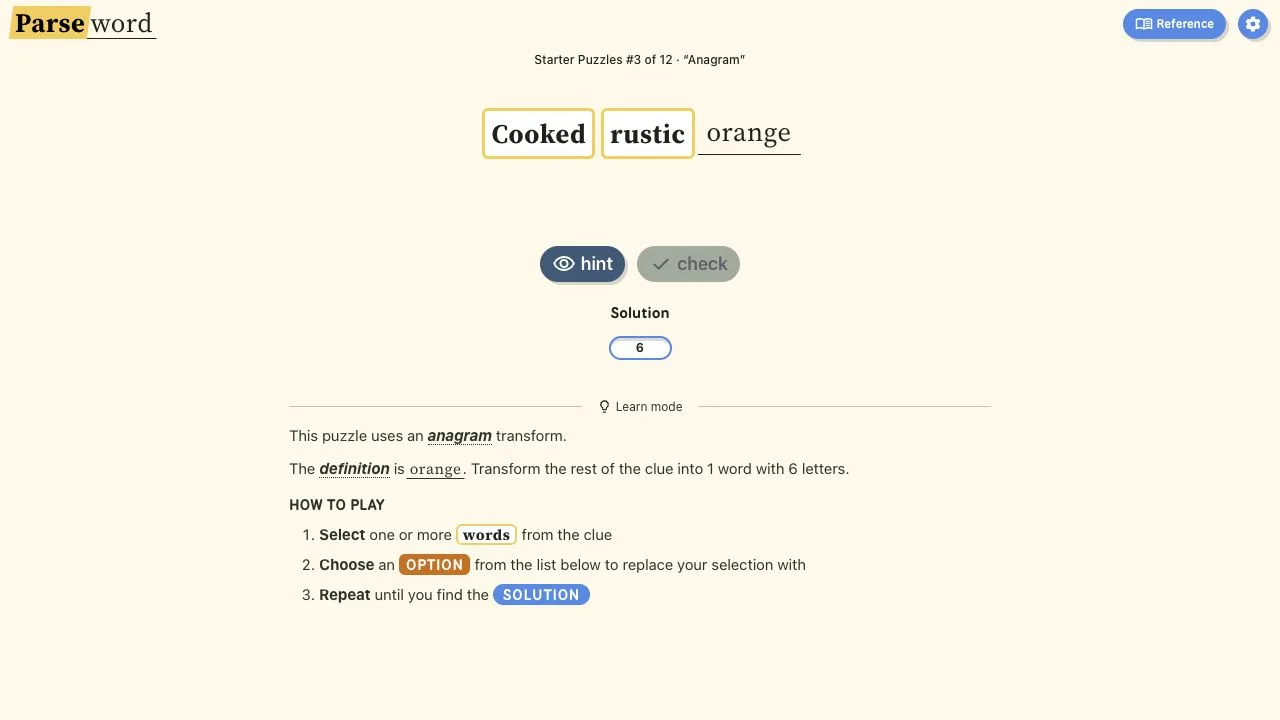
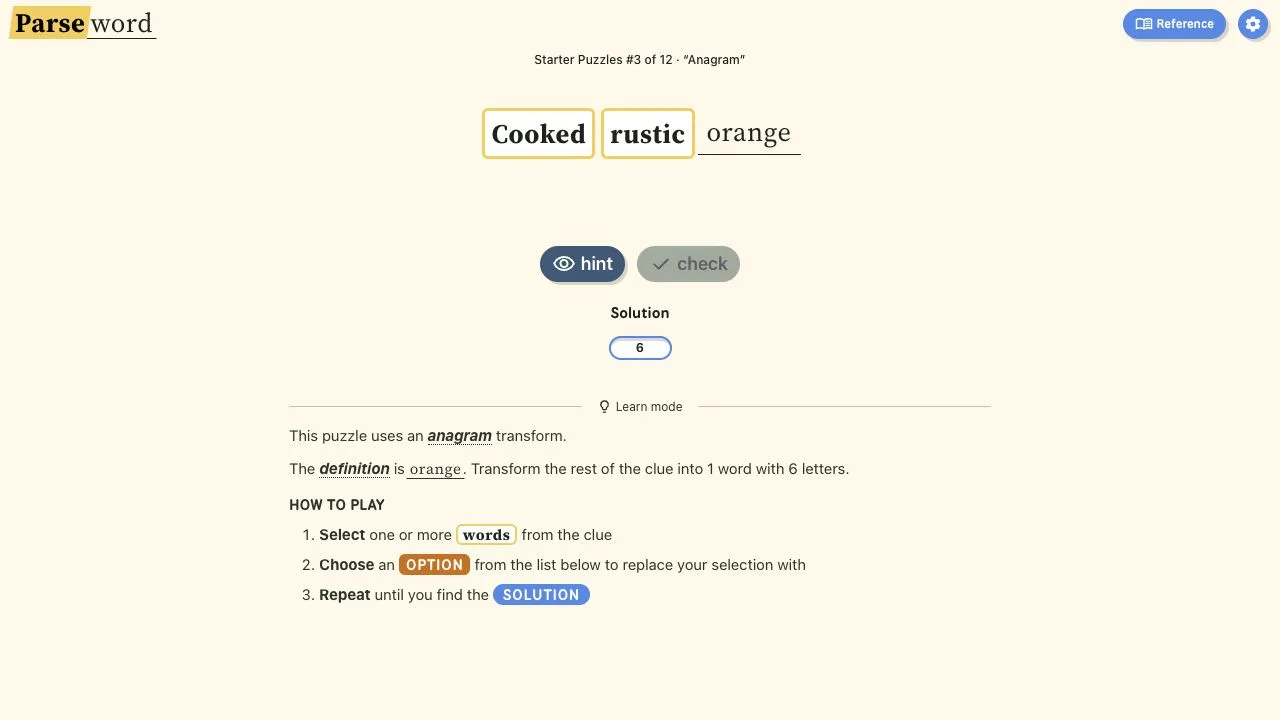
After our daily solve, the page displayed a breakdown of the transformations, a copy-results button and a link to an earlier puzzle from the same week. The public screenshots show an unsolved practice board and the result summary with the answer breakdown excluded. The home page offers sign-in for syncing statistics across devices; we completed the tested round without signing in.
FAQ about Parseword
What does Learn mode reveal?
In the daily puzzle we tested, Learn mode identified the definition and named the transform types involved. The result retained a Learn Mode label alongside Perfect, even though we did not press Hint or Check.
Can you practise a particular type of clue operation?
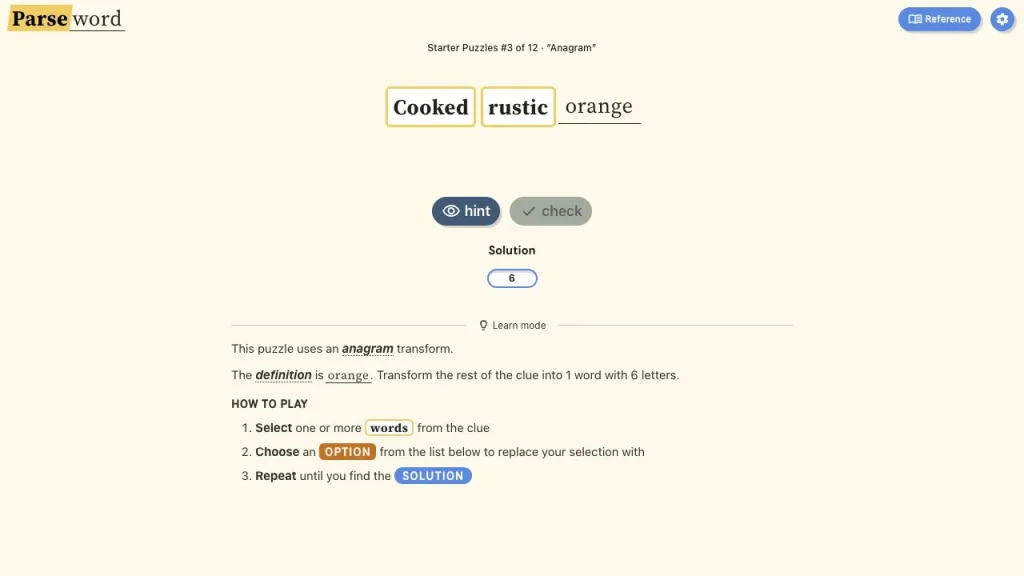
The Starter Puzzles menu groups practice by transform, including anagrams, deletion, reversal and joining. We opened an anagram practice board after completing the daily puzzle.
Do you need to sign in to solve a puzzle?
We completed the tested daily round without signing in. The home page offers sign-in to sync statistics across devices.
Player reviews
0 reviewsPlayed it? Share what you think and help the next player choose.
Your experience
Games like Parseword
All word games →
Letter Tax
WordAnswer seven categories while permanently taxing letters out of later words, then weigh rescue help against leaderboard eligibility.

Decoys
WordChange one letter in every word to uncover a shared secret group. Decoys separates harmless typos from real-word slips and marks solves that use its single reveal.

sedecordle
WordSolve sixteen five-letter words with a shared stream of guesses and a 21-guess limit in the original Sedecordle mode.

Transfiguword
WordSolve three definition clues, bank their letters, then rearrange the full pool into two new answers and a mystery word.

Wordgy
WordJoin a chain of compound words and two-word phrases, with free direction changes and optional score-reducing help.

Wordsummit
WordTrace adjacent letters to find the highest-scoring word on a 5×5 board. Five attempts, tile multipliers and coloured feedback make each path a deduction.