
1 / 3
Masonry combines a number-placement rule with a physical constraint: two values on a domino have to move together. In the tested 4 by 4 daily, each row and column needed the values 1 through 4 once. A promising value in one cell could still be wrong if its attached half prevented the rest of the board from fitting.
Read the piece before placing it
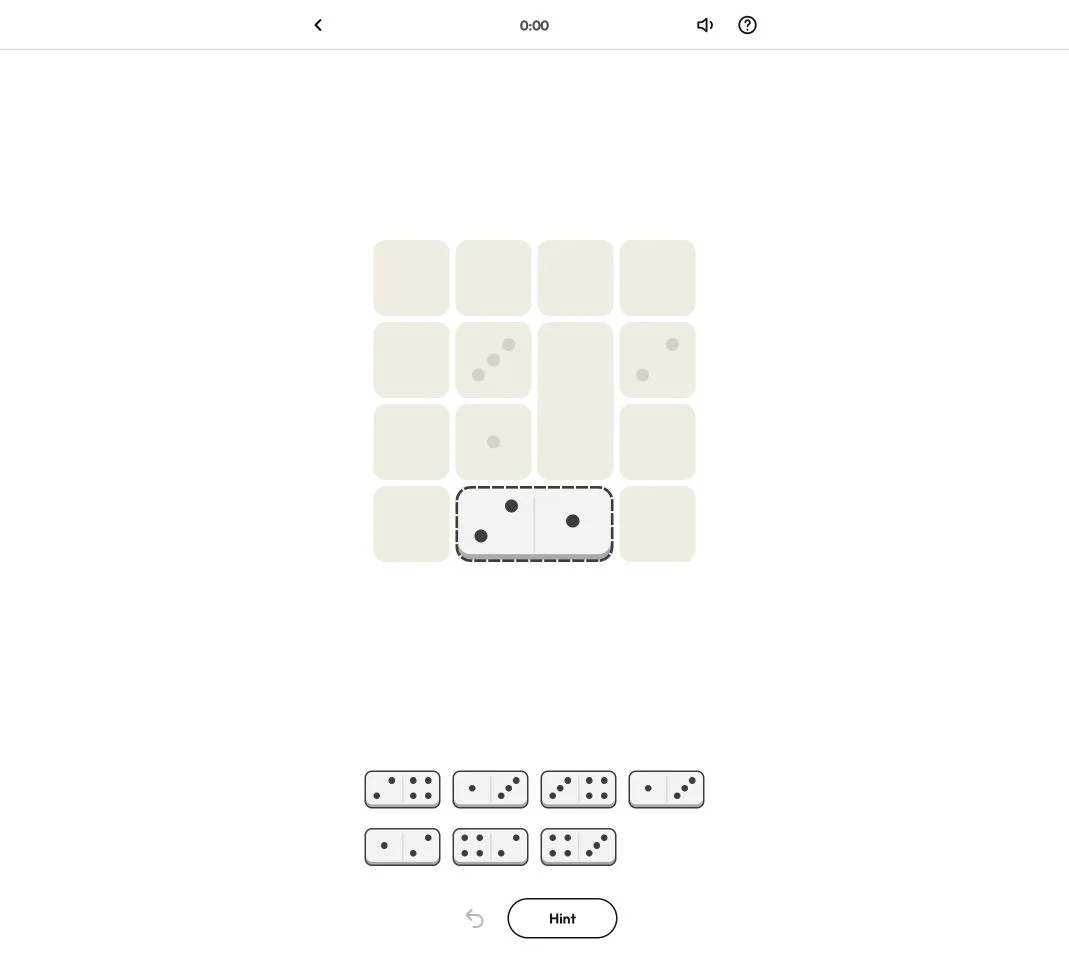
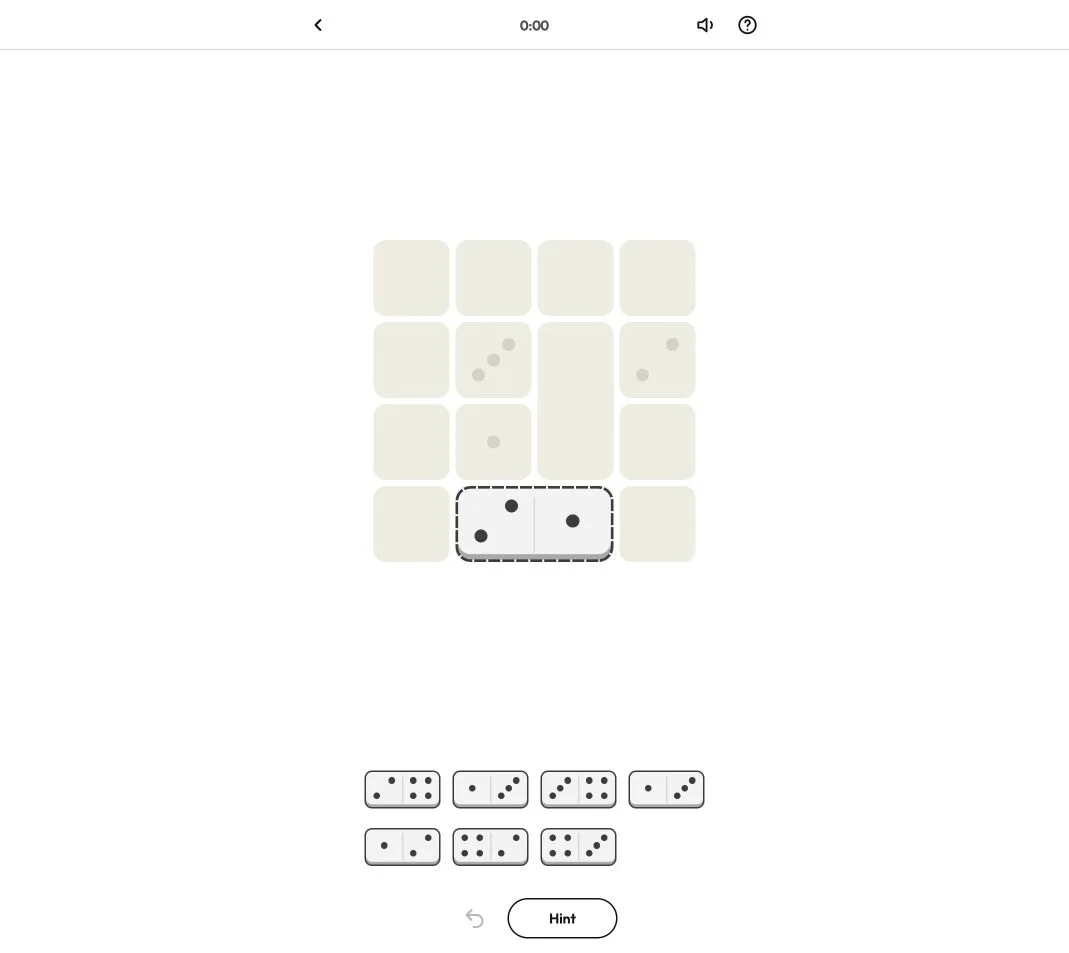
The board used pips for values. Gray pips marked values that needed to match, while joined cells belonged to one piece. Dashed markings identified fixed cells. Those distinctions matter before a move: a fixed value constrains nearby placements, and a domino cannot be treated as two independent single-cell entries.
Tap a tray domino to rotate it through four orientations, then drag it onto the board. Rotation changes both its direction and the order in which its halves meet the grid. We used ordinary drag placements throughout the test, including several vertical placements after considering the visible constraints.
The help also described notes on empty cells, holding to clear a note, Undo, and holding Undo to reset. These controls support working through alternatives, but a note is a planning aid rather than a placed domino. Check the actual row and column values before treating a note as settled.
A hint changes the scored time
We used one hint, which showed a ghost placement with values 4 and 2. After two manual placements, we used an offline constraint check of the visible board and tray to finish the remaining arrangement through the normal interface. The round was therefore assisted.
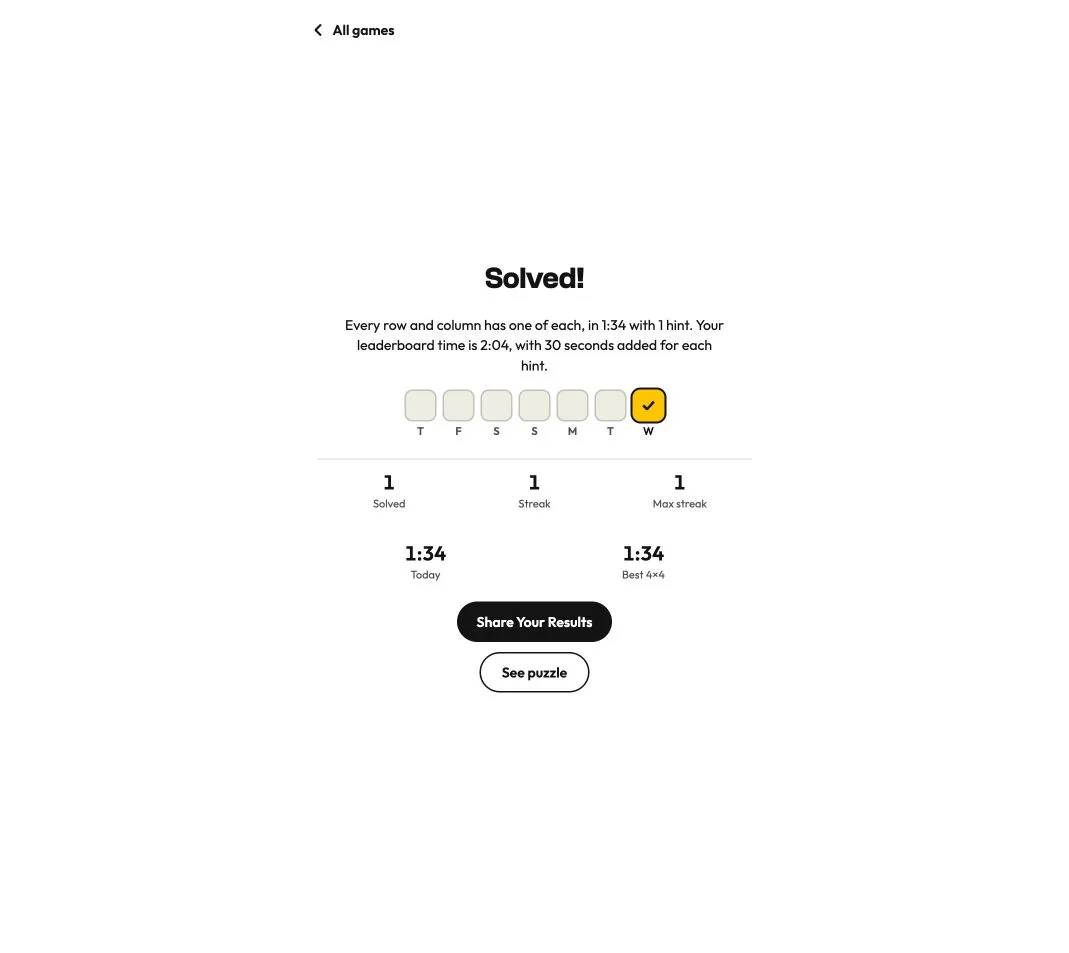
The completion screen showed 1:34, while the leaderboard time was 2:04. The 30-second difference matched the displayed penalty for one hint. When comparing a result, distinguish the solving clock from the adjusted leaderboard time; quoting the lower value alone would omit the help used.
For an initial approach, start with the most constrained fixed cells and examine both halves of each candidate domino. Then recheck the affected row and column together. This follows the board's rules, but our assisted round does not establish an optimal solving method or a normal completion time.
FAQ about Masonry
Why can a domino be wrong when one half fits?
Both joined halves must fit the board and the row/column constraints. They cannot be placed independently.
Do hints affect the result time?
Yes. In the tested round, one hint added 30 seconds to the leaderboard time, changing 1:34 to 2:04.
Player reviews
0 reviewsPlayed it? Share what you think and help the next player choose.
Your experience
Games like Masonry
All logic games →
Ponder Club
LogicA daily puzzle collection spanning words, numbers and visual games; tested here through Color Flood.

Ronin
LogicFill a 6×6 chess grid with one of each piece per region, keeping matching pieces out of attack. Use pencil notes and explore numbered past puzzles.

Nonograms
LogicFill black runs from row and column clues on 5x5 to 25x25 grids, request another standard puzzle, or choose scheduled special puzzles.

Guess a hidden word using totals for exact matches, misplaced letters and misses. Play a daily puzzle or choose a word length in Unlimited.

Boxed In
LogicFit nine supplied words into a shared letter grid, using the given letters and placement previews.

Unlabeled
LogicRestore eight missing axis labels across four charts, using numerical scales to separate the right labels from two decoys. Correct placements lock after each check.