
1 / 4
VideoOn this page
Letroso asks you to find a secret word of up to ten letters. Each submitted word returns colored tiles, but the shapes matter too: connections show letters that belong together, while rounded ends can identify the beginning or ending of the answer.
That makes a familiar-looking green tile less straightforward than it first appears. You are reading the order and structure of a word whose length is still uncertain. A useful guess can reveal a fragment without telling you the entire spelling around it.
Read order, connections and ends separately
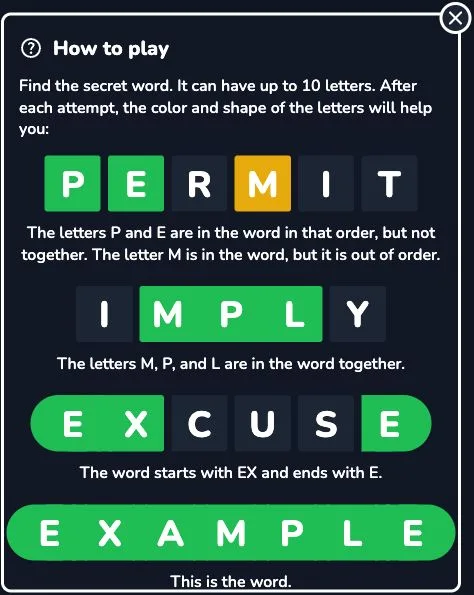
The official Help teaches the system with the answer EXAMPLE. In its PERMIT example, P and E are green because they occur in that order, but they are separated in the answer. M is yellow: it belongs to the word, but not in the order used by that guess. This is why treating every green as a fixed numbered slot can lead you astray.
The IMPLY example adds another piece of information. M, P and L join into one green group, showing that those letters sit together in the secret word. Keep that confirmed group intact when building a later candidate. A gap between green tiles and a bridge joining them are different clues.
Rounded outer ends provide boundaries. In the Help's EXCUSE example, the shape establishes that the word begins with EX and ends with E. Those are stronger constraints than merely knowing the letters appear somewhere. Once a boundary is confirmed, do not keep adding speculative letters beyond that end.
What our opening guess showed
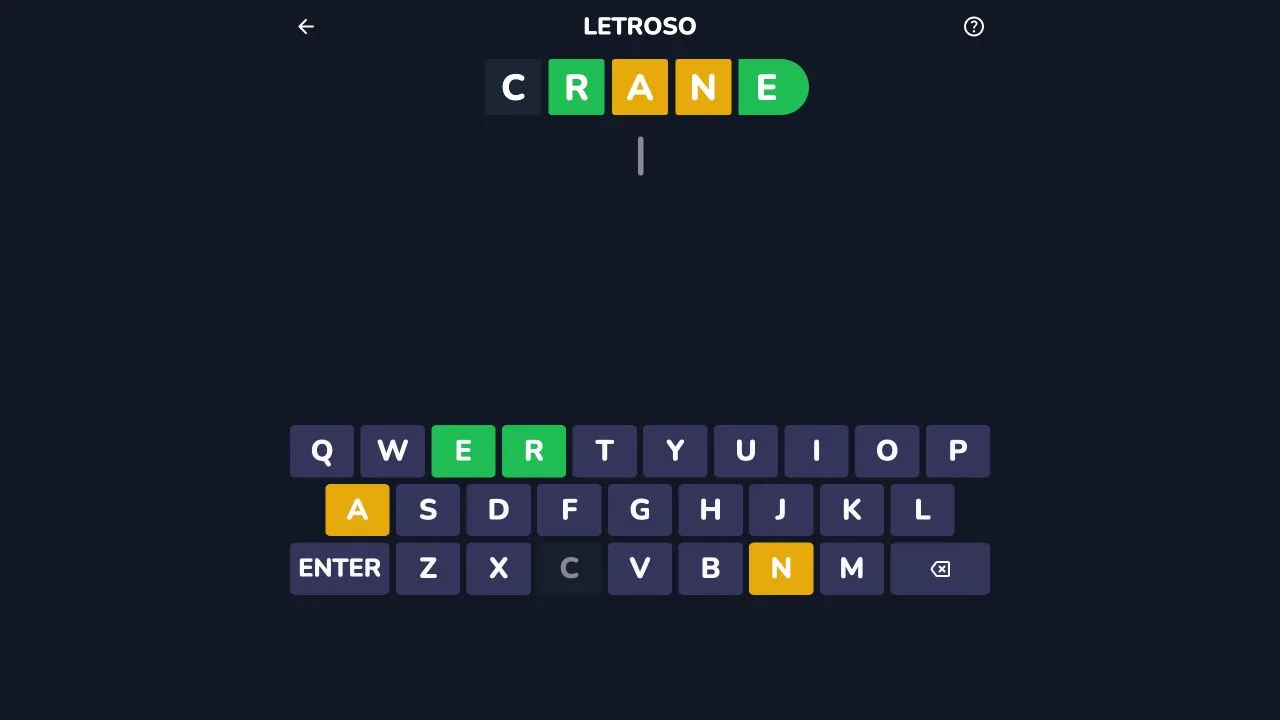
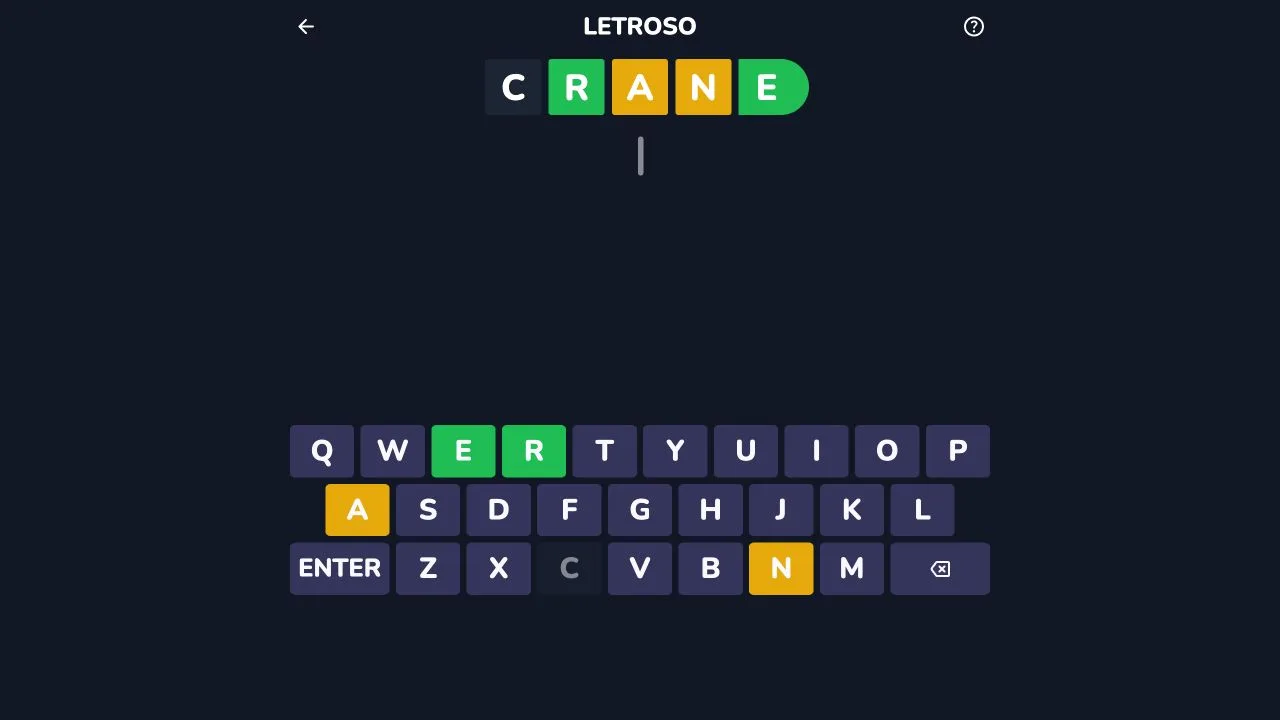
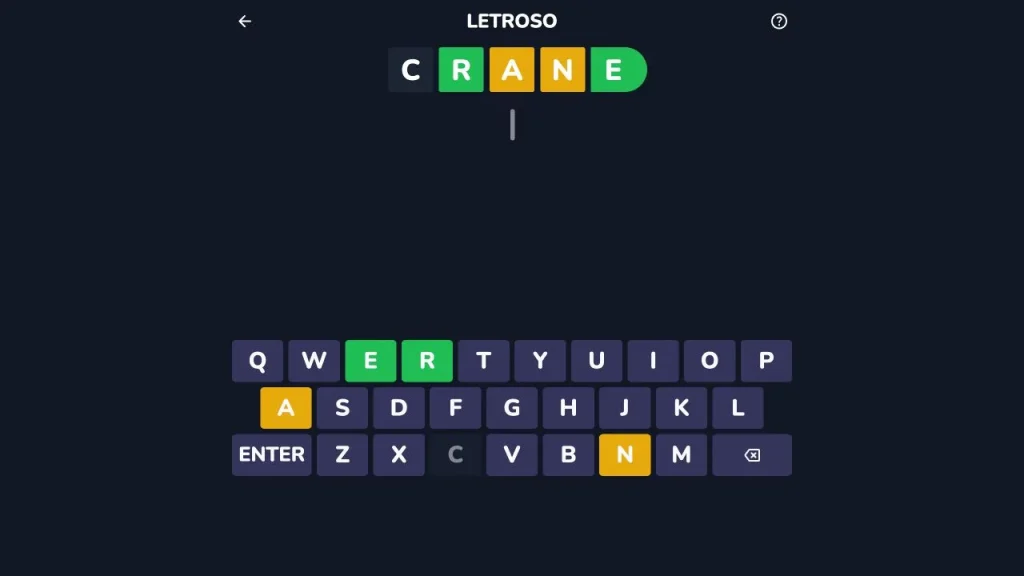
We submitted CRANE unaided on the English daily board before reading the Help or watching demonstrations. The board returned gray, yellow and green feedback, including a rounded right end on a green tile. The on-screen keyboard also retained the color information.
That completed a real guess-and-feedback loop, but we did not solve the daily word. The selected image shows that intermediate state, not a claimed victory or the current answer. We then opened the official Help to distinguish order, adjacency and boundaries accurately.
The contrast between a plain green tile and a rounded end was the most useful detail from this test. Both can look encouraging, but the rounded end tells you something additional about the word's extent. Read that shape before deciding where the next candidate needs more letters.
Build the next guess from the structure
Start by separating what you know from what remains flexible. Gray letters can be dropped from your working candidates. Yellow letters remain useful, but their arrangement needs reconsideration. Green letters preserve an order; joined green groups provide a sequence you can carry forward.
Then ask what the next word would actually test. It might test a missing gap, a possible prefix, or a different arrangement of yellow letters. A longer guess is not automatically better: it helps only when the feedback will distinguish between possibilities you are considering.
The English landing page offers the daily puzzle, Previous Games and Unlimited links. We inspected those navigation choices but did not test their full history range or unlimited-mode behavior. The review focuses on the English daily board and its official clue system. Letroso rewards careful reading of small visual differences, especially when several plausible words contain the same letters.
FAQ about Letroso
Can green letters have other letters between them?
Yes. The official PERMIT example shows P and E in the correct order with a gap between them. A joined green group, by contrast, marks adjacent letters.
What do rounded ends mean?
A rounded left end marks the beginning of the word, and a rounded right end marks its ending. The official EXCUSE example confirms EX at the start and E at the end.
Player reviews
0 reviewsPlayed it? Share what you think and help the next player choose.
Your experience
Games like Letroso
All word games →
Letter Tax
WordAnswer seven categories while permanently taxing letters out of later words, then weigh rescue help against leaderboard eligibility.

Decoys
WordChange one letter in every word to uncover a shared secret group. Decoys separates harmless typos from real-word slips and marks solves that use its single reveal.

sedecordle
WordSolve sixteen five-letter words with a shared stream of guesses and a 21-guess limit in the original Sedecordle mode.

Transfiguword
WordSolve three definition clues, bank their letters, then rearrange the full pool into two new answers and a mystery word.

Wordgy
WordJoin a chain of compound words and two-word phrases, with free direction changes and optional score-reducing help.

Wordsummit
WordTrace adjacent letters to find the highest-scoring word on a 5×5 board. Five attempts, tile multipliers and coloured feedback make each path a deduction.