
1 / 2
On this page
Dinner Party makes you arrange a meal around the guests' preferences. Some want a companion beside them; others lose mood near a noisy neighbor or the kitchen. Wine and candles occupy the table rather than a chair, and affect the people within reach. Your job is to place the whole cast and make those rules work together.
A good seat depends on who sits nearby
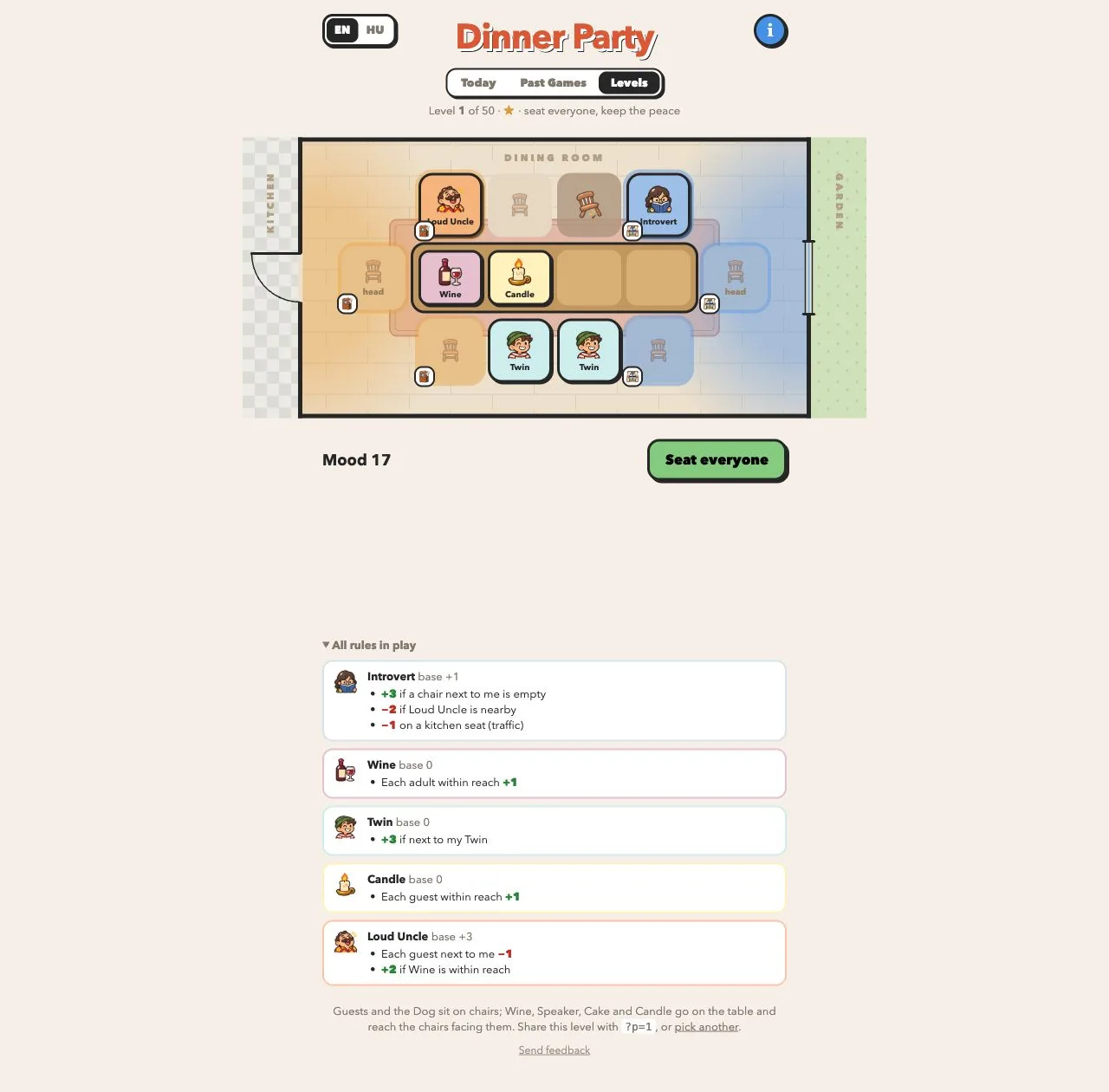
Read the cards before filling the table. The All rules in play panel collects each character's base mood and the bonuses or penalties that change it. A guest's best position may depend on an empty chair, a particular neighbor, a window or an item on the table. The tutorial distinguishes next-to, across and within-reach relationships, so proximity is more specific than simply putting two cards on the same side.
You can drag cards into position or tap a card and then a seat. We used the tap method throughout our test. Guests belong on chairs; props belong on the tabletop. Broken chairs cannot be used, while the help also explains that some puzzles include locked seats already taken. Placed items can be swapped by dragging one onto another, or taken back by dragging them away.
The mood total changes while you arrange the cards. You can use that feedback to check whether a placement produces the bonus you expected. The submission button stays unavailable until everyone and every prop has a place, so the goal is to arrange the entire set rather than leave a troublesome guest in the tray.
Our first dinner finished below par
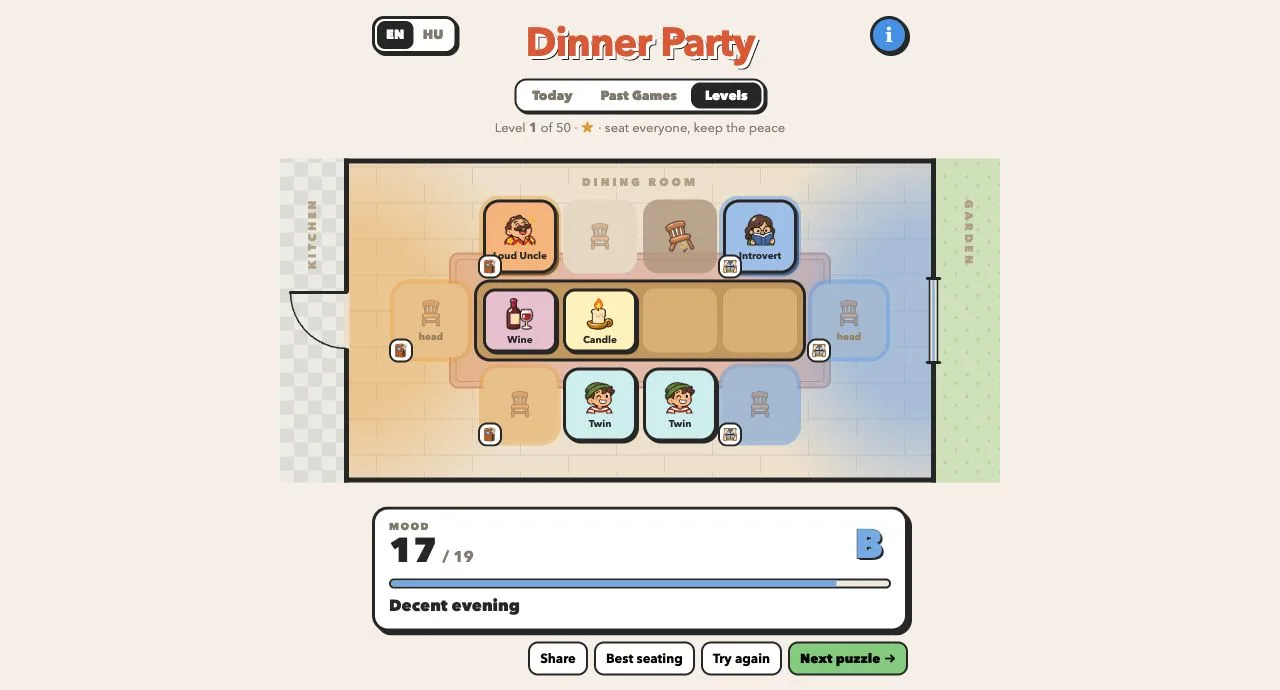
We completed Level 1 unaided using the displayed rules, without opening the Best seating solution. Its cast included an Introvert, two Twins, a Loud Uncle, Wine and a Candle. Seating the Twins beside each other increased the running mood, and putting Wine within reach of the Loud Uncle produced a further gain. Those interactions make the puzzle a small optimization problem rather than a seating chart with one simple matching rule.
Our arrangement reached 17 mood before submission. The result was 17 out of 19, a B grade labeled Decent evening. It offered Share, Best seating, Try again and Next puzzle controls. A completed meal can therefore leave room for improvement. The tutorial defines par as the best possible seating and says matching it earns S rank, Legendary night. We did not reach that optimum in the documented attempt.
For a first pass, look for a strong relationship between two cards, then check what their seats do to everyone else. An isolated guest can benefit from a gap while another loses points without a neighbor. The running total makes those competing effects visible; it does not remove the need to read each rule.
Daily tables and 50 fixed levels
The site separates Today, Past Games and Levels. The Levels screen lists 50 set puzzles, the same for everyone, ordered from easiest first and grouped into Easy, Medium and Hard. It says your best grade on each is kept there and provides individual level links for comparing moods with a friend.
Our completed test covered the first fixed level. The current daily puzzle showed a different cast and Hard difficulty, so the Level 1 result should not be read as a test of that daily table. The mode labels let you choose between returning to a dated dinner and working through the fixed progression.
FAQ about Dinner Party
Can you finish Dinner Party without getting the best score?
Yes. Our completed Level 1 returned 17/19 and a B grade. The tutorial says matching the best possible seating, or par, earns S rank.
Do props take guest seats?
No. Guests and the Dog sit on chairs. Wine, Speaker, Cake and Candle go on the table and reach the chairs facing them.
Are the 50 levels different for each player?
No. The Levels page says its 50 fixed puzzles are the same for everyone, with individual level links and best grades.
Player reviews
0 reviewsPlayed it? Share what you think and help the next player choose.
Your experience
Games like Dinner Party
All logic games →
Ponder Club
LogicA daily puzzle collection spanning words, numbers and visual games; tested here through Color Flood.

Ronin
LogicFill a 6×6 chess grid with one of each piece per region, keeping matching pieces out of attack. Use pencil notes and explore numbered past puzzles.

Nonograms
LogicFill black runs from row and column clues on 5x5 to 25x25 grids, request another standard puzzle, or choose scheduled special puzzles.

Guess a hidden word using totals for exact matches, misplaced letters and misses. Play a daily puzzle or choose a word length in Unlimited.

Boxed In
LogicFit nine supplied words into a shared letter grid, using the given letters and placement previews.

Unlabeled
LogicRestore eight missing axis labels across four charts, using numerical scales to separate the right labels from two decoys. Correct placements lock after each check.