
1 / 3
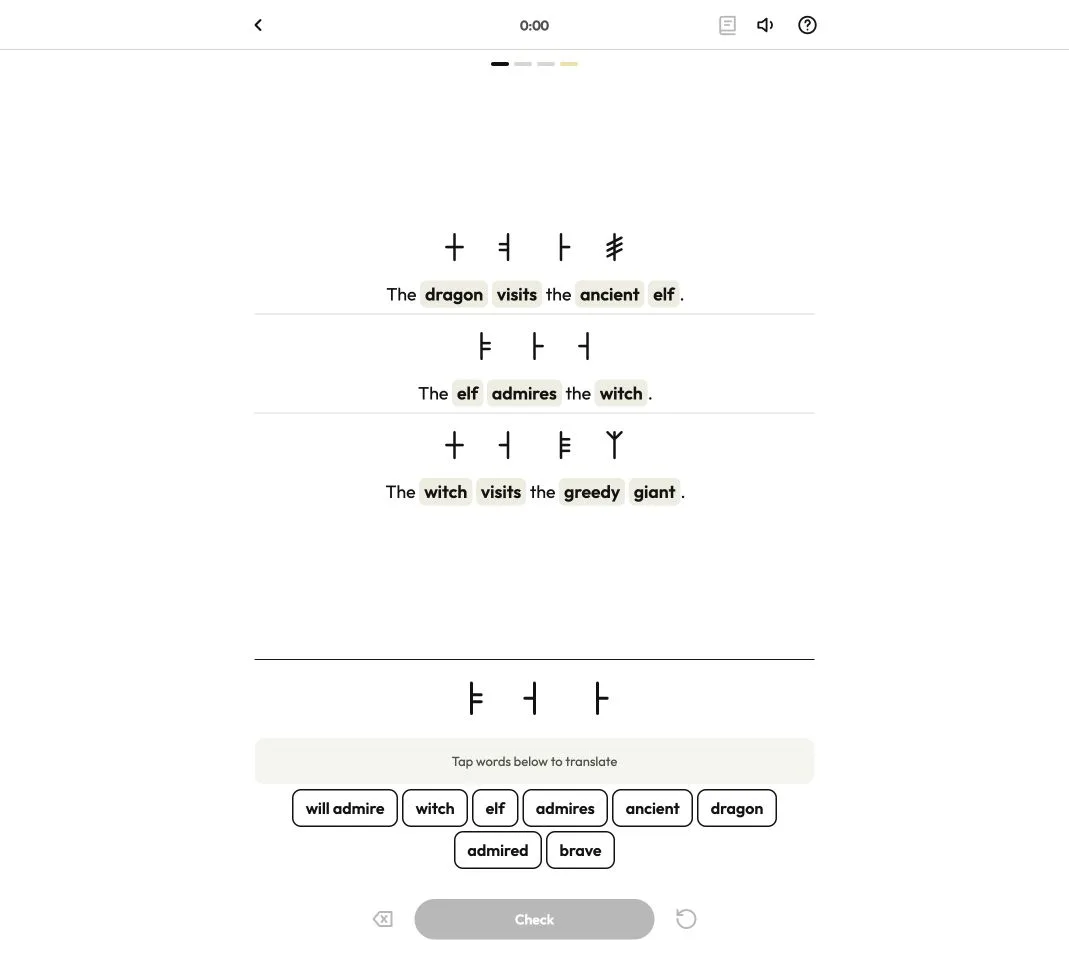
Dialect asks you to translate an invented language before testing whether you can read it without the examples. The task involves sentence structure as well as vocabulary: knowing the symbols for a noun and an adjective does not guarantee that you have put them in the right order.
Build a working translation
The tested daily progressed through three translation stages. An early example established a relationship between characters; later sentences added more vocabulary and grammatical distinctions. Symbols could be annotated, and those notes carried forward as the puzzle developed.
The clue book let us revisit earlier material while working on the translation stages. That made it possible to compare a new sentence with a familiar one rather than trying to memorize every example immediately. An annotation is most useful when it records a specific meaning or role, such as a tense marker, rather than a loose guess about the whole sentence.
Partial feedback helped isolate errors. In one stage, our noun and adjective order was wrong and the game reported 4 of 6 correct. Correcting that order resolved the stage. A later selection mistake left only 5 of 10 correct: tapping a selected item again had removed it. When feedback worsens after a small edit, check whether a word was deselected before replacing an entire translation.
The quiz removes the examples
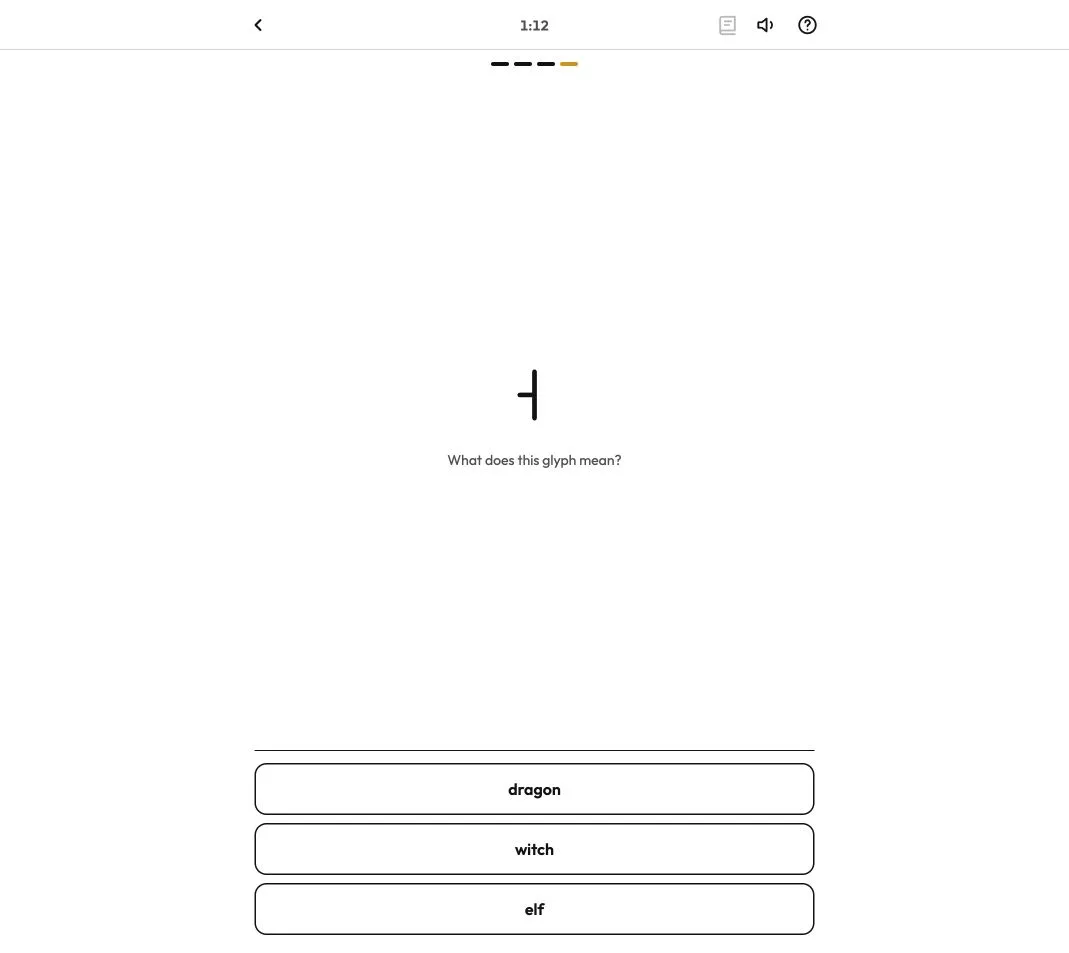
After the translation stages, the game presented three multiple-choice questions with the clue material hidden. The final quiz therefore asked us to use the vocabulary and grammar we had already worked out.
We completed all three quiz questions correctly and received “Fluent,” with a displayed time of 1:32. The solve was unaided, but this is one recorded daily rather than a typical completion-time claim. The session also showed that tense could be expressed as a separate word and that word order needed to be inferred rather than copied from English.
A practical approach is to keep vocabulary notes and grammar observations separate. Reuse confirmed meanings across examples, then test whether the remaining mismatch concerns order or a grammatical marker. That follows the kinds of errors observed during this round.
FAQ about Dialect
Can you consult earlier examples throughout the puzzle?
The clue book was available during the translation stages. The final quiz hid those clues.
Does knowing each symbol guarantee a correct sentence?
No. In the tested daily, word order and a separate tense word also mattered.
Player reviews
0 reviewsPlayed it? Share what you think and help the next player choose.
Your experience
Games like Dialect
All logic games →
Ponder Club
LogicA daily puzzle collection spanning words, numbers and visual games; tested here through Color Flood.

Ronin
LogicFill a 6×6 chess grid with one of each piece per region, keeping matching pieces out of attack. Use pencil notes and explore numbered past puzzles.

Nonograms
LogicFill black runs from row and column clues on 5x5 to 25x25 grids, request another standard puzzle, or choose scheduled special puzzles.

Guess a hidden word using totals for exact matches, misplaced letters and misses. Play a daily puzzle or choose a word length in Unlimited.

Boxed In
LogicFit nine supplied words into a shared letter grid, using the given letters and placement previews.

Unlabeled
LogicRestore eight missing axis labels across four charts, using numerical scales to separate the right labels from two decoys. Correct placements lock after each check.