
1 / 4
VideoOn this page
Daily Gogen gives you the words and asks you to build the grid that contains them. Drag the available letters into empty cells, using the fixed letters as anchors. Each word must follow neighboring cells on the connected board. A single arrangement has to satisfy the whole list, so a placement that helps one word can still obstruct another.
There are three daily sizes: 3×3, 4×4 and 5×5. The small grid makes the rules easy to grasp; the larger boards give you more letters and shared constraints to keep in mind. The English version uses English target words, and a language setting is available in the menu.
How the letter grid works
Start with the letters already fixed on the board. Those cells narrow down where the surrounding letters can go. Read a short target word and trace a possible route from its fixed letters, then look for another word that needs some of the same cells. You are arranging a shared letter layout, rather than filling a separate row for each answer.
The routes can bend. Treat the board as a network of connected neighbors instead of looking only for straight horizontal or vertical words. A word that appears impossible along a row may work around a corner. This is the detail that made the small board click during our test.
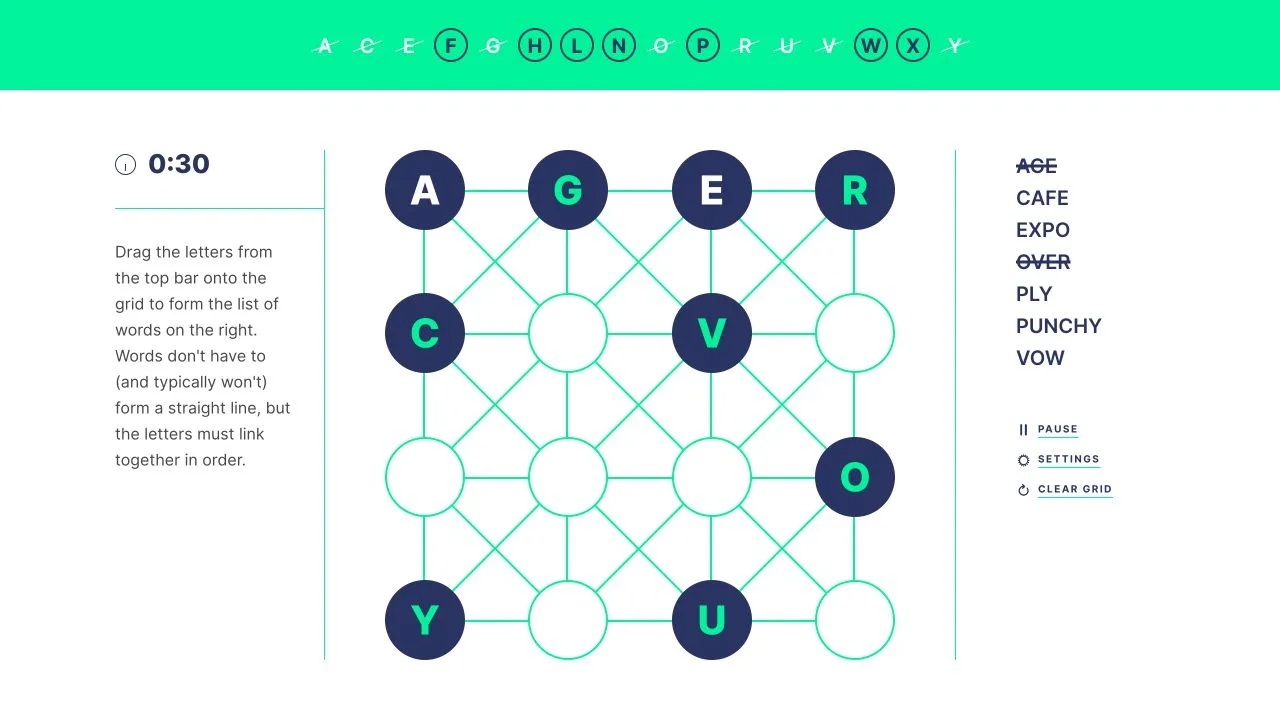
Drag a letter from the bank into the grid and watch the word list. In our partial 4×4 attempt, two target words became crossed out after their paths were available. That feedback lets you check a small section before deciding how to use the remaining letters. A completed word is useful evidence, but the rest of the list still has to fit around it.
What we tested
We solved the 3×3 daily puzzle without outside help, placing its four available letters around the fixed cells. The game showed a congratulations panel, a 10.74-second timer, a streak of one and a countdown to the next puzzle. That was a short small-grid solve; it does not establish how long the larger boards take.
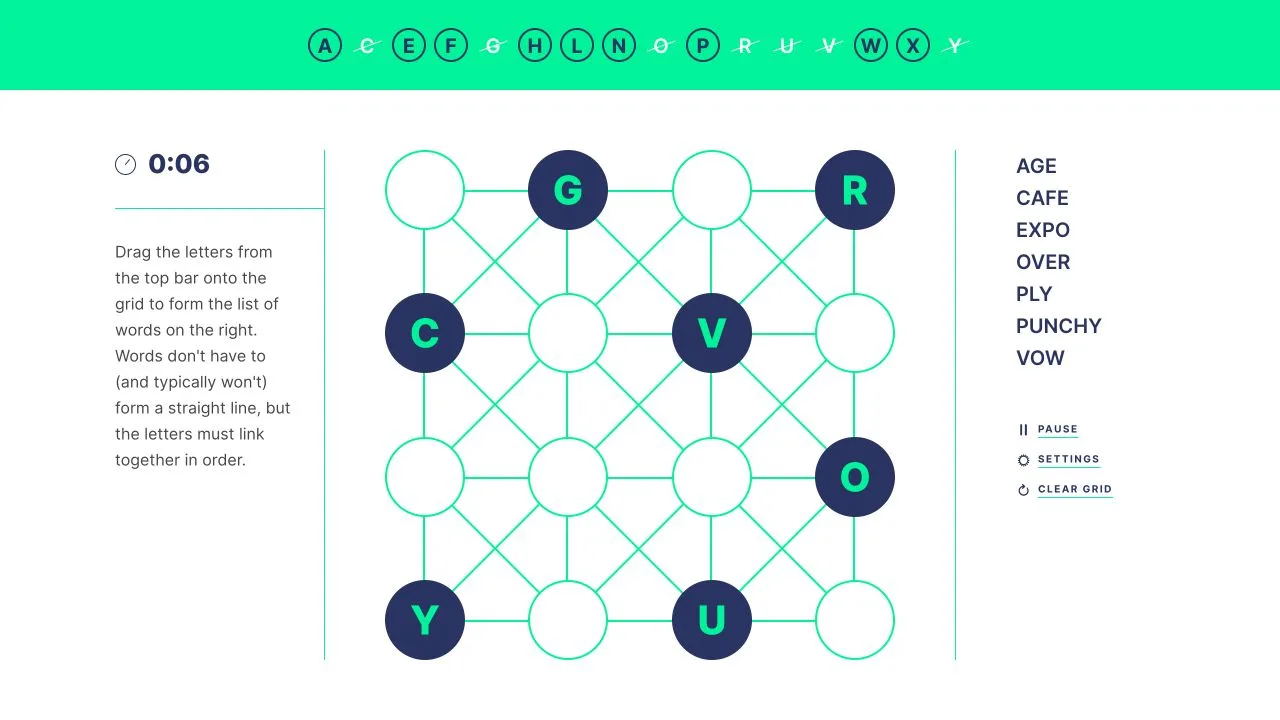
We then opened the 4×4 board and made two words register in the list. We did not finish that board or the 5×5 puzzle. The screenshots show the larger board before and after a few placements, rather than publishing the finished daily solution.
A useful way to approach it
Work from the tightest connections first. If a word contains two fixed letters, its possible route is more constrained than a word whose letters are all still in the bank. Check the words that share a letter before committing to a whole corner of the board. The satisfaction comes from finding a placement that serves several routes at once.
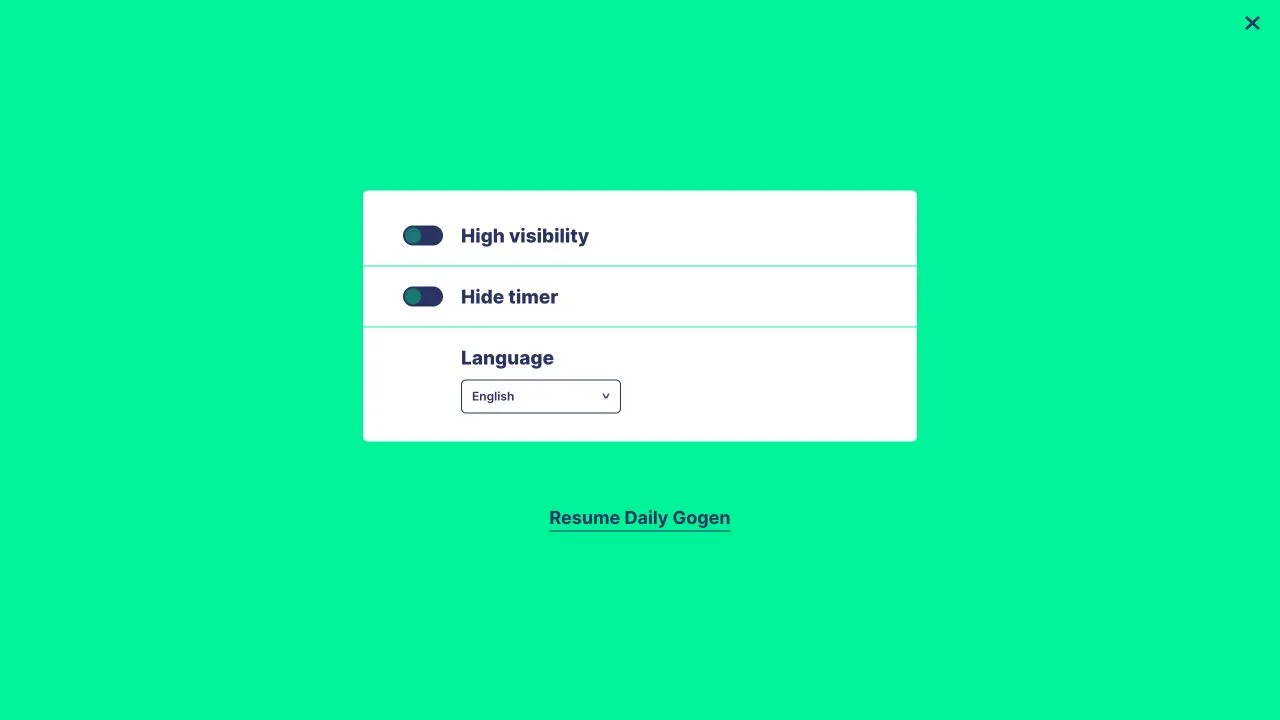
Settings include High visibility and Hide timer. Hiding the clock is an option if the running display distracts you; we did not establish that it pauses timing. Daily Gogen suits players who like seeing all the ingredients at the start and gradually fitting them together. The challenge is spatial word placement, with the target vocabulary supplied for you.
FAQ about Daily Gogen
Must Daily Gogen words run in a straight line?
No. Words follow neighboring cells on the connected grid and can bend. Use the connecting lines to trace a possible route.
Do I need a different grid for every word?
No. One shared arrangement of the letters must contain all the listed words. Fixed letters remain anchors for those overlapping constraints.
Can I hide the timer?
Yes. Settings includes Hide timer. We verified the option, but did not establish that it pauses the underlying timer.
Player reviews
0 reviewsPlayed it? Share what you think and help the next player choose.
Your experience
Games like Daily Gogen
All logic games →
Guess a hidden word using totals for exact matches, misplaced letters and misses. Play a daily puzzle or choose a word length in Unlimited.

Boxed In
LogicFit nine supplied words into a shared letter grid, using the given letters and placement previews.

Symble
LogicSolve a five-letter word in eight guesses while deducing what three changing symbols mean and reading feedback in answer order.
Shiftogram
LogicInsert blue letters and shift the starting rows to solve a 4×4 crossword whose clues have no assigned positions.

Vowelsweeper
LogicUncover consonants in a daily word grid while treating every hidden vowel as a Minesweeper mine.

Relink
LogicFind an imposter in each row, then use the remaining word tiles to describe what connects the four outsiders.