
1 / 3
On this page
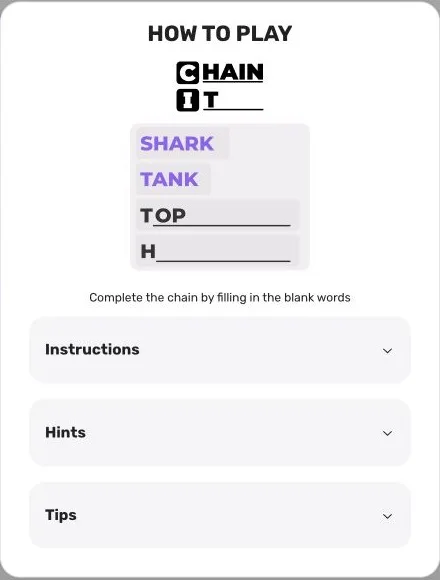
Chain It gives you a word at the top of a column and the first letter of every missing word below it. Your task is to complete the links: each new word must pair with the word immediately above through a compound or an association. Knowing several plausible connections helps, but each blank accepts one particular answer. The challenge is narrowing that possibility to the link the puzzle wants.
One word changes the next question
The first letter stays visible while you work out the rest of a word. Enter a guess and submit it; the game immediately accepts it or reports an incorrect guess. A correct word becomes the starting point for the next connection. The official examples, Club–House and Computer–Screen, show why both familiar compounds and looser associations belong in your search.
This creates a different task from guessing a single hidden word. Rather than collecting letter-position clues, you are looking for a natural pair that also begins with the supplied letter. A word can sound reasonable in isolation and still fail because it is not the accepted link. In our desktop session, several plausible guesses were rejected before a revealed letter helped us find the intended continuation.
The official Chain It rules describe one accepted word per blank. Treat a rejection as a reason to reconsider the pair, rather than evidence that every related word will eventually count. We could continue after incorrect guesses and finish the chain; a mistake did not immediately end the round.
Hints reveal letters and cost score
The Hint button offers a direct way through a stuck link. After confirming a hint, the next letter of the current word appears. That extra letter can be more useful than another broad association: it cuts down the words that could fit both the prefix and the preceding word.
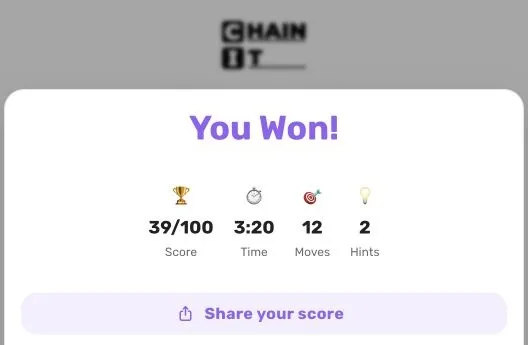
Puzzlit states that hints lower the day's score without preventing completion. We used two during the tested round and reached the win screen, which showed 39/100, 3:20, 12 moves and 2 hints. These are the results of one resumed session, not a recommended pace or a scoring formula. The result panel separates score, elapsed time, moves and hints, so a completed chain and a high score are different goals.
Before taking a hint, try saying the two words together. Start with familiar compounds, then consider common phrases, names or associations that fit the visible first letter. Once a hint supplies another letter, use that narrower prefix to test a different idea. These are practical ways to organize guesses, rather than a guarantee of the best score.
A daily browser round, with archives in the app
The browser edition provides a new daily chain, free and without an account or download. The official FAQ directs players to the Puzzlit app for past chains. We tested the current browser puzzle; archive access and any app purchase conditions were not part of that session.
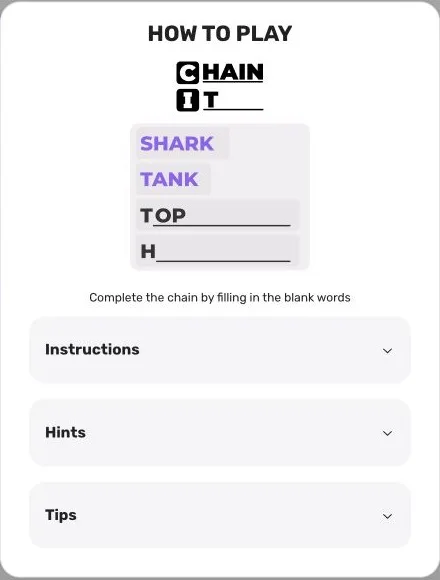
Chain It is Puzzlit's game. It should also be distinguished from Chainle, which Puzzlit identifies as a separate third-party game. Here, the defining interaction is completing a vertical chain with immediate right-or-wrong feedback and letter-revealing hints. The public screenshots show its built-in example and our result panel, keeping the tested day's solution out of view.
FAQ about Chain It
Why is a related word rejected in Chain It?
Each blank has one accepted answer. A plausible association can still be rejected if it is not the intended link; use the supplied first letter and the preceding word to narrow your next guess.
Can I finish after using a hint?
Yes. A hint reveals the next letter of the word you are working on and lowers the day’s score. It does not lock you out of completing the chain.
Where are past Chain It puzzles?
Puzzlit directs players to its app archive for past chains. The browser page offers the daily puzzle; we did not verify the app archive’s purchase or account conditions.
Player reviews
0 reviewsPlayed it? Share what you think and help the next player choose.
Your experience
Games like Chain It
All word games →
Letter Tax
WordAnswer seven categories while permanently taxing letters out of later words, then weigh rescue help against leaderboard eligibility.

Decoys
WordChange one letter in every word to uncover a shared secret group. Decoys separates harmless typos from real-word slips and marks solves that use its single reveal.

sedecordle
WordSolve sixteen five-letter words with a shared stream of guesses and a 21-guess limit in the original Sedecordle mode.

Transfiguword
WordSolve three definition clues, bank their letters, then rearrange the full pool into two new answers and a mystery word.

Wordgy
WordJoin a chain of compound words and two-word phrases, with free direction changes and optional score-reducing help.

Wordsummit
WordTrace adjacent letters to find the highest-scoring word on a 5×5 board. Five attempts, tile multipliers and coloured feedback make each path a deduction.